Watts Gallery Exhibition: The Pattle Sisters

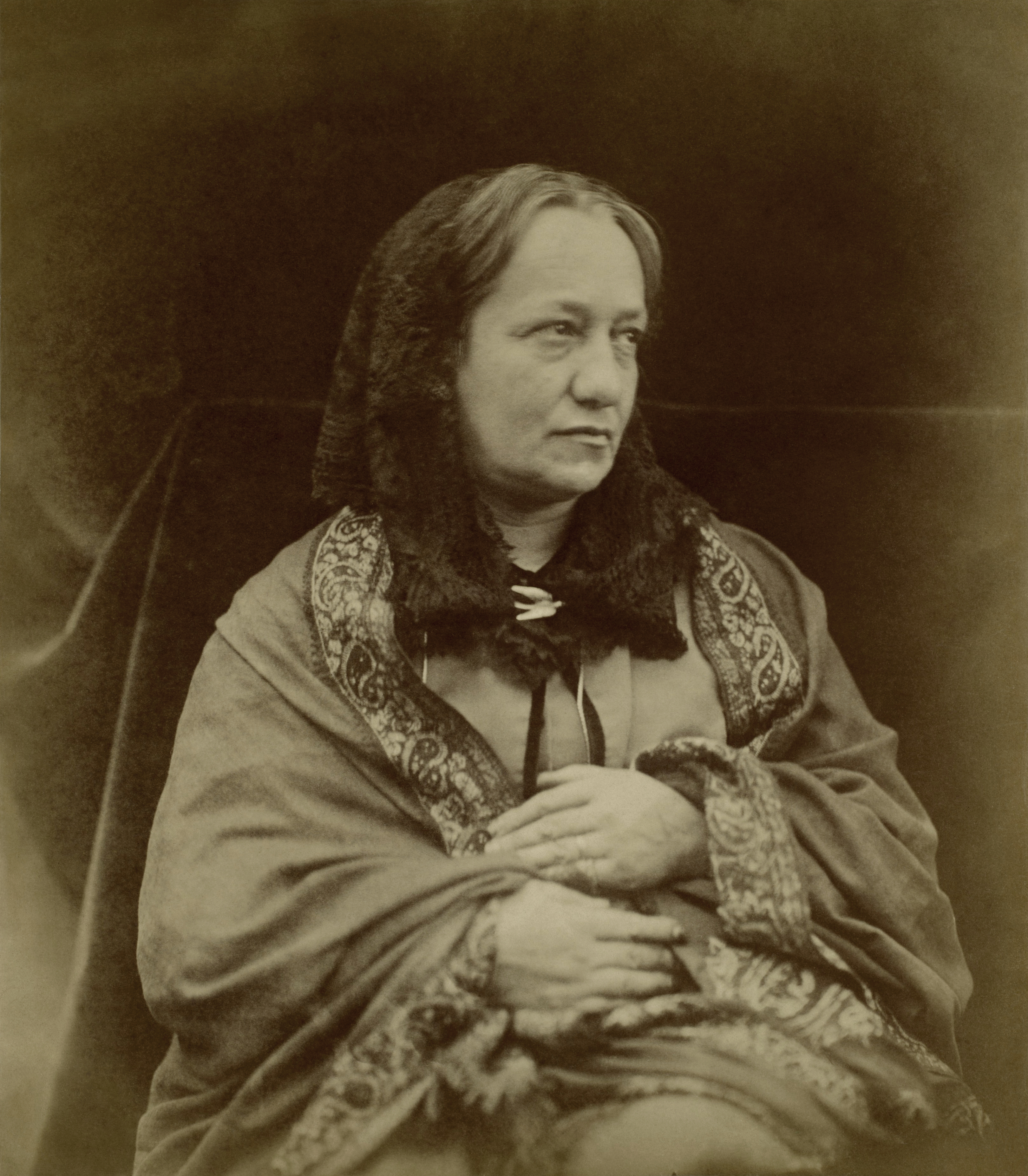
Probably the best known of the Pattle sisters, Julia Margaret Cameron

This is the current exhibition at the Watts Gallery at Compton near Guildford. This is the gallery of the paintings of George Frederick Watts, the famous Victorian painter. He lived nearby at his house called Limnerslease, with his wife Mary. He was a prolific portrait painter. He was also well known for allegorical subjects. His painting called Hope was featured on postage stamps and was also known as Barack Obama’s favourite painting. Likewise he often painted pictures with a social message

His wife Mary, also a painter, gave up painting to support her husband. She founded a pottery workshop in nearby Compton to give employment to local craftsmen. She is also known for building the nearby chapel with designs by her husband, generally regarded as an Art Nouveau masterpiece
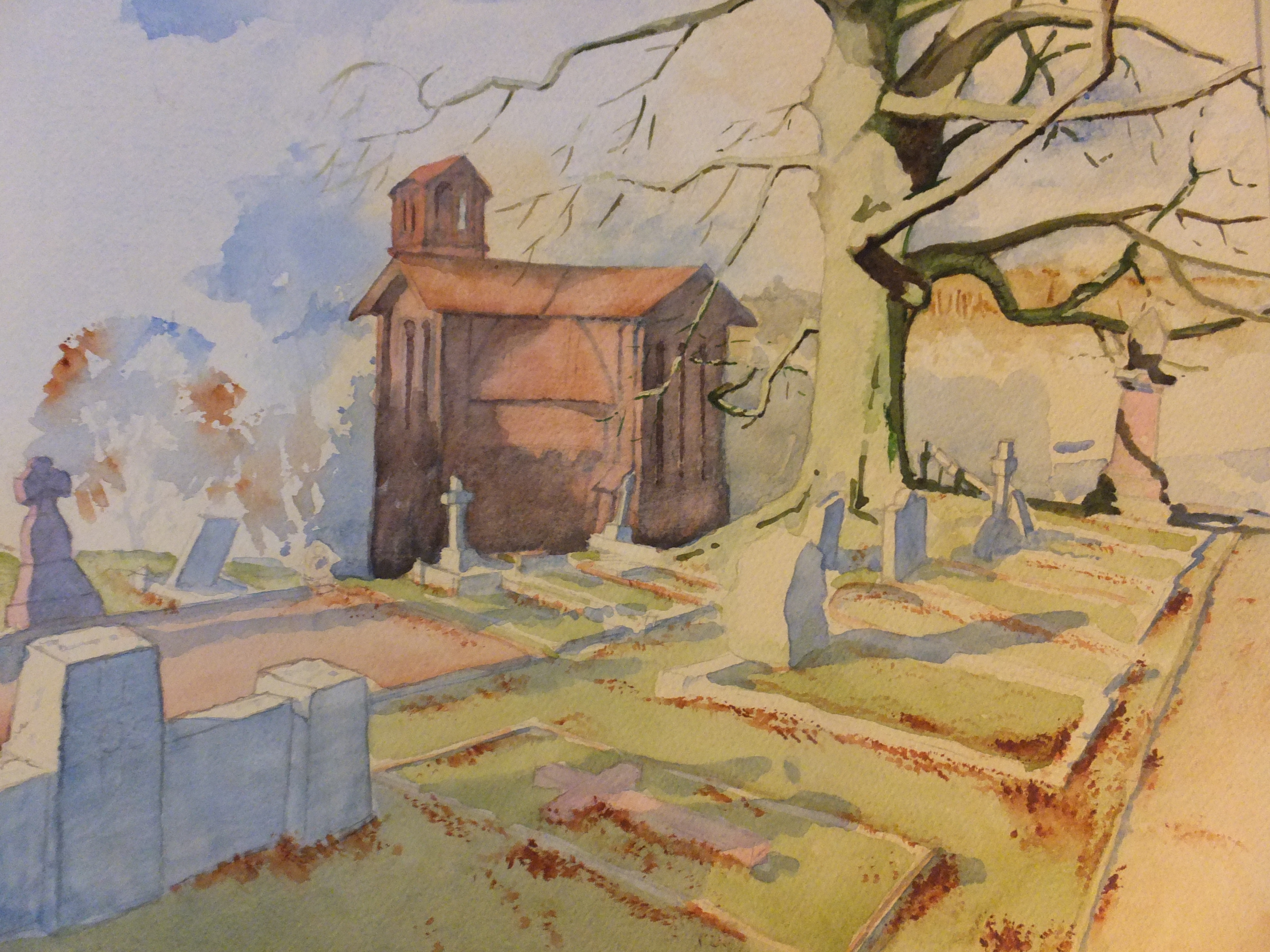
This is the painting of the Watts Chapel that I did once, built in brick and shaped like a Greek cross. The interior is beautifully designed in Arts and Crafts style. The bricks were made locally in Mary Watts works

The Pattle sisters were born in India, and became central figures British art and literary society. Born in Calcutta now Kolkata to James Peter Pattle, a civil servant, and Adeline Maria De l’Etang ,they received education in Paris and India.

Known for their beauty, intelligence and independent spirits they navigated complex social landscapes, bridging cultures and influencing Victorian high society and intellectual movements

George Frederick Watts was one of the prominent figures that they were connected with. There were seven sisters in all, and probaly the best known is Julia Margaret Cameron, the famous photographer, who lived on the Isle of wight for many years. Given a camera by her daughter, she became well known for her photographs of famous people, and also for the ability to capture subjects in a very soft light.

Maria Jackson (nee Pattle) was the mother of Julia Stephen who was mother to Virginia Woolf and Vanessa Bell, thus linking them to the Bloomsbury group

Pattledom was a term coined by Thackeray describing the sister’s powerful social network and bohemian lifestyle, blending Indian heritage with French education and English society

This exhibition is on until May, and well worth a visit if you are within striking distance of Compton

Btw. if you want to see more of my own paintings, they are listed also on my own website davidharmerwatercolour.co.uk. This website is a showcase rather than a shop, but enquiries are nevertheless welcome
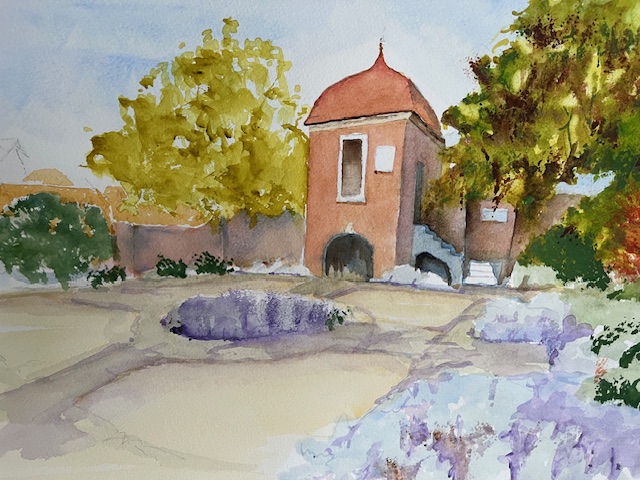
The Havant Gazebo Painting

This was a nostalgic trip for me. I used to live literally round the corner from this lovely building, although at that time you could only see the top half as it was surrounded by a high wall. Pieces of glass were set into the top of the wall, to stop people climbing over. Even in those benighted times, this was illegal and constituted a man trap. Goodness knows when these shards were mounted into the wall, well into previous centuries certainly

Since then, walls were taken down and this delightful gazebo was exposed for all to see. It is from the c18 and was built as all gazebos were, to enable the leisured classes to enjoy the view from over the wall, and no doubt in those days for quite a distance. It would have looked out over the Fair Field, a large green space which would have hosted an annual fair. This is long gone, and today is commemorated by a road called Fairfield Road. The row of houses in this road was built in the reign of Queen Victoria, quite late in her reign as I remember, from building material taken from the demolition of the old manor house opposite.

Coming back to the gazebo, this was in a large garden at the back of a beautiful Georgian house called Magnolia House, occupied by two generations of dentists, now gone. Still a dentists surgery but the original old Havant family is no longer there. The house is one of the very few Georgian buildings to have survived a great fire in the c18. It is slightly uphill from the rest of the town which may have saved it from the flames.

I did this little watercolour quite quickly just to preserve a childhood memory. Havant is not a town which escaped development and there are very few gems like this remaining

I don’t live in Havant now, haven’t done for many years. My father lived in the family home in nearby Manor Close, named after the manor house which disappeared. I used to go down regularly so was able to look at the gazebo in all its glory, although could never go in as that is by appointment only, and time did not allow. The only problem with going back to scenes of one’s childhood, is that you start to hear voices of people you knew at the time, so stop and move on

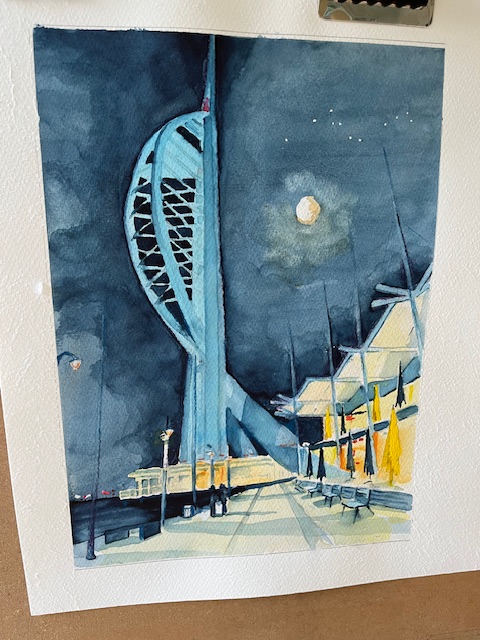
Spinnaker Tower at Night finished painting

This is the finished painting literall hot of the easel. This was a commissioned painting which the client has previewed, and is delighted with. That is always a relief. I was happy with it, but art is subjective, so one is never sure. i don’t remember tackling a night time scene before one that is highly illuminated. It is quite tricky as so many light sources to take into account. Interesting nonethe less.

I used indigo for the night sky and introduced cloud and the moon to make it more interesting. An occasional dab of black where I wanted the sky to be really dark. Quite a lot of masking out on this one. The tower itself for one which was a big job, plus the gables over the restaurants. Also I had to do a lot of lifting of colour for example to produce the tall poles which are shown in deep shadow on the photograph. They worked well. I was pleased from some of the comments afterwards that the mood created was what I was trying to get. Some drama and some romanticism, bearing in mind that this was someone’s special place

As always I was privileged to be entrusted with something that is special to someone, and as always so pleased that it turned out well.