Copenhagen Canal and other paintings

Back in the summer, we toured the Baltic. At one time we did eight shore excursions in eight days. Even by cruise ship, we found this tiring because of our age, especially my wife who has walking difficulties, so we might not attempt this sort of holiday again. Copenhagen was just one of the stops we made in Denmark

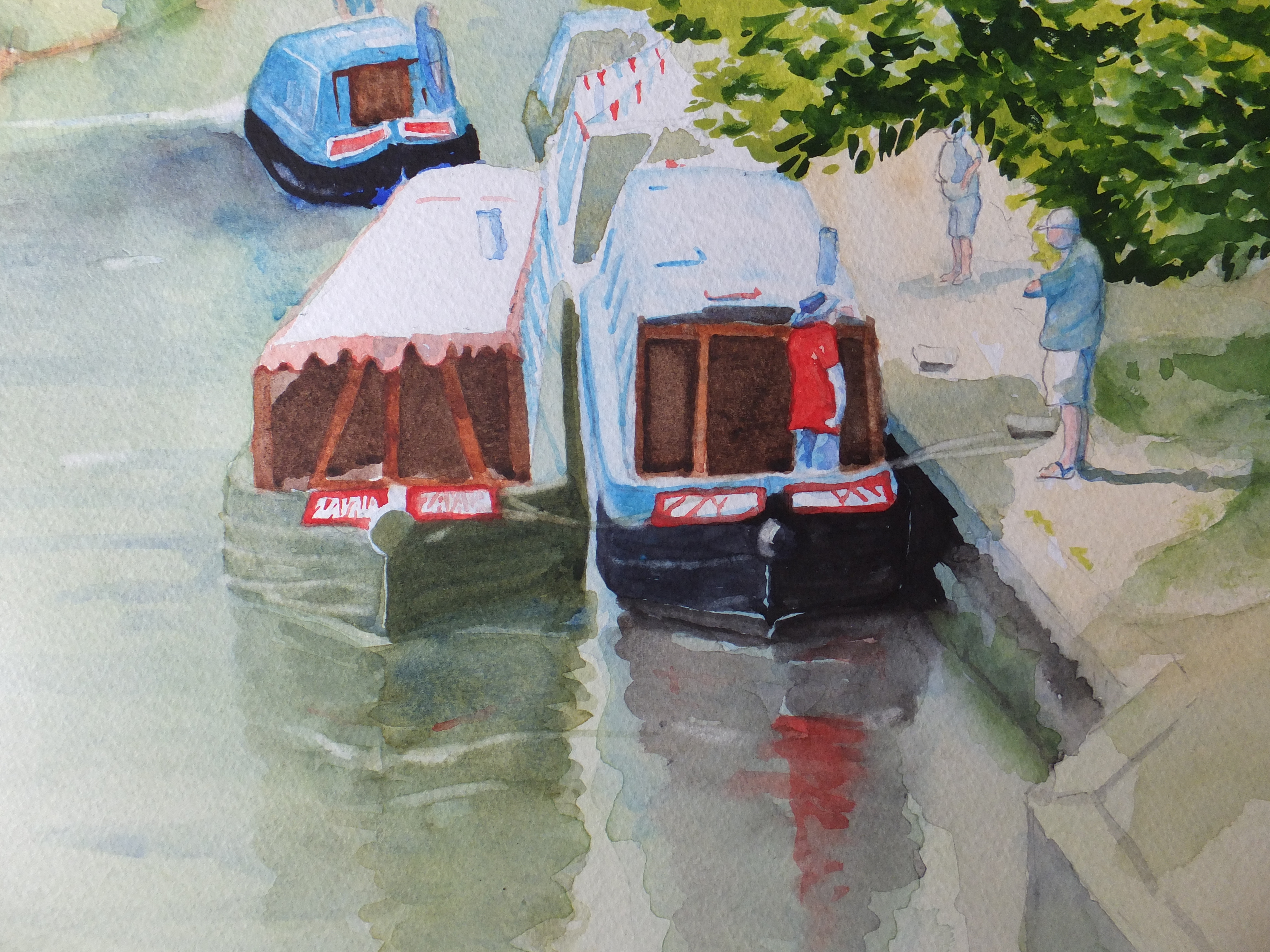
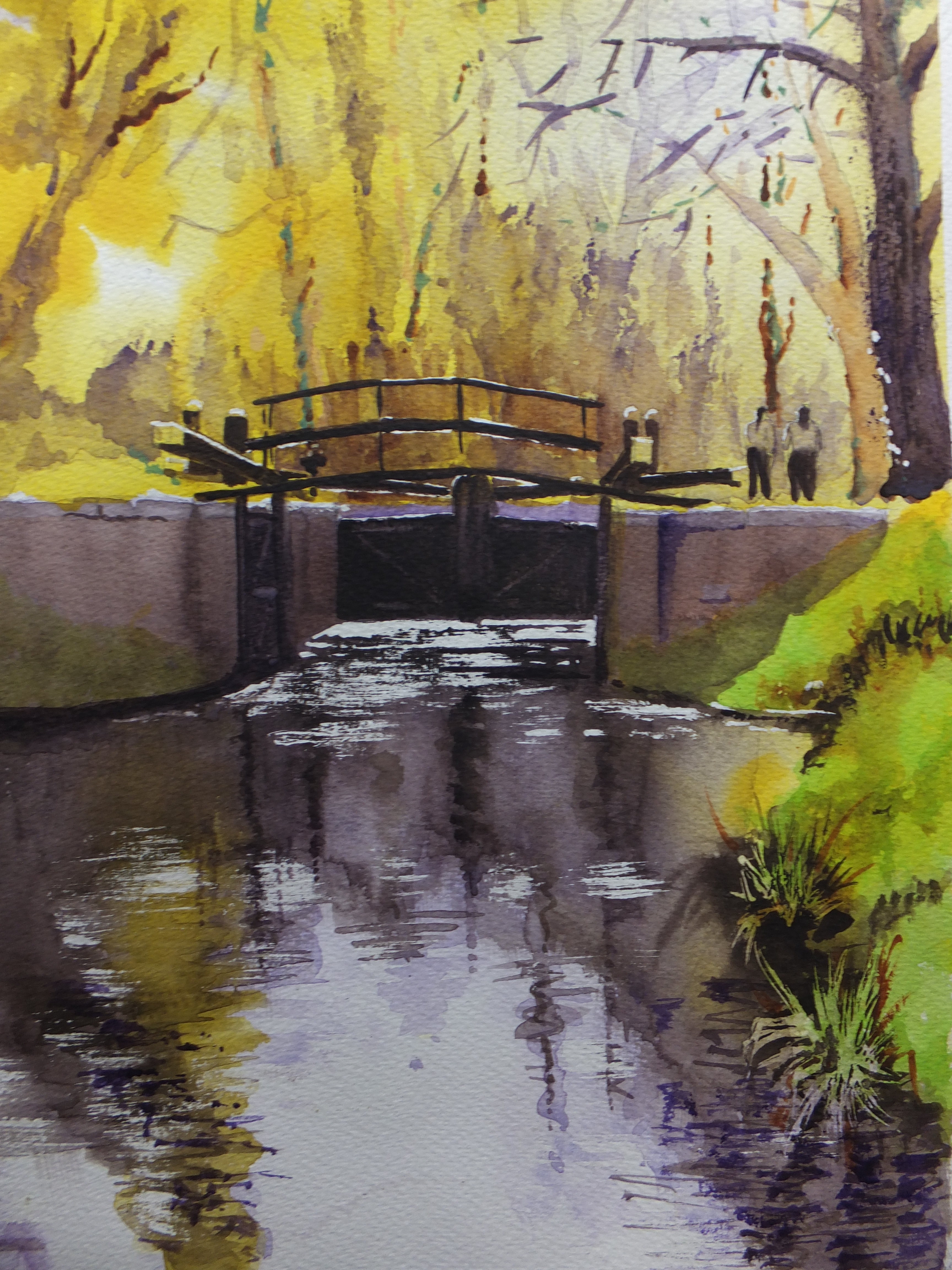
Touring the canal system was fun. i like painting boats and this was just one scene that I snapped for reference. Quite a lot of light and dark in this shot. The sun was very bright especially on the buildings in the background. Deep shadows were cast by the trees, which accentuated the boats. The figures on the canal side were reduced to silhouettes. It took me several glazes to get the water to be an acceptable colour, whilst at the same time still looking transparent. This was more of an exercise about light against dark, than anything else

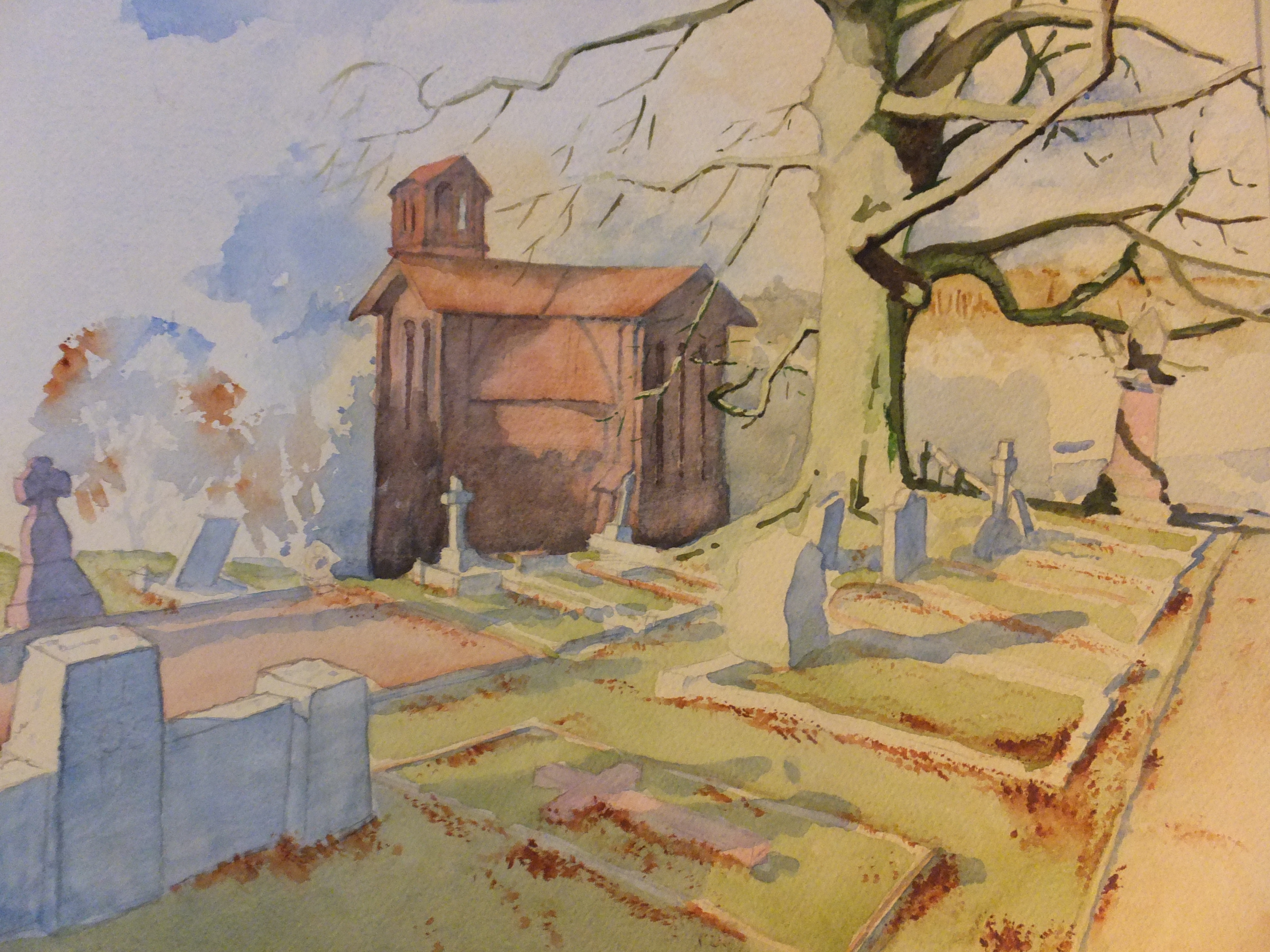
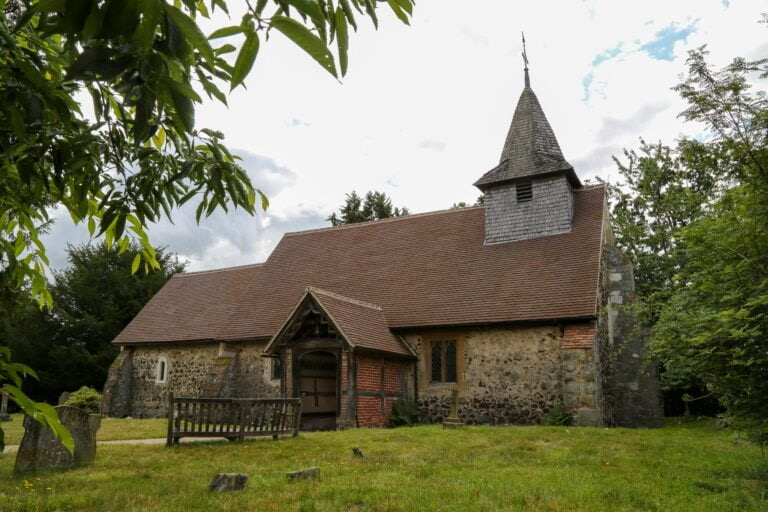
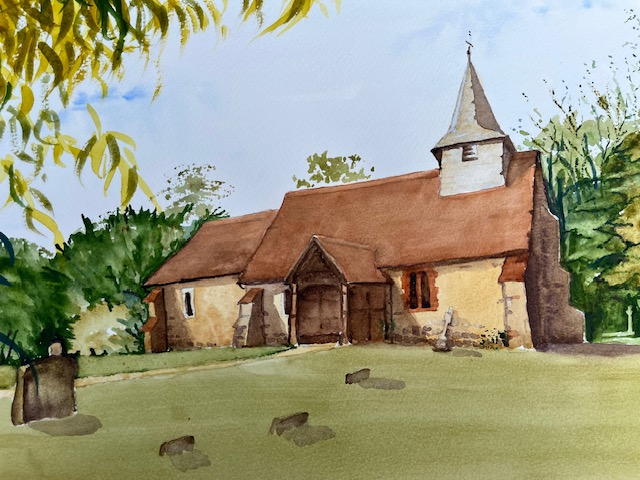
I have been commissioned to paint this church, the village church of Pyrford in Surrey. Ancient yet still in use as a parish church, it is set in a tranquil spot, and is quite charming. The lady who commissioned it no longer lives in the area. Her parents are buried here, so a meaningful place. I always feel very priviliged being asked to paint places that are so important in people’s lives. I am working on it at the moment and will post the result

This is how the painting turned out. I have put sunshine into the painting as the photograph was taken on a very dull day, so the colours are brighter. The lady who commissioned this painting was very pleased, which is always a relief

I have another commission now, quite different to the last, This one is a wedding venue, which I get asked to do from time to time. This one involves marqees and the newly wed couple strolling in the grounds around a lake, so quite a lot of different things to worry about, Still it’s good to have these commissions coming through as sales from my gallery are poor at the moment. Times are hard everywhere still and doubtless will be for some time

Painting of Pirbright Church

I come back to a subject I never tire of painting. The historic church in the parish of Pirbright in Surrey

Dedicated to St Michael and all Angels, the church has saxon foundations and was a site of worship before then. The current church building dates from the c18. The churchyard is notable for its wildlife and also contains the grave of Sir Henry Morton Stanley, the explorer, he who found Livingstone, and said the immortal words “Doctor Livingstone I presume”. He is also well known for the discovery of the sources of the Nile and the Congo rivers The headstone is a huge piece of granite with his African name, Bula Matari 1841-1904 The funeral service was in Westminster Abbey but the interment was here at Pirbright, near his country home at Furze Hill.

This is my photograph of Stanley’s grave with its monolithic headstone

I have painted this church on a couple of occasions over the years. One painting I did in the snow which was well received. I was especially thrilled at the end of last year, for that particular painting to be printed as a greeting card by the church and sent to everyone in the parish, setting out the times of services over the Christmas period. I will see if I still have an image

This was the painting done in the snow. I’m not sure that I don’t prefer it to the one that I have just done. Looser somehow. Also there is something about snow with sunshine that softens the light beautifully. The trees on the left have been removed since I did this painting

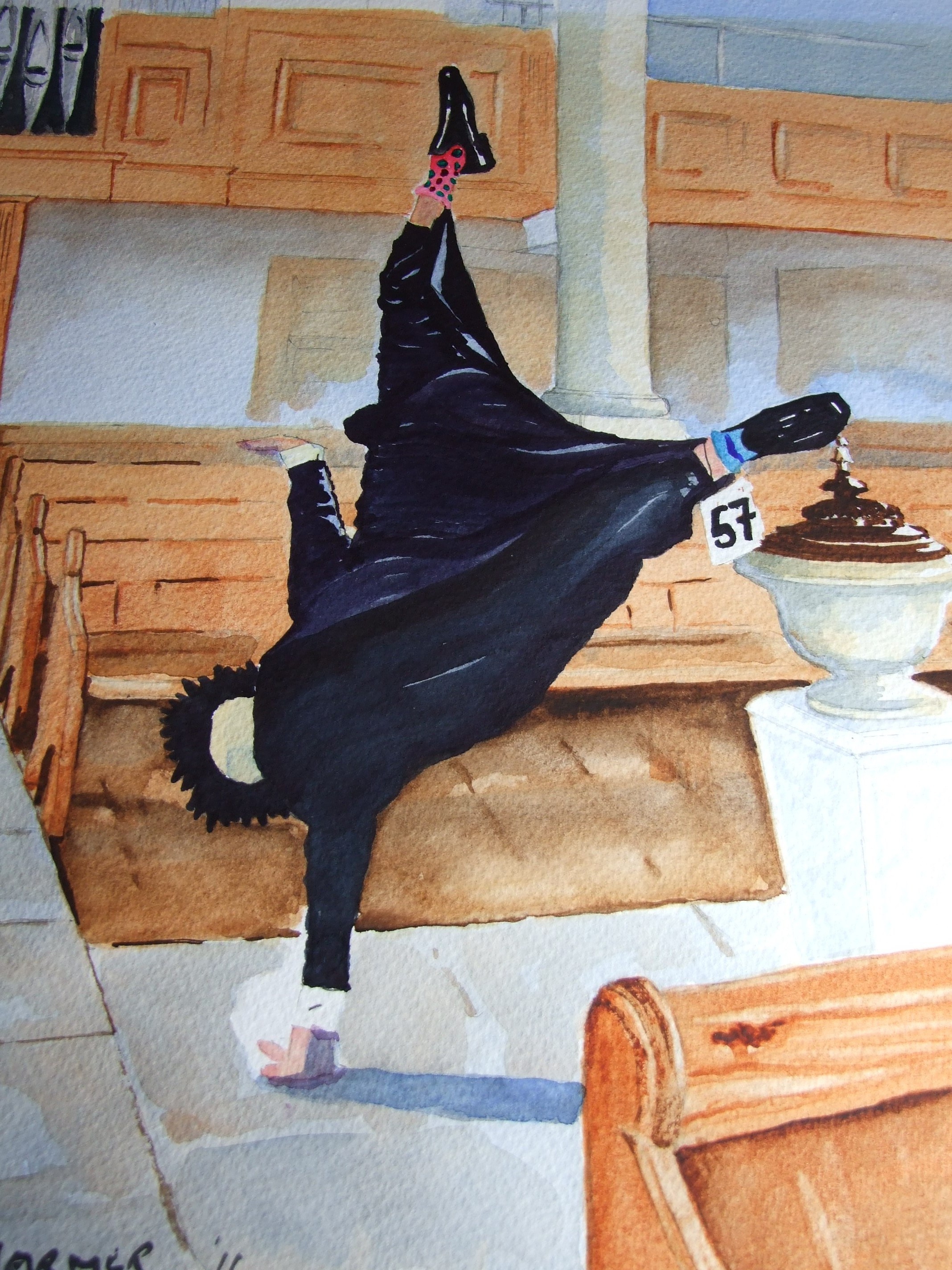
Although I don’t actually live in Pirbright, I do get involved through the Pirbright Art Club which i have belonged to for many years. Pirbright like so many villages, has an annual fair and the art club would take a stall. The theme for some years was scarecrows, and ingenious examples were made, very often characters from literature. Do you remember the wedding of the Prince and Princess of Wales? After the service the Dean of Westminster cartwheeled down the centre aisle, presumably overjoyed. An amazing scarecrow was made and was on display in the church. I painted it. I’ll see if I can find it

I was proud of this painting. I exhibited it locally expecting it to be snapped up. It wasn’t! In the end, I sold it online to a buyer in the north east of England. How strange was that. Afterwards the buyer wrote to me and told me he looks at it every morning and it cheers him up for the day, so it was worth doing just for that.

Gondolas, and other recent paintings

I’ve been off the air for a while. I had to get a new PC as part of an upgrade, and of course, nothing was where I remembered it. I couldn’t find my way back into my blog, or not at least to the page where I coud write something, and I can’t pretend the seemingly helpful robot was any use to me. Anyhow after a tortuous journey I can now post again

As I have been away for a while I thought I would just do a compendium of more recent paintings, just to catch up, and start with one called Gondolas. Always a favourite subject, and this view with San Giorgio Maggiore in the background I have painted and sold several times. This shot is completely different to any that I have done before

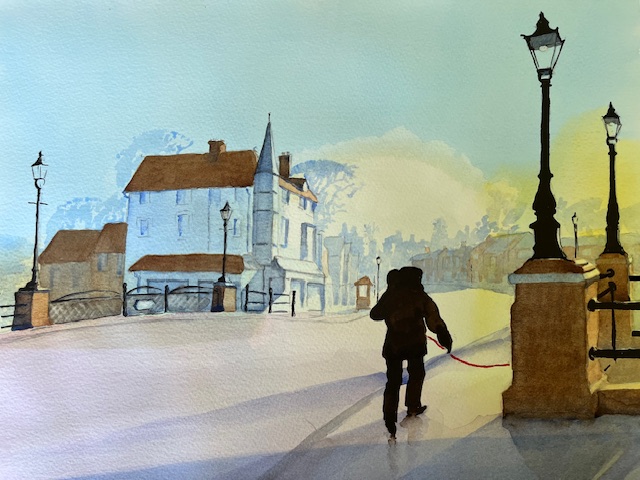
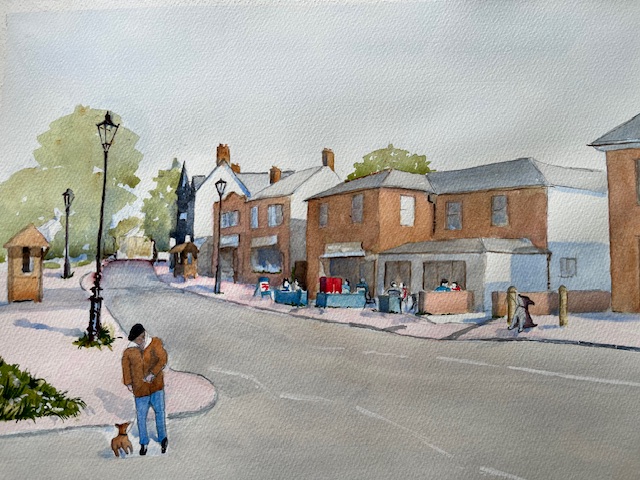
I have also been painting some views of my local village, something I have neglected in the past. This shot I put on the village website and received over 150 hits. I am pleased to say that a gentleman in Canada ,who used to live locally, bought it, Always that extra buzz when a painting makes a long journey

This view just shows some of our shops, so being a village we only have indepemdent shops which is a nice relief to seeing brands all the time. In the background by the trees is the bridge over the canal, which was cut in the late c18. In fact the village grew up around the canal. The name St John’s came from the church which was built here as a Chapel of ease for the villagers

The hub of the village is the coffee shop which was started only about ten years ago and provided a much needed meeting place and alternative to the nearest pub.

I have been getting commissions which is always nice. A more recent one shows a country house hotel called Gravetye Manor, which I have painted before. This is a different view in evening light commissioned by a guest who had a meaningful stay there

This is a mistake but I will leave it there. An old shot of Venice. I will now try and find the shot of Gravetye Manor

Succesful this time. An evening shot with the last of the sun catching the roof tops, so it worked well

There are others but I will leave it there. I am not long back from a trip up the Baltic as far as and including Helsinki so quite a lot to digest. I am going to try and put a post together about that voyage. On the art side, we went to Skagen on the northern most tip of Jutland. Artists in the c19 were attracted there by the wonderful light and their work is just breathtaking

I am going to try and be more regular now that I have got back control, and am grateful for the help I have received

Turner in Surrey: the River Wey

Turner, Joseph Mallord William; Newark Abbey on the Wey; Tate; http://www.artuk.org/artworks/newark-abbey-on-the-wey-202538

Described as Newark Abbey which is in fact Newark Priory, and even Newark Priory Church. The priory was a huge complex, and the ruined church is all that is left after the Dissolution . It looks to me that Turner sketched this from the road. The view is much the same today. The land is privately owned so close inspection is not possible. Cows are in the field much the same as Turner’s sketch. Newark Abbey is near Ripley as a point of reference. This painting is in Tate Britain

After the dissolution it was said that the priory was bombarded by cannon from nearby Pyrford Hill. After that the site must have been robbed for stone, as the ruined church is all that remains, apart from the odd outcrop

Turner would row down the river. We know that he stayed at the White Lion in Guildford, and at another in inn in Walton-on-Thames. He also thought nothing of sleeping on his boat. He was also a prodigious walker, known to cover 25 miles in a day including making sketches on the way. Sometimes he would set out with company and leave them behind if they couldn’t keep up

This is the entrance to Quarry Street in Guildford today. It is not by Turner! This is my painting made about twenty years ago. There is a link with Turner albeit a tenuous one. In order to take the reference photograph for this painting, I had to step back into the White Lion Walk in order to keep the bright sunshine out of my lens. The White Lion Walk is the shopping arcade which now stands on the site of the old White Lion Hotel. Let’s look at the next picture.

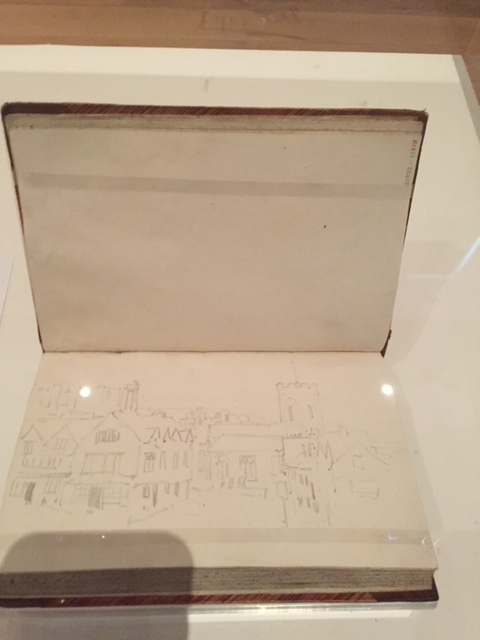
This is by Turner! It is one of his sketch books and shows the same view which I made years later, which still amuses me. I am sorry the image is so pale, but he worked in pencil. You can see the building on the left is much the same and the ancient church of St Mary stands in the background exactly as it does today On the right hand side is an inn much as today. Turner sketched this whilst staying at the White Lion in Guildford. Was he in the lounge relaxing or in his room. We know he didn’t like an audience so maybe the latter

We’ll leave it there for now and continue Turner’s drift down the Wey at some later date

The Maunsell Sea Forts in the Thames Estuary

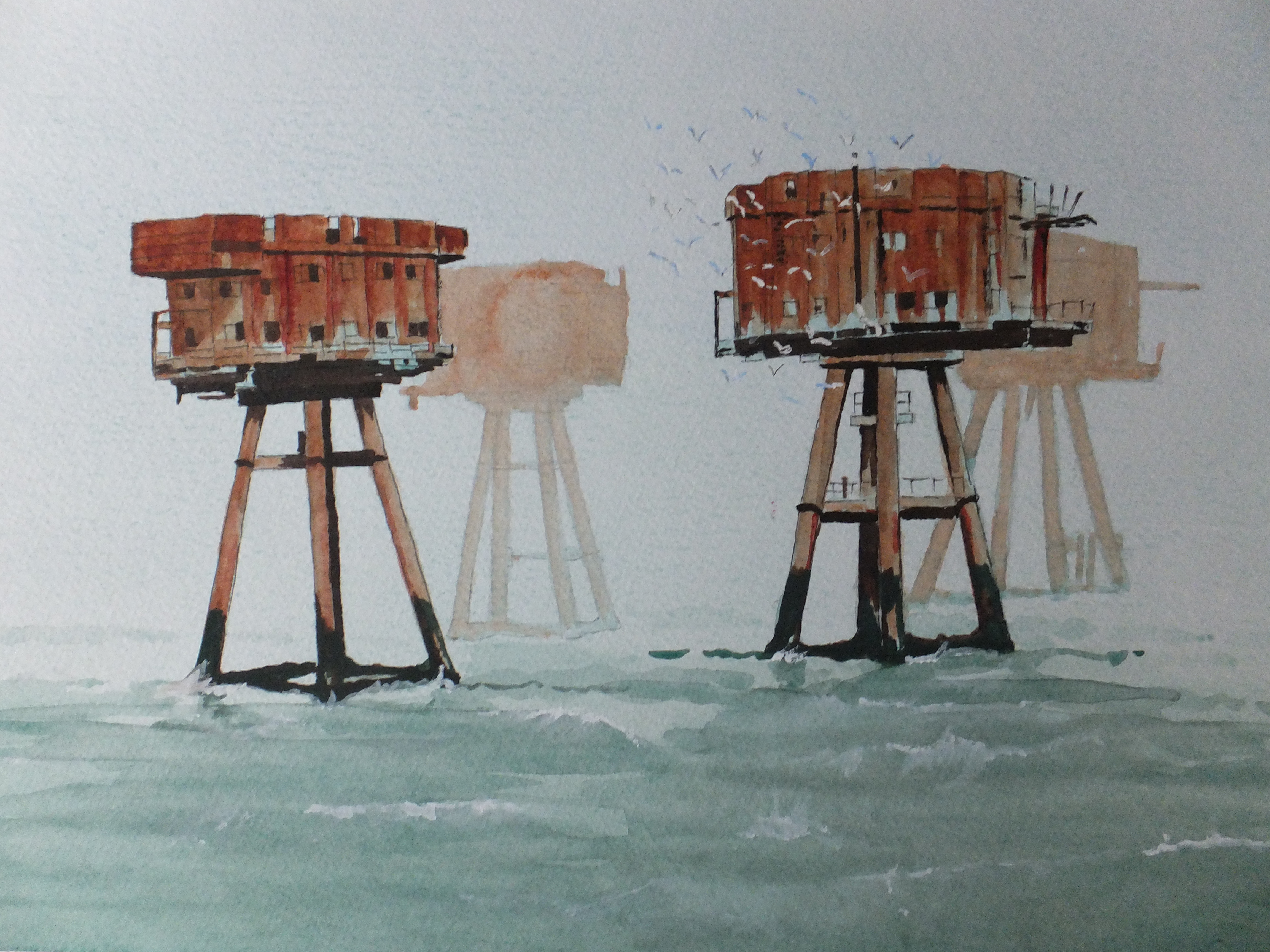
I have written about these magnificent structures before albeit many years ago. This is the second time that I have painted the towers, this time a different angle from the first. I think I prefer this one. It has more atmosphere. Certainly a very still and eerie place

It is now more years than I can remember that we took ship and sailed out to look at these forts. We were on an old paddle steamer called The Waverley which is a well-known vessel, and in those days, this boat would steam round the British Isles putting in at various ports, and running trips from there. This trip started in the Pool of London, which meant that the Tower Bridge had to raise its drawbridge to let us through, which was an experience in itself. The return journey took all day, calling in at Southend Pier to pick up more passengers, past car ferries mothballed which had been used to take cars from the Ford Motor Plant at Dagenham, and then out into the North Sea until we could see the sea forts

Designed by Guy Maunsell, the forts bear his name. Built in Gravesend they were towed to site on the sandbanks in 1942. There they protected the mouth of the Thames and prevented enemy aircraft using the river as a guide into central London. Decommissioned in 1950, they were later used as pirate radio stations until deemed unsafe. They stand as a nostalgic memorial