Painting of my home village

This is the centre of my local village, St John’s near Woking. The name St John’s was taken from the local church, built in the c19 by the then rector of Old Woking, as a chapel of ease for the village inhabitants. Quite a long walk to church otherwise in a century when no one had transport.

The village is mostly Victorian, and although surrounded by suburbia, does still retain its village atmosphere and integrity. Life started here in the late c18 when the canal was cut through open heathland. In the distance in my picture, the road makes a hump, as it crosses the canal. This is Kiln Bridge, where as the name suggests bricks were made from local clay, and these were used in the building of the canal. The canal was intended to link London with Southampton, but only reached Basingstoke before the railways were built and superseded canals. This was still a time when war with France was a possibility, and inland links with major south coast ports were desirable.

Today the Basingstoke Canal is maintained by Surrey and Hampshire County Councils. There is some leisure boating but not much. Wild life proliferates and the towpath is used for cycling and walking.

This is the very first time that I have painted my own village. I don’t know why. I put this painting on a local website and had more than 240 hits. All complimentary, I am pleased to say. No offers to buy though.

In the middle of the picture is our comparatively recent coffee shop, which has become the hub of village activity. Walkers and shoppers meet there to relax and catch up. We never had that before and it is a very welcome addition. We do have a pub but located going out of the village, so not so convenient. We have most shops so a useful selection.

At the bottom of my lane, we are blessed with a green open space, called St John’s Lye. Lye, lea or leigh means a green space. It is common land and so protected although we did have to physically resist Woking Borough Council who wanted to build a village hall on the Lye to replace the one that was starting to fall down. Eventually common sense prevailed and the new hall was built on the site of the old one. The Lye is available to all age groups for spontaneous activity including dog walking.

And so you have it. Not a place that many know, but loved by its local population

Art and Empire: Following on from my post in February

Moslem Burial Ground

The Muslim Burial Ground near Woking built by the War Office in 1917 and restored beautifully in 2014 in time for the Centenary

If you read my post in February about the exhibition at the Tate Art Gallery, London, entitled Art and Empire, much of which had to do with India including the contribution of the Indian Army during World War 1, then you will remember that I finished with the story of the Muslim Burial Ground where Muslim soldiers who died of wounds in local hospitals, were interred.

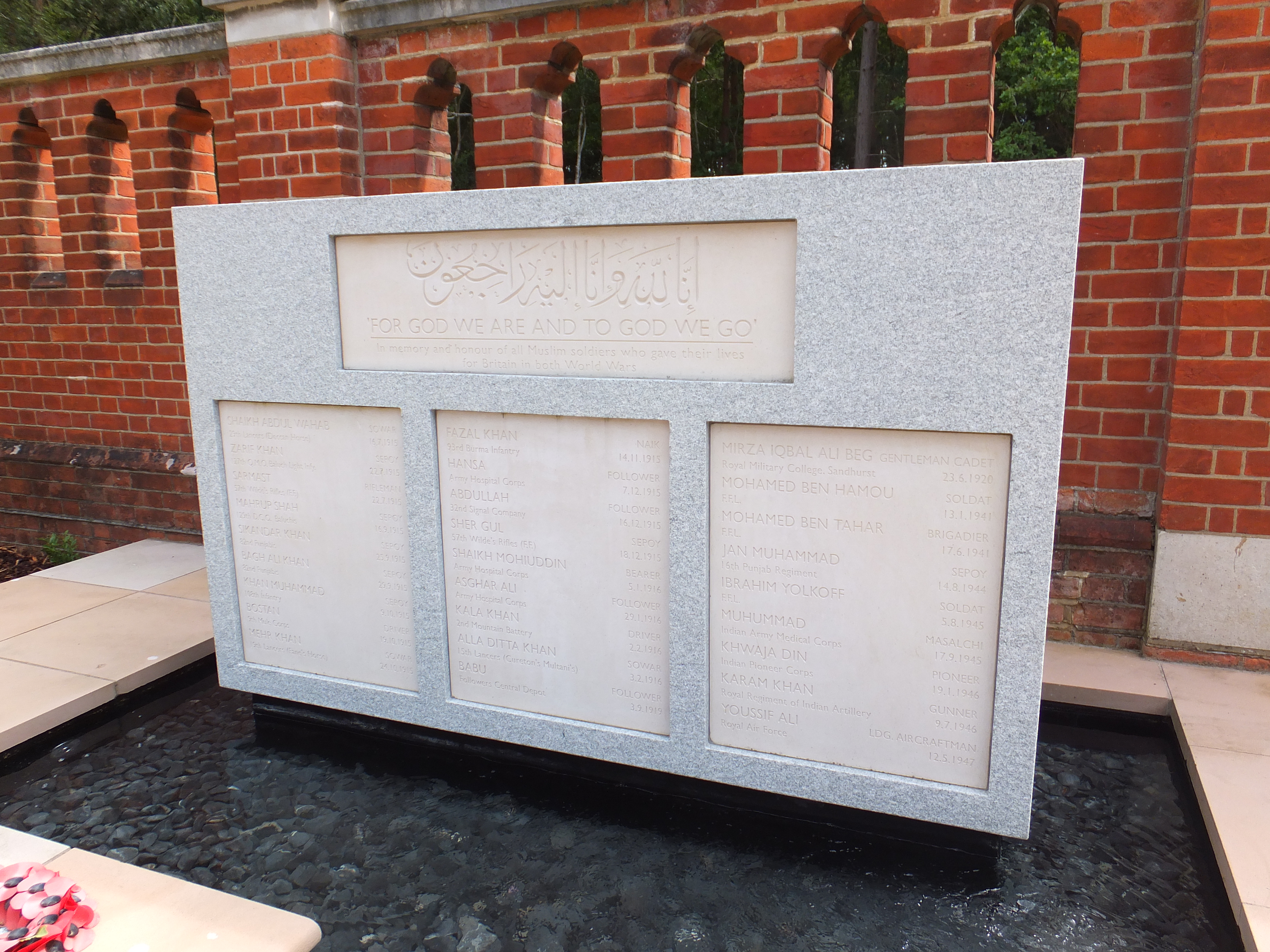
There were 28 service personnel buried there from both world wars. Their remains were moved to the Brookwood War Graves in 1968, since when, the area within the walls was left barren. With the restoration, this area has now been turned into a Garden Of Remembrance, and includes a stone tablet with the names of the 28 fallen, inscribed on it.

Finally I have been again to look at it, and have taken some pictures so that I can conclude this post. It really is a very tranquil and, I think, sacred place

DSCF3077

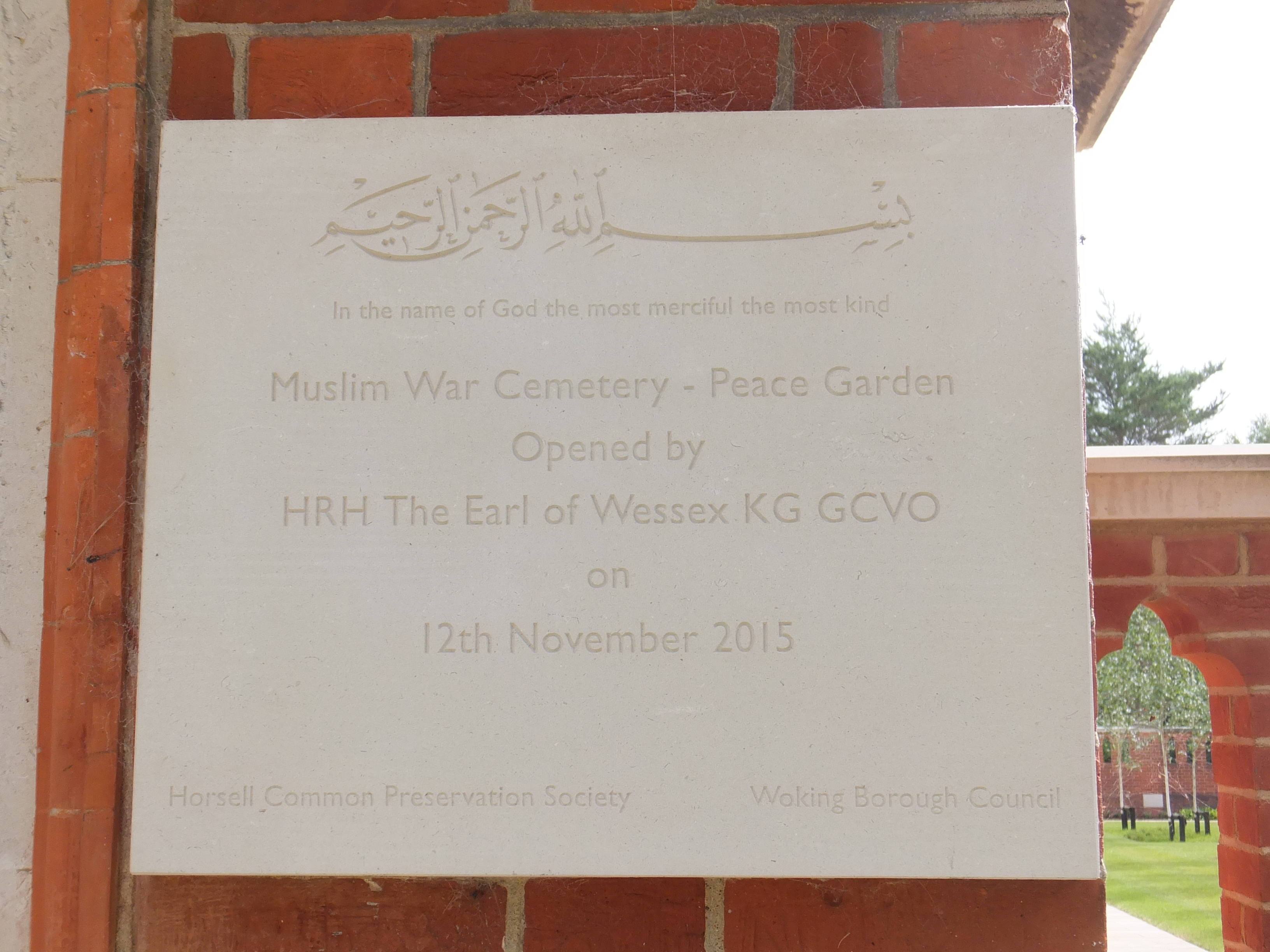
The new plaque by the main entrance of the Muslim War Cemetery-Peace Garden. Let us hope the sentiment comes true

DSCF3082

This is the tablet commemorating the 28 service personnel who lost their lives in both world wars. You will need your zoom to read the names, I am afraid. This was as close as I could get

DSCF3085

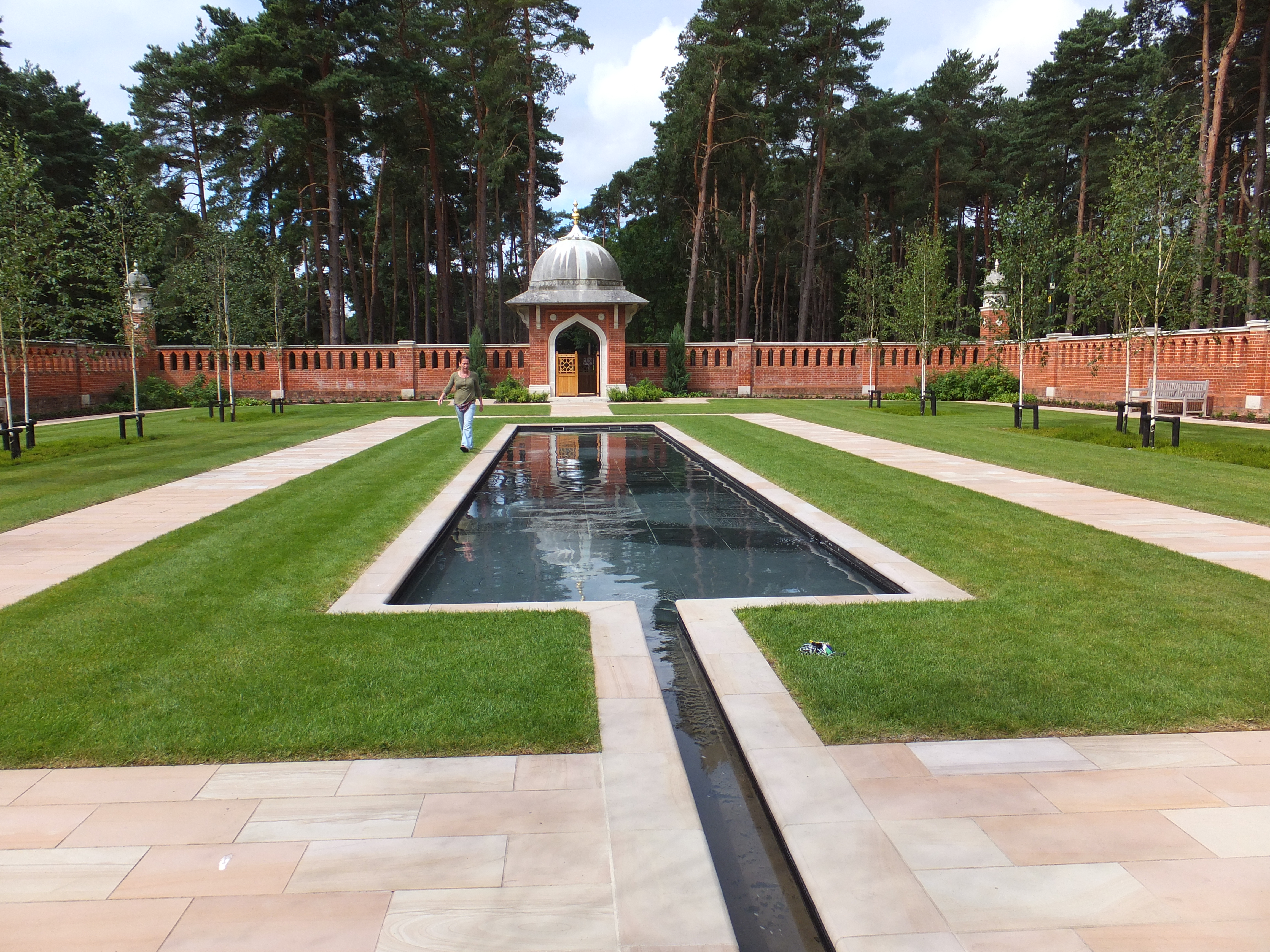
Looking back towards the main gate, with the pool, landscaping and new trees. The water is being pumped round continuously, giving that delightful trickling sound. Certainly a place for meditation, and perhaps a prayer for peace. Not easy when there is an atrocity every day

I am still working on the painting of Shere Village and Church, which I would hope to finish within the next week or so

H.G.Wells at the Lightbox

Neville Godden's Winning Artwork.JPG

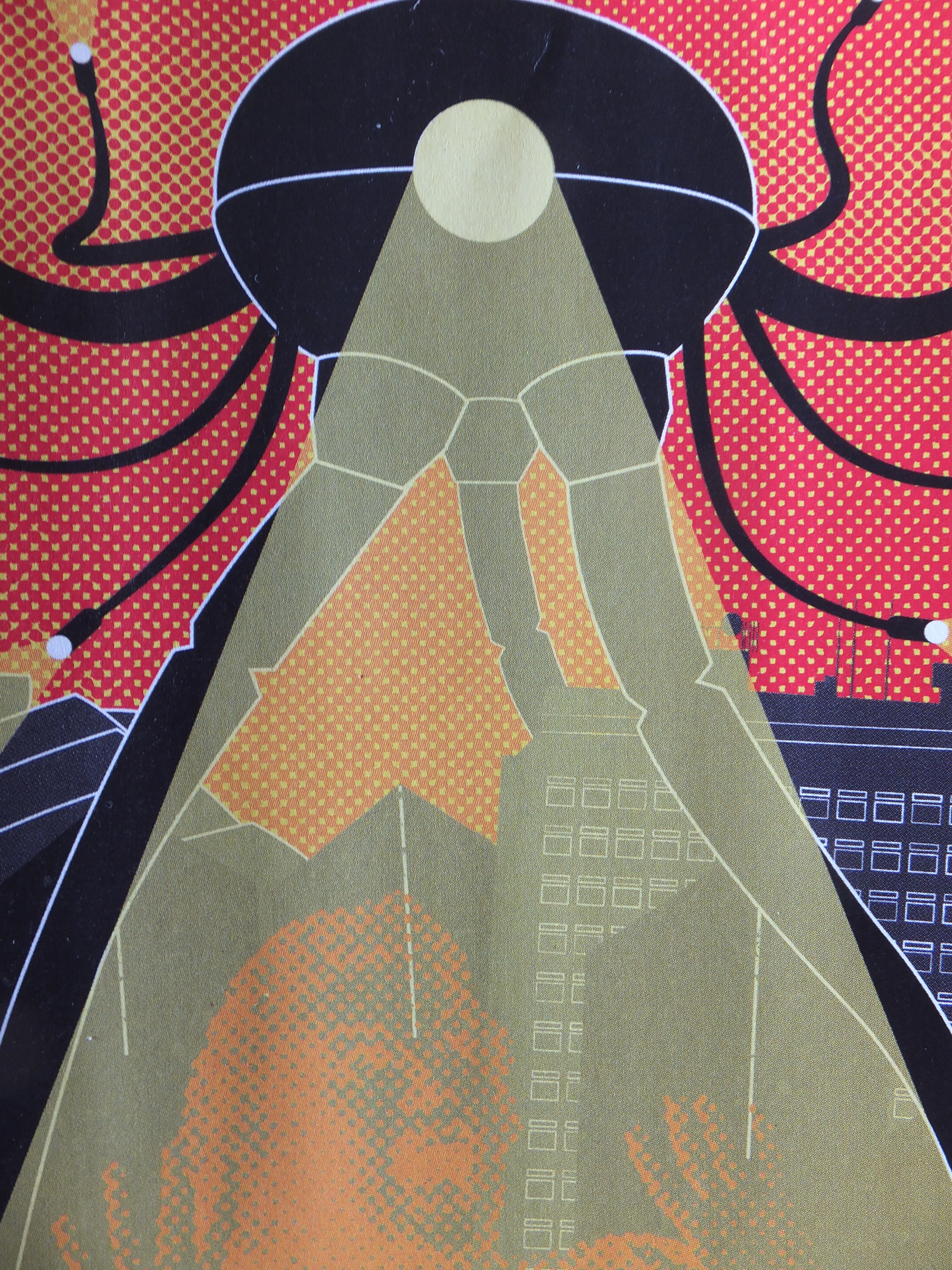
Neville Godwin’s Winning Artwork

This year celebrates 150 years since the birth of Wells. He made Woking famous or infamous with his great work War of the Worlds, siting the landing of the Martians on nearby Horsell Common.

The Borough Council and its partners have launched the “Wells in Woking” cultural event programme

One of the first such events is an art exhibition in the Lightbox Gallery inspired by War of the Worlds, which runs now until May 1st. I went today, and there are some extremely imaginative entries by well-known local artists. The winning artwork I publish with this article. If you are local, this exhibition is worth seeing

He came to Woking in 1895, after the end of his first marriage, with student Amy Catherine Robbins, otherwise known as ‘Jane’. They married in the October of that year and lived happily at 141 Maybury Road, although the house was called Lynton at the time.

Wells lived in Woking for less than 18 months and yet it was his most productive time as an author. He worked at a prodigious rate to establish himself as a writer, which he did, as by the time he left, he was in his own words “fairly launched at last”

He wrote the Time Machine fairly soon after his arrival, his first science fiction work. He planned and wrote War of the Worlds, and sited the action in and around Woking, a most unlikely place for an extra-terrestrial invasion.

He followed up with the Invisible Man, completed the Island of Dr.Moreau, wrote and published both The Wonderful Visit and a pioneering cycling novel called The Wheels of Chance. He began writing When the Sleeper Wakes, another science fiction story, and started on Love and Lewisham. He worked in his own words at “a ghastly pace” in order to make his fortune

Reportedly, his literary earnings in 1896 were £1056, or £118,000 in today’s money

Later that summer, the couple moved to Worcester Park, and the story leaves Woking. He went on to international acclaim, meeting statesmen like both Presidents Roosevelt, Lenin and Stalin.

Later, there are talks at the Lightbox and two guided walks by historian Iain Wakeford, culminating in an International Conference in July at the H.G.Wells Conference and Events Centre in Woking