Turner in Surrey Part 2

Thameside Ferry Crossing

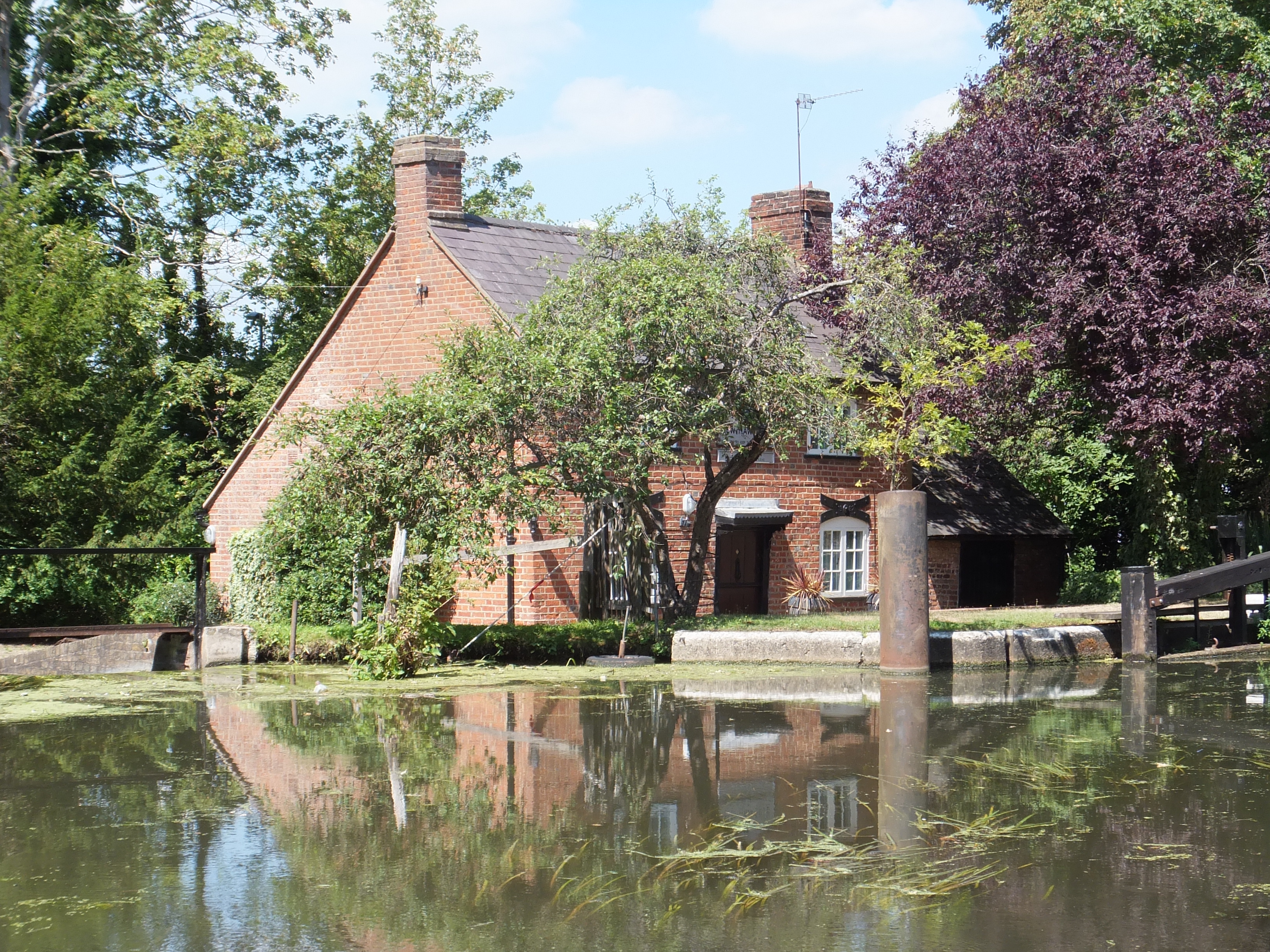
This is a photograph I took myself trying to catch the little ferry crossing from Twickenham over to Ham on the other side. I just missed the ferry but my reason for keeping this picture, is that this must be one of the nearest points on the river from Turner’s house in Twickenham. I dealt with his house a few blogs ago so I won’t repeat that. Turner loved boats, he loved fishing, he loved the river, and he loved picnics with his friends. Was this the sort of spot he came to? We don’t know for sure about him fishing here, but he would have known this location.

I took this picture from the riverside of the grounds of Orleans House Gallery, where we go from time to time. The gallery is what remains of the original Palladian mansion built in the c18. Louis Philippe duc d’Orleans lived here in exile from 1813-1819. Turner met him and they became lifetime friends. Later in 1830 he became king of France, until he was toppled by another revolution, and went into exile in England once more. He died at Claremont in 1850. Turner went to see him in France near the end of his own life in 1845, one of his last visits to Europe, and they talked into the night about ‘Dear Old Twick’

In the background on the hill is the Star and Garter, what used to be a retirement home for disabled service men, and more recently converted into apartments. Nonetheless a powerful landmark, and showing us where Richmond Hill starts. Turner painted the view from there, and I would like to look at one particular painting dated 1819, painted in honour of the Prince Regents birthday
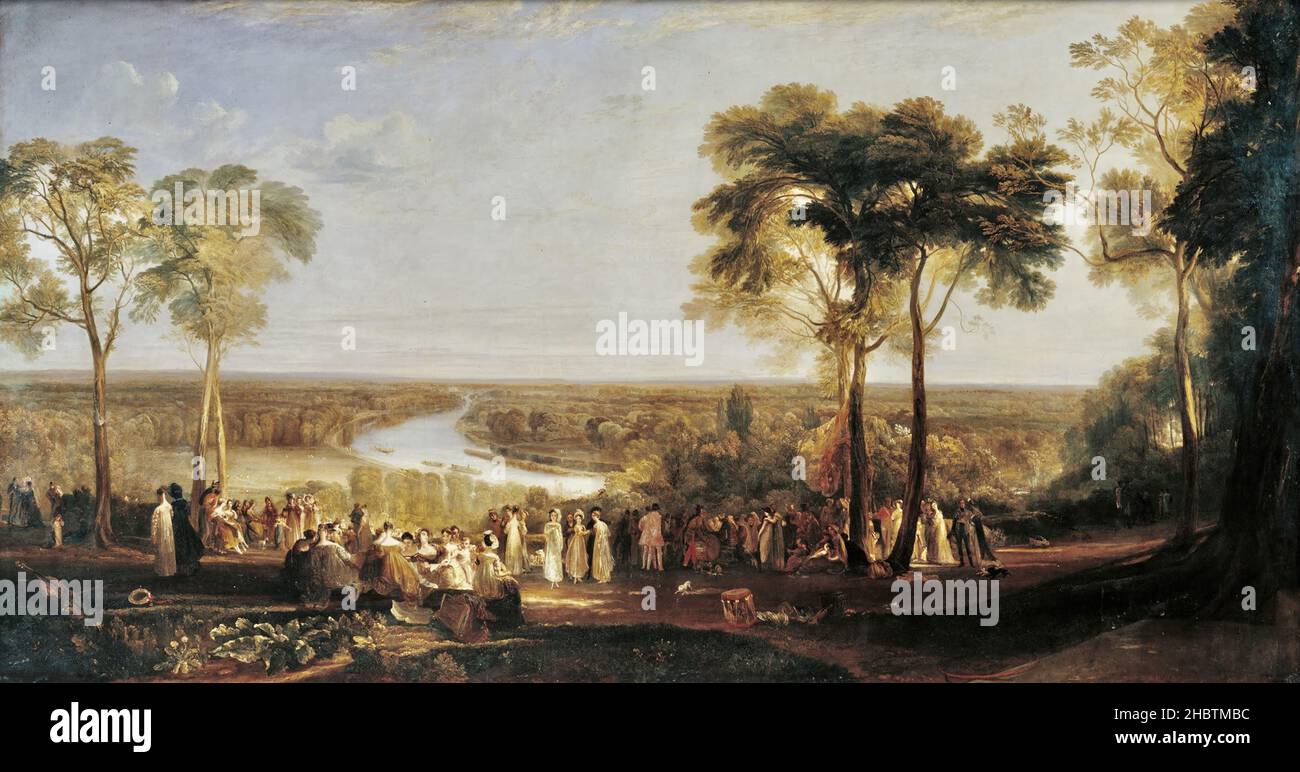
I think that this was an unashamed bid for royal patronage, which was unsuccessful as I believe but nevertheless an interesting painting, which of course looked down on an area which he grew to love. Actually as King George 1V he was able to bestow a seascape on Turner in 1823, but to return to Richmond Hill

I will, if I may quote from Anthony Bailey’s biography, which talks about this painting in some depth. Travel and the proprietorship of Sandycombe Lodge, his country house in Twickenham, had occupied much of his time. His painting output had dropped, and he had no new commissions, so he needed new patronage, or may have felt so. In 1819 he had exhibited this great canvas, kingsize, measuring about six feet by eleven. This was England: Richmond Hill on the Prince Regent’s Birthday. It showed the winding Thames at Twickenham, and Sandycombe hidden in the trees, and on the further bank a game of cricket going on whilst in the foreground a group of partying people which could have been borrowed en masse from Watteau

There were mixed views. Some thought the painting to be unEnglish despite its title. There is a quotation from Bell’s Weekly Messenger (16 May 1819) where the writer admired the painting but qualified his praise.’ The distance, the foreground,the trees,and the figures are all Italian. On Richmond Hill, and on such a day, John Bull with his dame, with the rustic lads and lasses of the village, sporting under the sturdy oak, would have been more characteristic of England’ But this was to request a different nostalgia. Turner had not yet been to Italy and was perhaps looking forward to that country to paint

That is probably enough for writer and reader for now. I am getting some material together for his excursions down the River Wey taking him deeper into Surrey, so we can look at that another time
Turner in Surrey

In a weak moment, I have allowed myself to be talked into researching the work that JMW Turner carried out in Surrey, and writing a talk on my findings, which I will then have to deliver to my history group at a given date in November. this sounds a long way off. I know from experience that it is not, so i have already started gathering stuff from books and internet. A visit to tate Britain when the weather improves will be necessary but enjoyable. The bulk of his bequest to the nation is there so must be something of use. Also Petworth House where he was a frequent house guest of Lord Egremont. Petworth is not in Surrey as we know but is close enough. What I am realising from the start, is that there is precious little written about Turner’s expeditions into Surrey. he did a number of paintings on these trips but none of them became his best known works and so consequently little written about them. perhaps my view will change as I get further into my searches

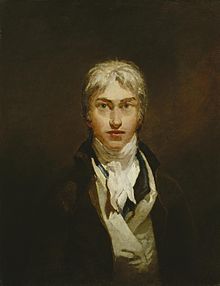
To start with a little background, the painting above is his self portrait. The only one he ever did in his lifetime. He was a private person as we know, and gave little of himself away. His birth date is given as 23rd April 1775, but this is disputed, as Turner would give different dates to different people. he had this aversion to people knowing his personal details. He lived with his parents, which was far from being satisfactory, as his mother had a violent temper, and was later incarcerated in Bedlam Hospital. So he as at School in Brentford and later in Margate, and this is where his love of the river started. He loved boats and messing about in boats. They figure in some of his paintings, and they are a frequent mode of travel on his painting expeditions. later he would row sometimes as far as Windsor on the Thames and down the Wey to Guildford, which we will look at later.

let’s start looking at some of his Surrey paintings and start in date order as far as we can

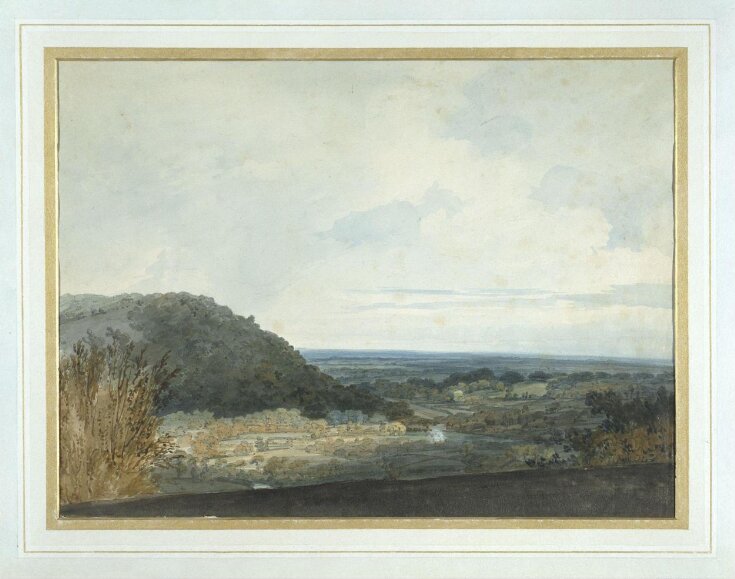
Possibly Box Hill Date….. previously attributed to Tom Girtin, and later to Turner. Girtin was contemporary to Turner, and they were in fact great friends. They would go on expeditions together, and on one of them painted the Savoy palace from a boat on the Thames. Girtin was an acclaimed painter, who sadly died at the age of 29. Turner held him in high esteem and his famous quote said ” if Tom had lived I would have starved”. Turner was definitely in the area that year, as the next painting of Leatherhead shows. This was his so called Student period.

At about the same time, we have this painting of Leatherhead

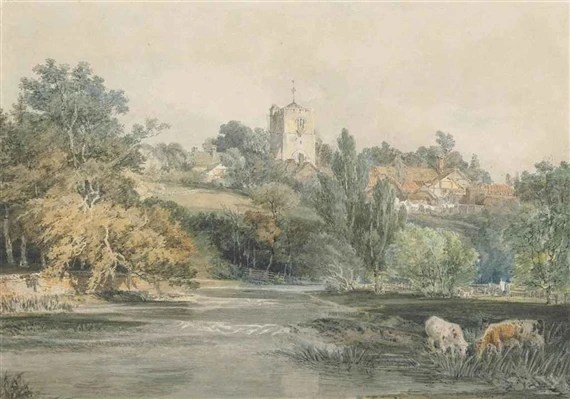
Leatherhead from the River Mole, with cattle in the foreground, dated 1796, and attributed to Turner. I find this an immature style compared to what we associate with Turner’s work, and it would be as this comes within his student period. Turner had been invited to Norbury Park, near Leatherhead, a place I associate with Fanny Burney who met her future husband there, Comte d’Arblay, an emigre from the French revolution. I wonder if they met Turner. Interesting to conjecture

I will publish so far and go on with this at a later date

House Portrait: the Preliminary Sketch

The Preliminary Sketch

I’ve just done this from the photograph. This is,of course, a commissioned work and I have to visit the site next week. Seasons have changed so may well look different, but this will do for now to work from. I will take some photographs of my own which I prefer, so that I can clear up some details which are ambiguous at the moment.

For now, there is little more that I can do before I see the actual building, and as I say, the colours have changed. The original photograph that I had was from the summer, and now everything is autumnal. As far as colour schemes are concerned, I prefer that. There should be some bare branches as well.

I just have to hope that the sun will be out, so that we get some lights and darks. For weeks now, the weather has been wet and the skies have been heavy. This is quite hopeless for painting, but as always we must work with what we have got.

Some news from the exhibition at the hospital. I have sold one painting entitled Canals of Venice, so not out for a duck, which is something

I shall be able to add more next week

Swan Family on the Basingstoke Canal

Something near home this time.

The Basingstoke Canal runs through our village, and originally ran as a branch from the Wey Navigation, and ended up in the town of Basingstoke in Hampshire. It was cut in the late c18 by navvies or navigators who dug canals by pick and shovel in those days.

The intention was to link London with Southampton by inland waterway, which would prove a vital link in war time. The advent of the railway stopped the canal in its tracks, and it lapsed into disuse

Rescued by enthusiasts comparatively recently, the canal is in use by leisure craft, not going as far as Basingstoke due to a tunnel cave-in the 1930s but nevertheless, still offering a valuable resource to the area.

Needless to say, the canal offers a haven for wildlife. Generally we have a family of swans near the village most years, and I have painted them in the past. The photograph above is one of many that I have taken, and I am going to work with that.

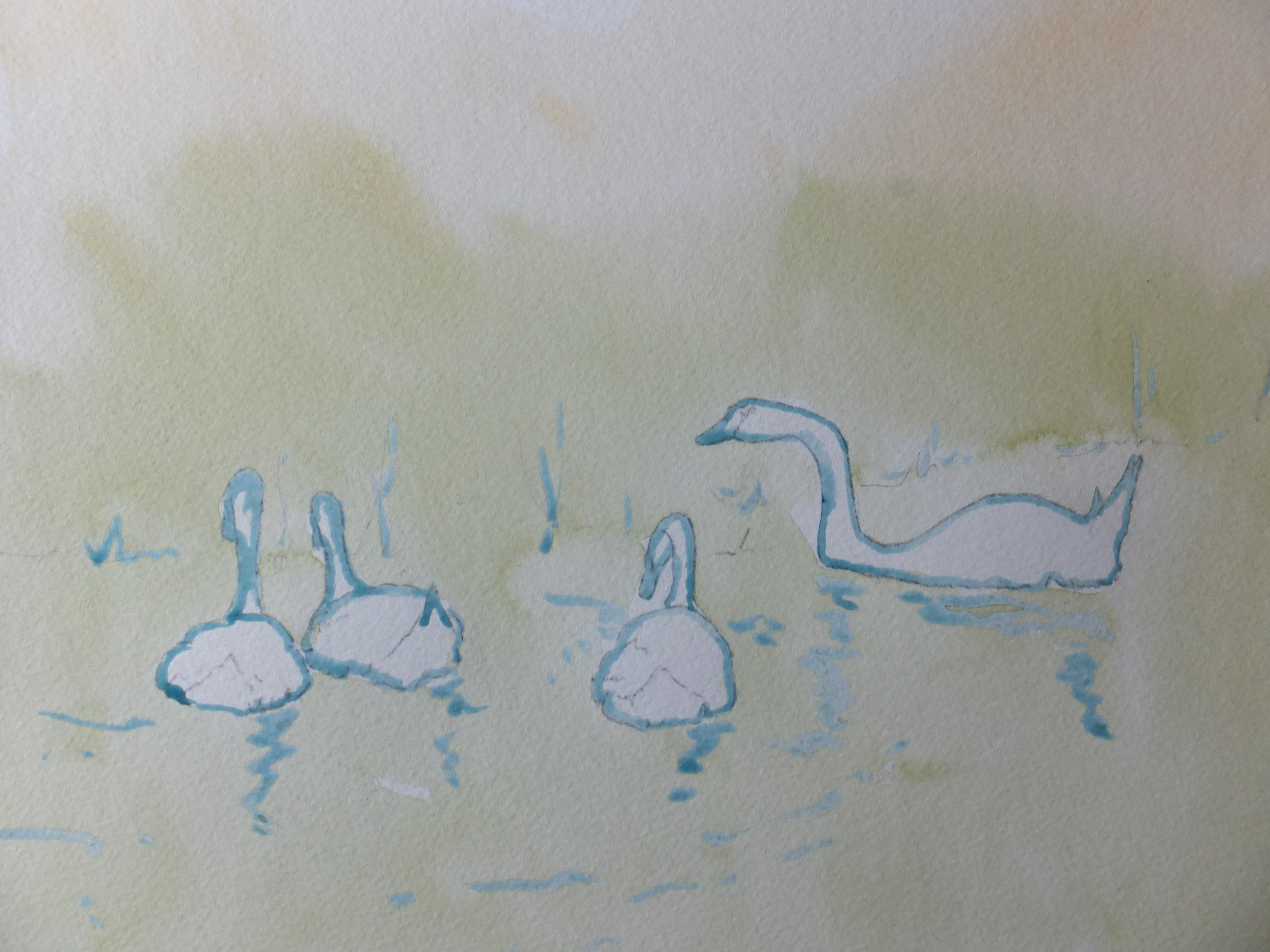
The swans are feeding off the reeds in the bank. Reeds are more tricky to paint in watercolour than swans in my opinion. So many shades of green. So I am going to try something different for me and use masking fluid almost like paint. This came to me from the last exercise with the glass jars. This is as far as I have got

Not too easy to see what I ‘ve done I know but basically I have done a pencil sketch of the swans, and then masked them off with the Frisk liquid which is blue and easier to see than the natural. I have also done a few strokes for grasses and highlights in the water. When that was bone dry, I put a very wet solution of green into raw sienna around the birds

The green went bone dry overnight and today, still painting with masking liquid, I have brushed in many more reeds and grasses. Hopefully after I have put darker green over the top of these, and that dries, then removing the mask will reveal light green reeds against the dark or so I hope. All this because you can’t go from dark to light with watercolour. I may still have to do a rescue job with body paint but I hope not

That is the theory. I hope it works. You shouldn’t really leave masking fluid on for too long for fear of tearing the paper when you remove, so this is risky but different.

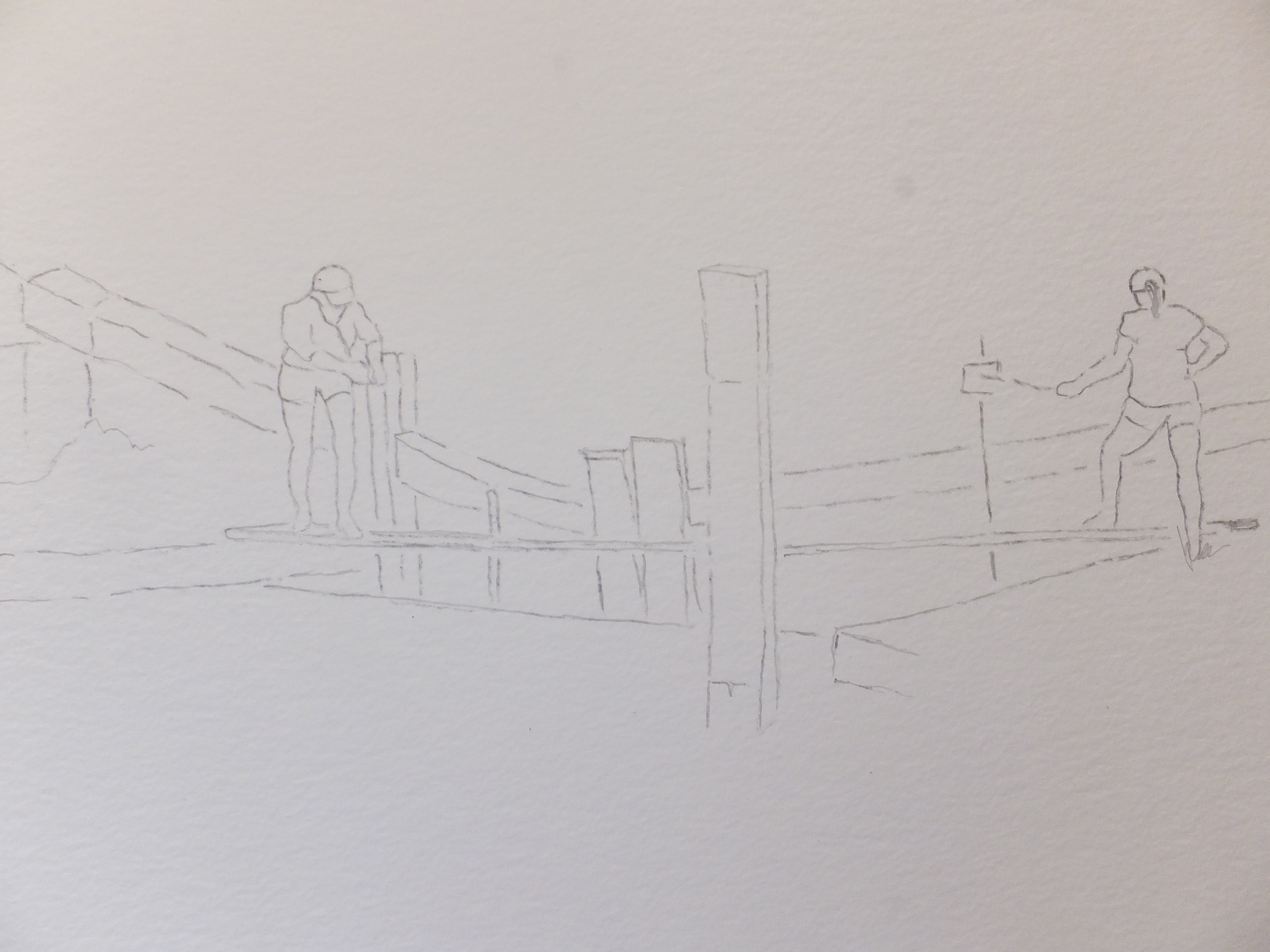
New Haw Lock the drawing ready for painting

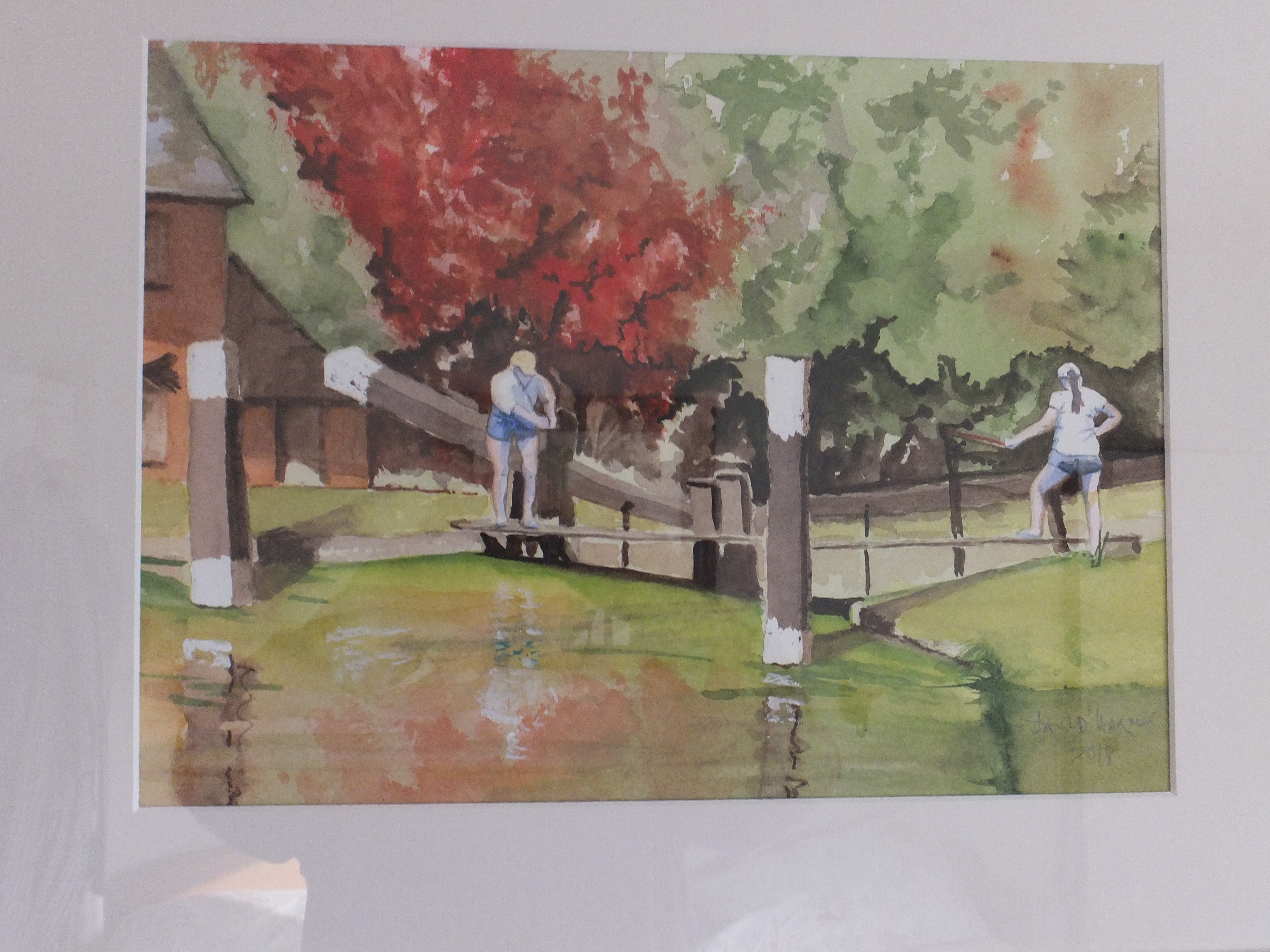
Girls on New Haw Lock 2Girls on New Haw Lock

Since the last post on the subject of New Haw Lock, I started to come off the idea of just painting the lock keeper’s cottage with the lock gates. It was a little bit cliche d. very attractive and very popular but I decided to put my sketch aside, and ran through the photographs that I had taken during the course of the morning

There were many of them on the camera and also on the phone camera which was quicker to use if anything interesting came up

These two girls came up as possibles. They had jumped off their boat whilst boyfriends did the steering, and each manned the winding mechanism of a lock gate, really putting their backs into the work. I picked the best action shots that I could find, and compiled them into a drawing

DSCF4311

I am sorry that the drawing is faint and I hope you can make out the figures. I drew them freehand from the screen onto tracing paper, and then moved them around the paper until they looked right, I hope.

What I like about them is that their tops are bright white which will stand out against the deep shadows behind them. It was a very hot day, one of the last of our heatwave, and they are wearing baseball caps with big peaks, which we nearly all wear nowadays as they are so effective against bright sun. So no faces to draw which is for me a great bonus.

This may prove to be a bad decision. I have actually started the painting and I will not publish an interim as it is such a mess but will post the finished item, no matter how it turns out

If anyone missed my previous post, this came from one of my very rare plein air painting days next to New Haw Lock on the Wey Navigation in Surrey. An ancient waterway from the c17, it connected Guildford and then Godalming commercially with the Thames right up to 1959. It still does but only for pleasure craft nowadays.

Plein Air Painting at New Haw Lock

DSCF4301

Something I rarely find time for is painting outdoors, but recently did, with our local art group at New Haw Lock, which is one of the many locks along the Wey Navigation in Surrey. The Navigation dates from the c17, and made the river Wey navigable by cutting canals across the meanders and shallows. Thus this mix of river and canal made the Wey navigable for barge traffic from Guildford to the Thames. Amazingly this traffic by horse drawn barge went on until 1959. By then the navigation had been cut through to Godalming in the south, and had been especially useful in carrying gunpowder from nearby Chilworth Mill through to the Thames and on into the Port of London

During the c18 the Wey Navigation linked with the River Arun, and on down to the south coast, but that leg was short lived and proved uneconomic to run. That section fell into disuse, although some sections have been revived by conservationists

In the picture, one of the many lock keeper’s cottages, very charming and very paintable still. New Haw is somewhat underrated and is easily missed when driving by.

We found shade to sit, as the day was hot and became hotter towards midday. The morning was enough for me, so for about 2-3 hours during which time, I worked out my composition, and just sketched putting in the shadows which of course changed quickly. Photography helps the sketch book and I recorded several stages. It is my intention to finish the painting in my “studio”, but for the moment need to finish my Alhambra painting

I shall look forward to painting the New Haw lock. This is a typical Surrey scene and a typical Surrey cottage. I will attach my drawing. I regretted afterwards only taking an A3 pad which didn’t give me enough space but at home i can use a half sheet which will enable me hopefully to include the lock in its entirety

DSCF4307

Now all I have to do is to decide whether or not to include the foreground tree which obscures much of the cottage but nevertheless provides some interesting lights and darks

Basingstoke Canal outside Bellinis Restaurant in St.Johns: the Finished Painting

Basingstoke Canal St.Johns Finished

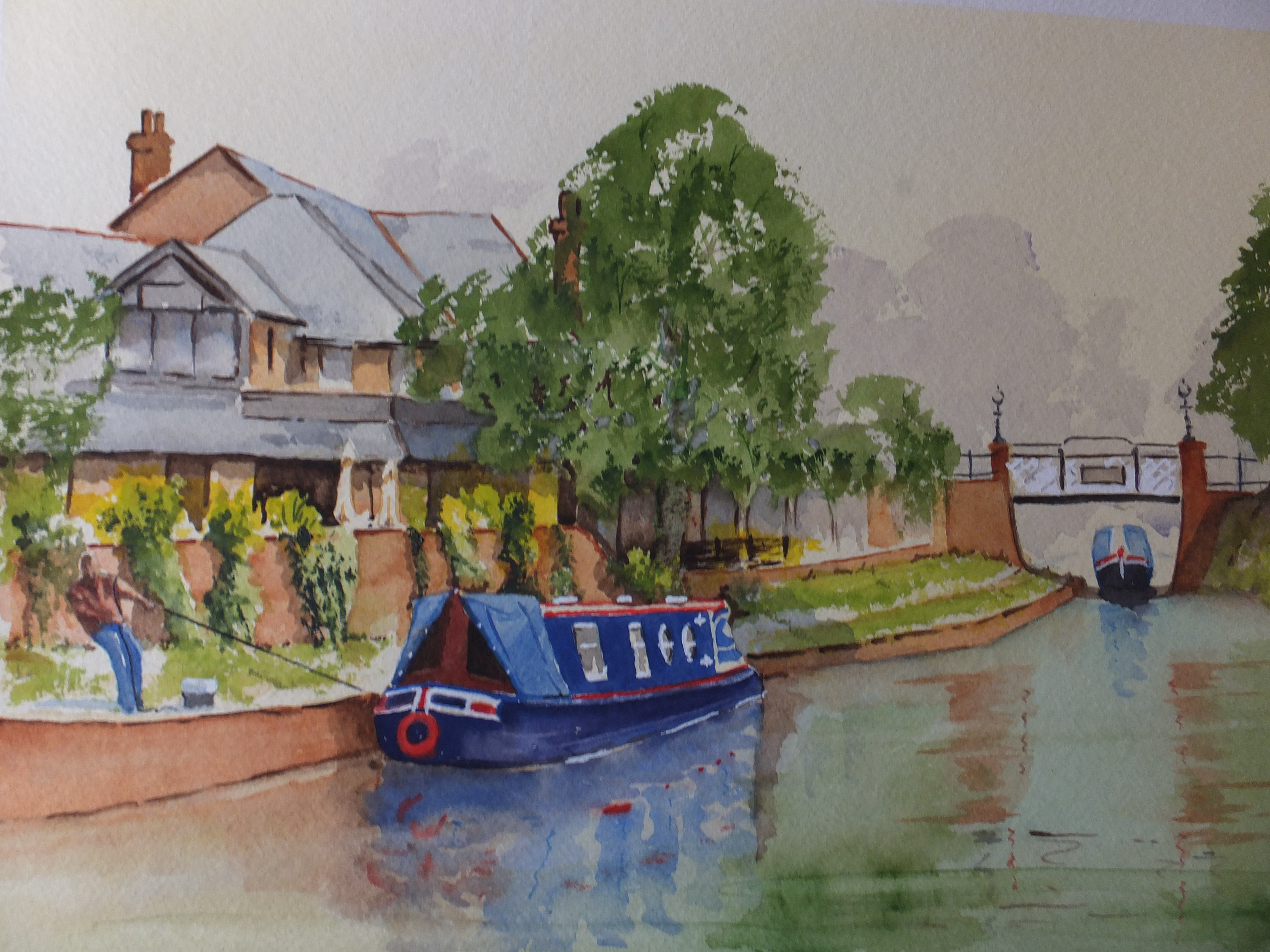
Well, the painting is finished, and it is what the photograph said it would be, a very traditional waterscape, with all the ingredients, water, barges, reflections and so on.

It is not exciting. I haven’t tried anything unusual or dramatic. Nevertheless it will make a useful addition to my February show, which is themed on waterways, and for which, I have little enough at the moment

I do wish that the sun had been shining into my lens when I took the picture, which would have given it an interesting contre jour look, with some dazzle coming off the water, but it could not be. I had to take what I was given. Not many barges use the Basingstoke Canal, and to see one tie up at St.Johns Village was a fairly rare event, and to see another in the distance coming through Kiln Bridge, rarer still. So I took the picture with the best light possible.

I have done contre jour along the canal in the past and the results are exciting even if the subject matter is simple. The other alternative is to go out early on a bright winter’s morning, when the shadows are long, which I might do on another occasion.

I have much to do before February, so I will move on. My son and daughter-in-law were in Amsterdam recently , and took some pictures along the canals on my behalf. Bikes, canals and tall buildings– all the ingredients which spell Amsterdam, so I think I can make a composition from these.

Quite an interesting one to tackle.

Basingstoke Canal: Watercolour Painting Part Finished Only

Basingstoke Canal Part Finished Only

I haven’t posted for a while, so perhaps now is a good time to publish what I’ve done so far.

I may have said last time that this painting is being based on a scene from my home village of St.Johns in Surrey. The Basingstoke Canal runs through the centre of the village, and in fact the village owes its existence to the canal, really. Cut in the late c18, the canal destined for Southampton, from London, only reached Basingstoke before the coming of the railway made it obsolete. A sort of shanty town grew up at first on the canal side, followed gradually by more prosperous houses as the village became commuter land. It is essentially a c19 working village, not pretty but charming nonetheless. The parish church of St.Johns built by the rector of Old Woking as a chapel of ease, to serve the people, gave the village its name

In the picture, the building in the background is Bellinis, our local Italian restaurant and one which attracts patrons from far afield. Lovely on a summer evening at one of the window tables looking out over the canal. In the painting, the barge is being tied up on the landing strip. The few barges that we get usually tie up here, possibly for coffee al fresco at Bellinis or perhaps access to the village shops.

So far, I haven’t done anything unusual. The palette I have kept simple, starting with my usual raw sienna and Naples yellow mix as a base. Some different greens for different plants. I favour a sap green and raw sienna mix for grass and trees rather than straight sap green. I have also used a yellow mix and also some terre vert for shadows. It was rather a dull day on that occasion, so little in the way of shadows which is a pity, in fact I have added more shadow than actually existed on the day. Warm shadows using Transparent Brown.

I have left the barge with its reflections to do, so something colourful amongst all that green and brown. That I think, will make an enormous difference. We shall see.

PS I had my first sale from my Artfinder site recently, which was the nice little painting of the Blue Mosque in Istanbul, so rather pleased about that. Will there be another, I ask myself? We live in hope, but quite a competitive site