
I come back to a subject I never tire of painting. The historic church in the parish of Pirbright in Surrey
Dedicated to St Michael and all Angels, the church has saxon foundations and was a site of worship before then. The current church building dates from the c18. The churchyard is notable for its wildlife and also contains the grave of Sir Henry Morton Stanley, the explorer, he who found Livingstone, and said the immortal words “Doctor Livingstone I presume”. He is also well known for the discovery of the sources of the Nile and the Congo rivers The headstone is a huge piece of granite with his African name, Bula Matari 1841-1904 The funeral service was in Westminster Abbey but the interment was here at Pirbright, near his country home at Furze Hill.
This is my photograph of Stanley’s grave with its monolithic headstone

I have painted this church on a couple of occasions over the years. One painting I did in the snow which was well received. I was especially thrilled at the end of last year, for that particular painting to be printed as a greeting card by the church and sent to everyone in the parish, setting out the times of services over the Christmas period. I will see if I still have an image

This was the painting done in the snow. I’m not sure that I don’t prefer it to the one that I have just done. Looser somehow. Also there is something about snow with sunshine that softens the light beautifully. The trees on the left have been removed since I did this painting
Although I don’t actually live in Pirbright, I do get involved through the Pirbright Art Club which i have belonged to for many years. Pirbright like so many villages, has an annual fair and the art club would take a stall. The theme for some years was scarecrows, and ingenious examples were made, very often characters from literature. Do you remember the wedding of the Prince and Princess of Wales? After the service the Dean of Westminster cartwheeled down the centre aisle, presumably overjoyed. An amazing scarecrow was made and was on display in the church. I painted it. I’ll see if I can find it
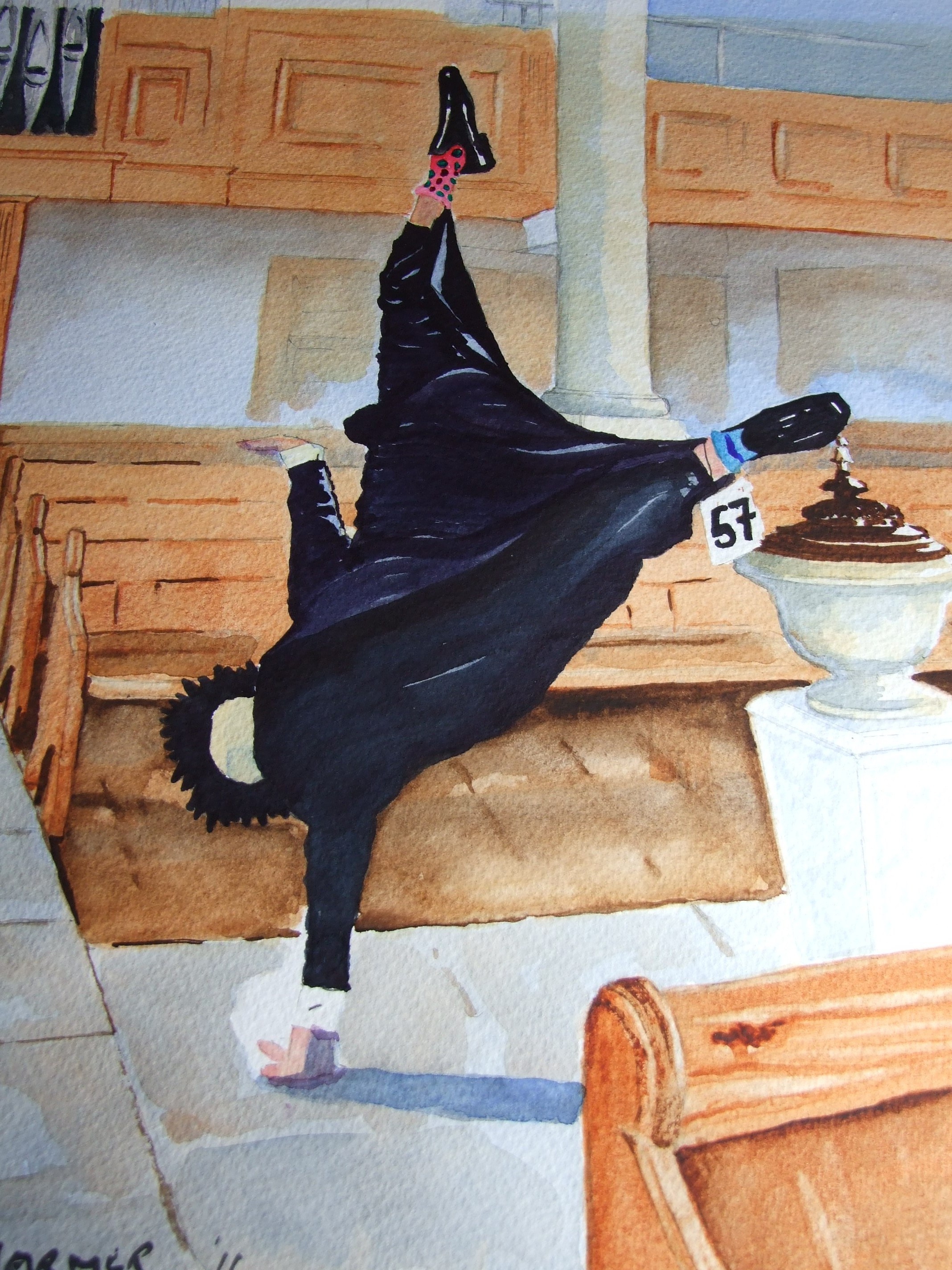
I was proud of this painting. I exhibited it locally expecting it to be snapped up. It wasn’t! In the end, I sold it online to a buyer in the north east of England. How strange was that. Afterwards the buyer wrote to me and told me he looks at it every morning and it cheers him up for the day, so it was worth doing just for that.

 offtoafineart