Turner in Surrey: the River Wey

Turner, Joseph Mallord William; Newark Abbey on the Wey; Tate; http://www.artuk.org/artworks/newark-abbey-on-the-wey-202538

Described as Newark Abbey which is in fact Newark Priory, and even Newark Priory Church. The priory was a huge complex, and the ruined church is all that is left after the Dissolution . It looks to me that Turner sketched this from the road. The view is much the same today. The land is privately owned so close inspection is not possible. Cows are in the field much the same as Turner’s sketch. Newark Abbey is near Ripley as a point of reference. This painting is in Tate Britain

After the dissolution it was said that the priory was bombarded by cannon from nearby Pyrford Hill. After that the site must have been robbed for stone, as the ruined church is all that remains, apart from the odd outcrop

Turner would row down the river. We know that he stayed at the White Lion in Guildford, and at another in inn in Walton-on-Thames. He also thought nothing of sleeping on his boat. He was also a prodigious walker, known to cover 25 miles in a day including making sketches on the way. Sometimes he would set out with company and leave them behind if they couldn’t keep up

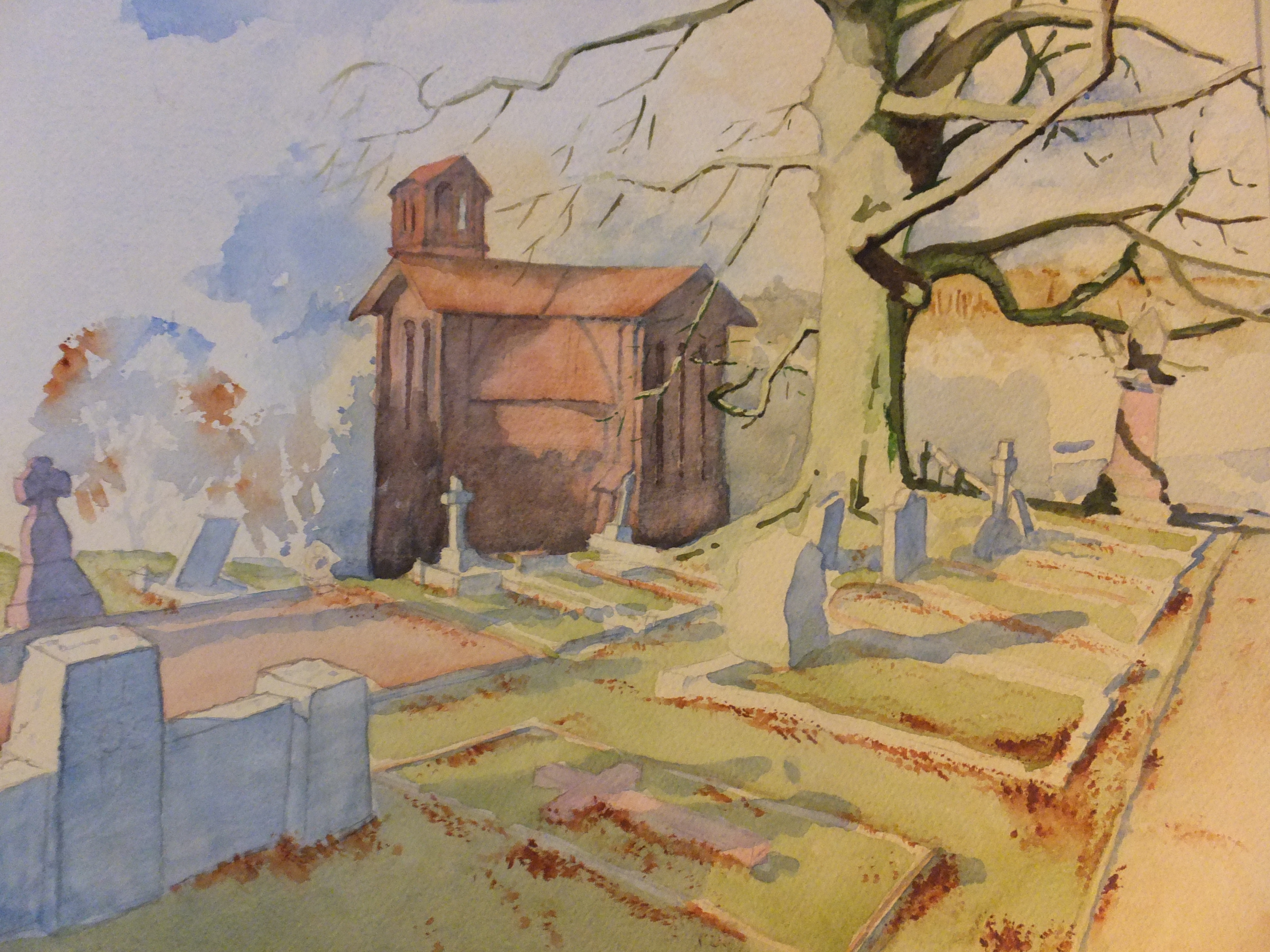
This is the entrance to Quarry Street in Guildford today. It is not by Turner! This is my painting made about twenty years ago. There is a link with Turner albeit a tenuous one. In order to take the reference photograph for this painting, I had to step back into the White Lion Walk in order to keep the bright sunshine out of my lens. The White Lion Walk is the shopping arcade which now stands on the site of the old White Lion Hotel. Let’s look at the next picture.

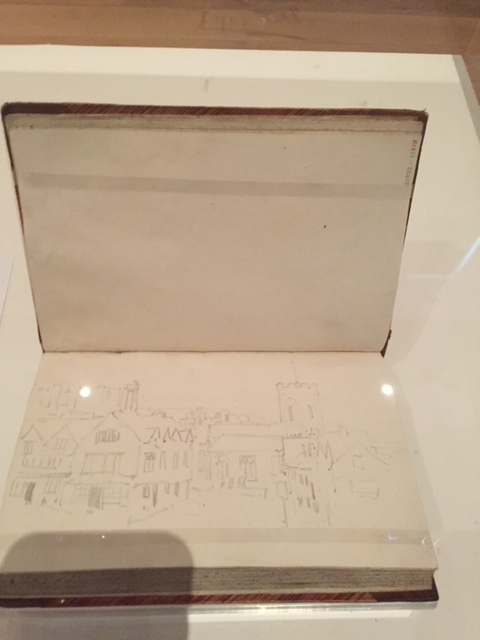
This is by Turner! It is one of his sketch books and shows the same view which I made years later, which still amuses me. I am sorry the image is so pale, but he worked in pencil. You can see the building on the left is much the same and the ancient church of St Mary stands in the background exactly as it does today On the right hand side is an inn much as today. Turner sketched this whilst staying at the White Lion in Guildford. Was he in the lounge relaxing or in his room. We know he didn’t like an audience so maybe the latter

We’ll leave it there for now and continue Turner’s drift down the Wey at some later date

Medieval Undercroft in Guildford High Street

DSCF3070

Not so much art this time, but architecture. I do say in my profile too, that I am a history freak.

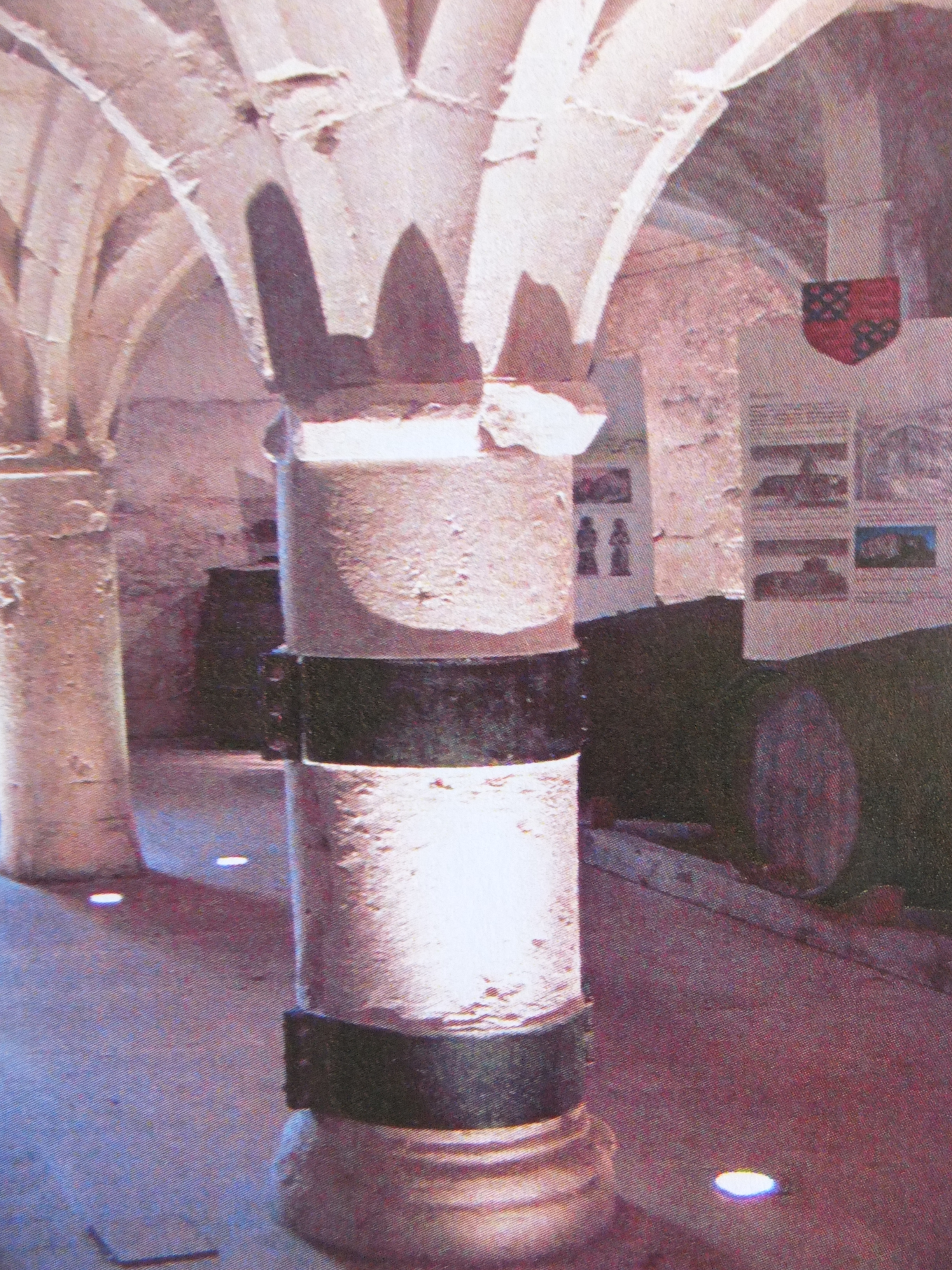
Together with other volunteers, my wife and I take turns to open this gem to the public on certain hours throughout the season. It is one of those local treasures that even local people are largely unaware of. I use the words gem and treasures without wishing to sound melodramatic as English Heritage tell us that this undercroft is one of the best preserved in the country

It is in fact a c13 shop, probably selling wine. That is an assumption but a safe one. We have records of wine merchants in the High Street during the c13 but we cannot make a direct link to this building . But that is what informed opinion believes.

The wine would have come from Gascony in SW France, which was English then, hence the trade connection. Wine would have come through Southampton and then by bullock cart overland to towns like Guildford

Guildford was wealthy in the c13. Wealth was derived from the wool trade and especially the trade in woollen cloth, the Guildford Blue for which the town was well known. The population of Guildford was probably less than 1000 in those days, and most would have been employed either directly or indirectly from the wool trade. Guildford controlled every aspect of manufacture. Sheep were raised on the Downs by the monks at Waverley. Weaving, fulling, dyeing, spinning, carding all were done locally

The processes are remembered in local place names. Racks Close was where the cloth was hung out to dry on “tenterhooks” after dyeing. Unscrupulous traders would stretch the damp cloth and make another metre or two. There are records in the Guildhall of such merchants being brought to book and fined. Finally a lead seal of approval was to be affixed to every roll of cloth that left the town to ensure that standards had been met.

Most went to export, especially to Antwerp which was the staple market, and from there across the then world, Europe and the Near East. The word staple is interesting. From the French word “etaple” meaning “main”. The main market or one of them. That is clear. So that buyers could see what they were buying, a small sample of wool was fixed to the label with a metal pin. The metal pin came to be known as a staple.

To come back to the undercroft, the reason that we are so proud of ours is that it was never restored in any way. What we look at is pure c13. The building is of chalk blocks or clunch which is the hard chalk dug deep from the earth. Guildford is on chalk. It was the only building material at the time. The stones are cut with a precision only possible from a master mason. Expensive to employ so the owner was indubitably a wealthy man. Another pointer to the merchant being a dealer in expensive goods.

To this day the c13 vaults take the weight of buildings above

On Saturday from 12 until 2 we had nearly 40 visitors, mostly shoppers who were passing and had never seen us before. Always their jaw drops as they come in, and they are fascinated with the story. Considering we were competing with the tennis, we didn’t think that was bad