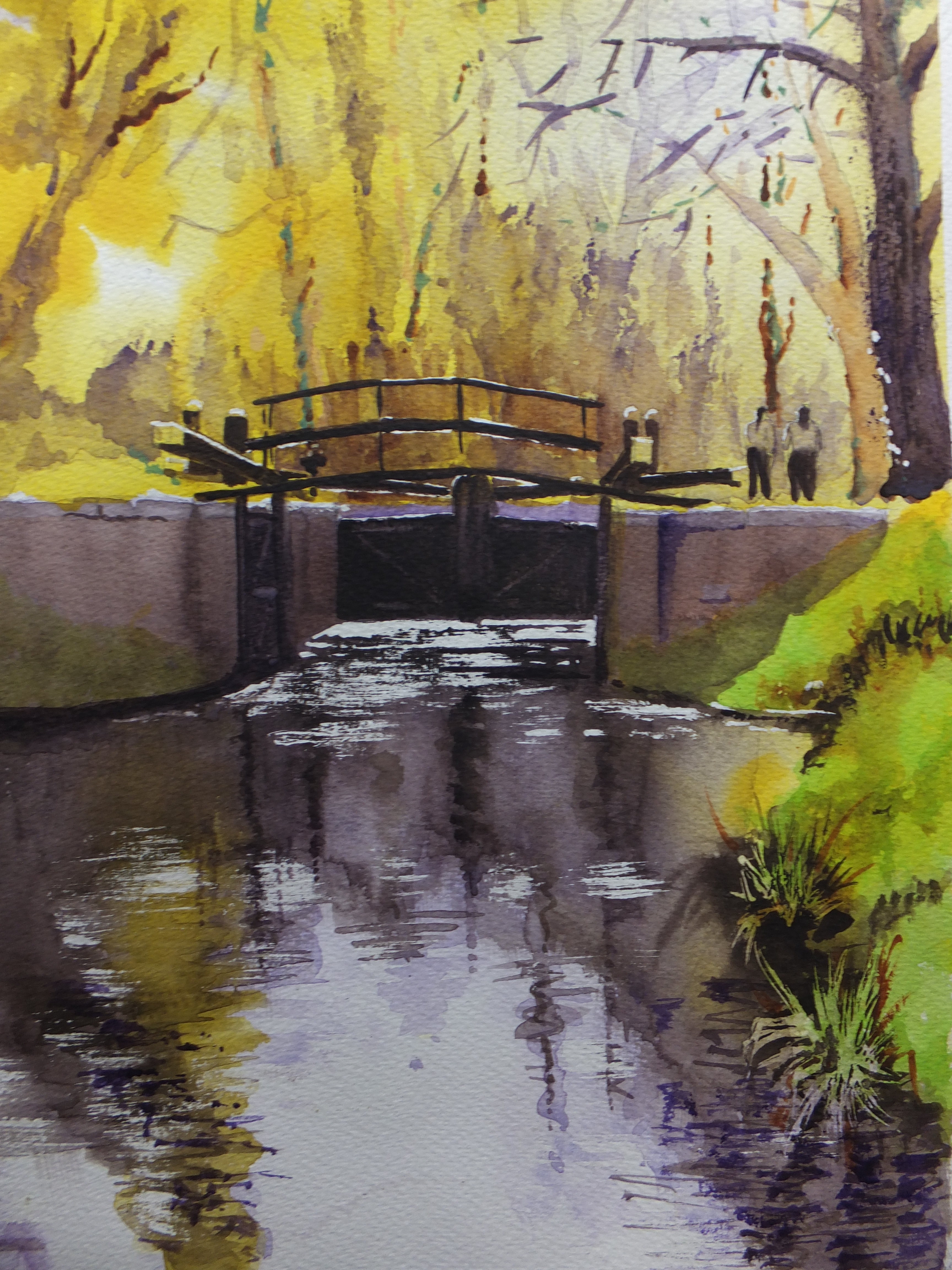
Copenhagen Canal and other paintings

Back in the summer, we toured the Baltic. At one time we did eight shore excursions in eight days. Even by cruise ship, we found this tiring because of our age, especially my wife who has walking difficulties, so we might not attempt this sort of holiday again. Copenhagen was just one of the stops we made in Denmark

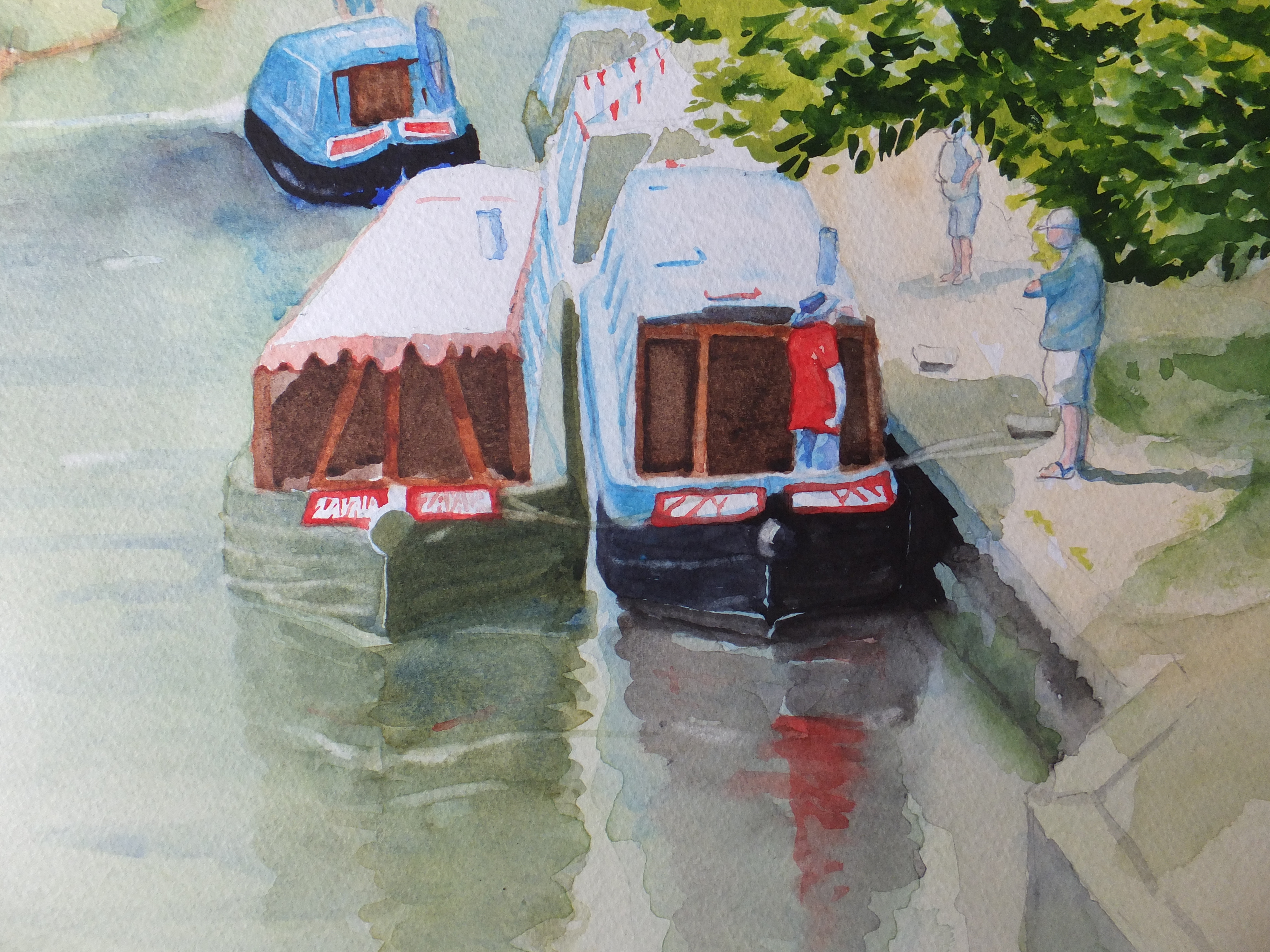
Touring the canal system was fun. i like painting boats and this was just one scene that I snapped for reference. Quite a lot of light and dark in this shot. The sun was very bright especially on the buildings in the background. Deep shadows were cast by the trees, which accentuated the boats. The figures on the canal side were reduced to silhouettes. It took me several glazes to get the water to be an acceptable colour, whilst at the same time still looking transparent. This was more of an exercise about light against dark, than anything else

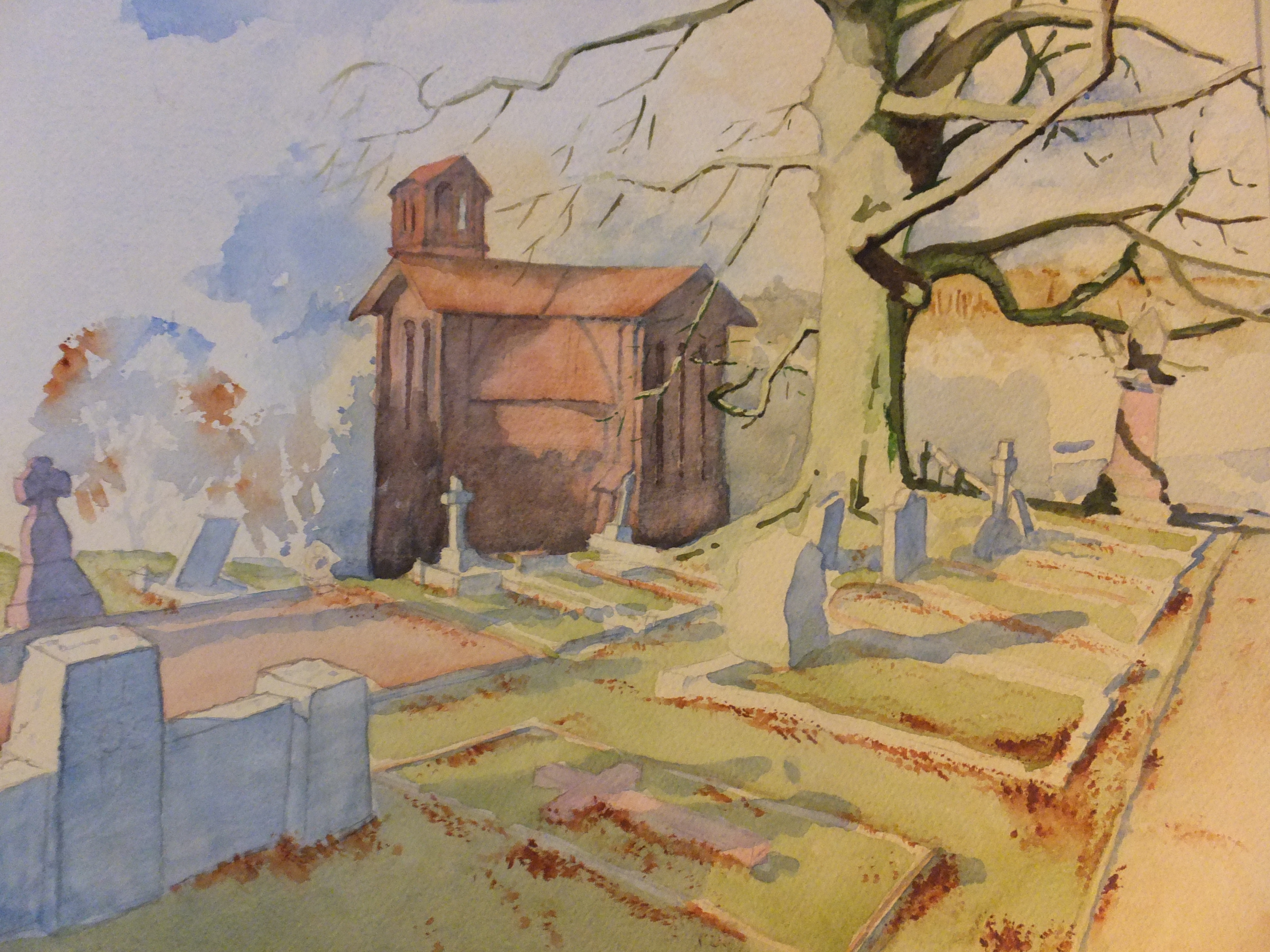
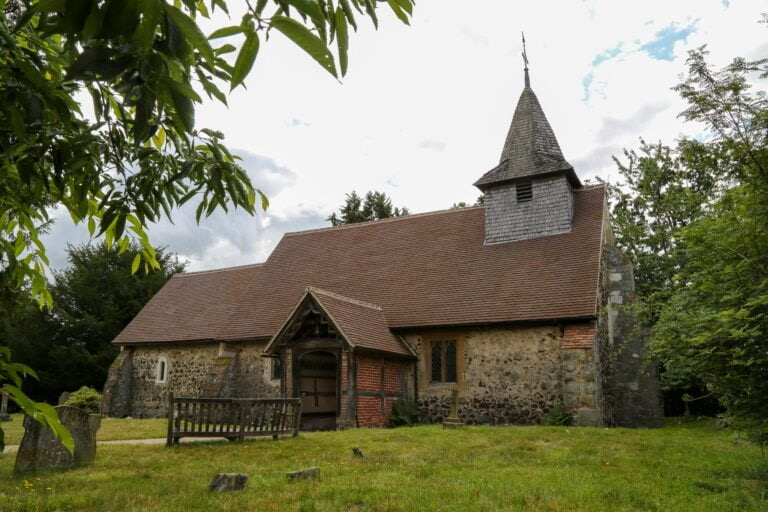
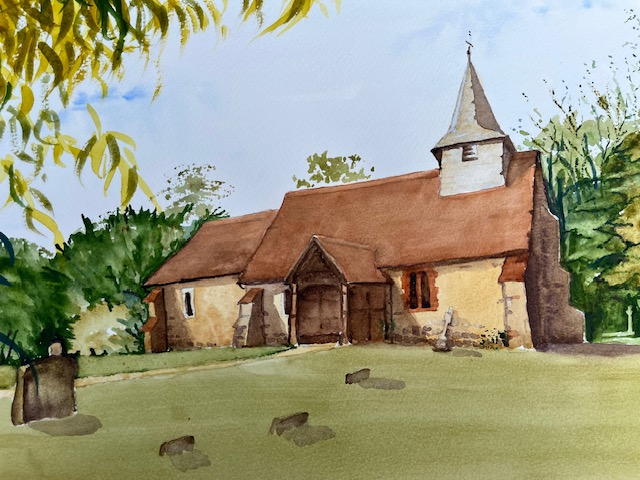
I have been commissioned to paint this church, the village church of Pyrford in Surrey. Ancient yet still in use as a parish church, it is set in a tranquil spot, and is quite charming. The lady who commissioned it no longer lives in the area. Her parents are buried here, so a meaningful place. I always feel very priviliged being asked to paint places that are so important in people’s lives. I am working on it at the moment and will post the result

This is how the painting turned out. I have put sunshine into the painting as the photograph was taken on a very dull day, so the colours are brighter. The lady who commissioned this painting was very pleased, which is always a relief

I have another commission now, quite different to the last, This one is a wedding venue, which I get asked to do from time to time. This one involves marqees and the newly wed couple strolling in the grounds around a lake, so quite a lot of different things to worry about, Still it’s good to have these commissions coming through as sales from my gallery are poor at the moment. Times are hard everywhere still and doubtless will be for some time

Painting of Pirbright Church

I come back to a subject I never tire of painting. The historic church in the parish of Pirbright in Surrey

Dedicated to St Michael and all Angels, the church has saxon foundations and was a site of worship before then. The current church building dates from the c18. The churchyard is notable for its wildlife and also contains the grave of Sir Henry Morton Stanley, the explorer, he who found Livingstone, and said the immortal words “Doctor Livingstone I presume”. He is also well known for the discovery of the sources of the Nile and the Congo rivers The headstone is a huge piece of granite with his African name, Bula Matari 1841-1904 The funeral service was in Westminster Abbey but the interment was here at Pirbright, near his country home at Furze Hill.

This is my photograph of Stanley’s grave with its monolithic headstone

I have painted this church on a couple of occasions over the years. One painting I did in the snow which was well received. I was especially thrilled at the end of last year, for that particular painting to be printed as a greeting card by the church and sent to everyone in the parish, setting out the times of services over the Christmas period. I will see if I still have an image

This was the painting done in the snow. I’m not sure that I don’t prefer it to the one that I have just done. Looser somehow. Also there is something about snow with sunshine that softens the light beautifully. The trees on the left have been removed since I did this painting

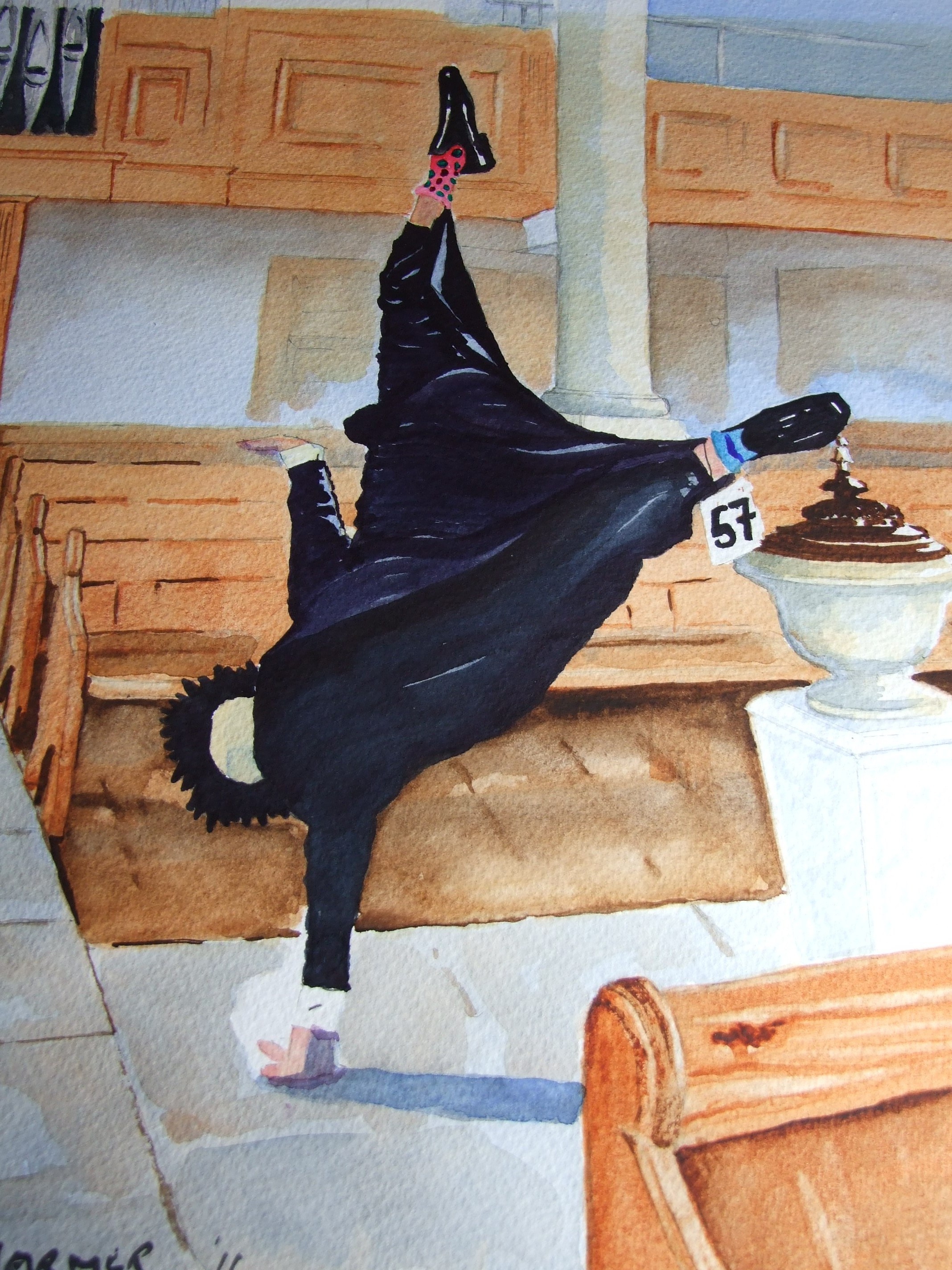
Although I don’t actually live in Pirbright, I do get involved through the Pirbright Art Club which i have belonged to for many years. Pirbright like so many villages, has an annual fair and the art club would take a stall. The theme for some years was scarecrows, and ingenious examples were made, very often characters from literature. Do you remember the wedding of the Prince and Princess of Wales? After the service the Dean of Westminster cartwheeled down the centre aisle, presumably overjoyed. An amazing scarecrow was made and was on display in the church. I painted it. I’ll see if I can find it

I was proud of this painting. I exhibited it locally expecting it to be snapped up. It wasn’t! In the end, I sold it online to a buyer in the north east of England. How strange was that. Afterwards the buyer wrote to me and told me he looks at it every morning and it cheers him up for the day, so it was worth doing just for that.

Turner in Surrey: the River Wey

Turner, Joseph Mallord William; Newark Abbey on the Wey; Tate; http://www.artuk.org/artworks/newark-abbey-on-the-wey-202538

Described as Newark Abbey which is in fact Newark Priory, and even Newark Priory Church. The priory was a huge complex, and the ruined church is all that is left after the Dissolution . It looks to me that Turner sketched this from the road. The view is much the same today. The land is privately owned so close inspection is not possible. Cows are in the field much the same as Turner’s sketch. Newark Abbey is near Ripley as a point of reference. This painting is in Tate Britain

After the dissolution it was said that the priory was bombarded by cannon from nearby Pyrford Hill. After that the site must have been robbed for stone, as the ruined church is all that remains, apart from the odd outcrop

Turner would row down the river. We know that he stayed at the White Lion in Guildford, and at another in inn in Walton-on-Thames. He also thought nothing of sleeping on his boat. He was also a prodigious walker, known to cover 25 miles in a day including making sketches on the way. Sometimes he would set out with company and leave them behind if they couldn’t keep up

This is the entrance to Quarry Street in Guildford today. It is not by Turner! This is my painting made about twenty years ago. There is a link with Turner albeit a tenuous one. In order to take the reference photograph for this painting, I had to step back into the White Lion Walk in order to keep the bright sunshine out of my lens. The White Lion Walk is the shopping arcade which now stands on the site of the old White Lion Hotel. Let’s look at the next picture.

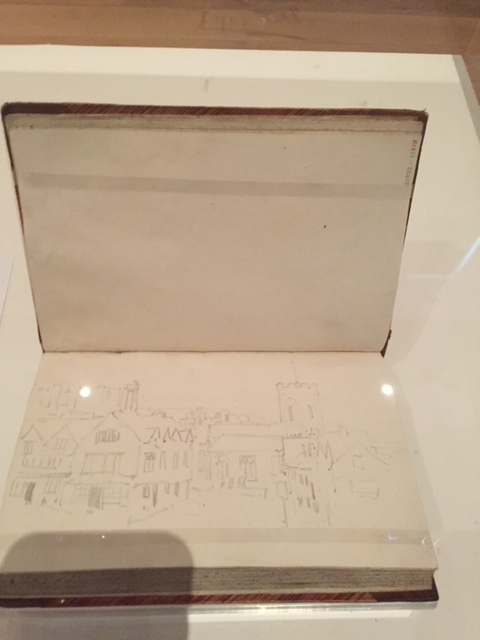
This is by Turner! It is one of his sketch books and shows the same view which I made years later, which still amuses me. I am sorry the image is so pale, but he worked in pencil. You can see the building on the left is much the same and the ancient church of St Mary stands in the background exactly as it does today On the right hand side is an inn much as today. Turner sketched this whilst staying at the White Lion in Guildford. Was he in the lounge relaxing or in his room. We know he didn’t like an audience so maybe the latter

We’ll leave it there for now and continue Turner’s drift down the Wey at some later date

Turner in Surrey

In a weak moment, I have allowed myself to be talked into researching the work that JMW Turner carried out in Surrey, and writing a talk on my findings, which I will then have to deliver to my history group at a given date in November. this sounds a long way off. I know from experience that it is not, so i have already started gathering stuff from books and internet. A visit to tate Britain when the weather improves will be necessary but enjoyable. The bulk of his bequest to the nation is there so must be something of use. Also Petworth House where he was a frequent house guest of Lord Egremont. Petworth is not in Surrey as we know but is close enough. What I am realising from the start, is that there is precious little written about Turner’s expeditions into Surrey. he did a number of paintings on these trips but none of them became his best known works and so consequently little written about them. perhaps my view will change as I get further into my searches

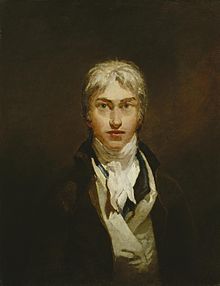
To start with a little background, the painting above is his self portrait. The only one he ever did in his lifetime. He was a private person as we know, and gave little of himself away. His birth date is given as 23rd April 1775, but this is disputed, as Turner would give different dates to different people. he had this aversion to people knowing his personal details. He lived with his parents, which was far from being satisfactory, as his mother had a violent temper, and was later incarcerated in Bedlam Hospital. So he as at School in Brentford and later in Margate, and this is where his love of the river started. He loved boats and messing about in boats. They figure in some of his paintings, and they are a frequent mode of travel on his painting expeditions. later he would row sometimes as far as Windsor on the Thames and down the Wey to Guildford, which we will look at later.

let’s start looking at some of his Surrey paintings and start in date order as far as we can

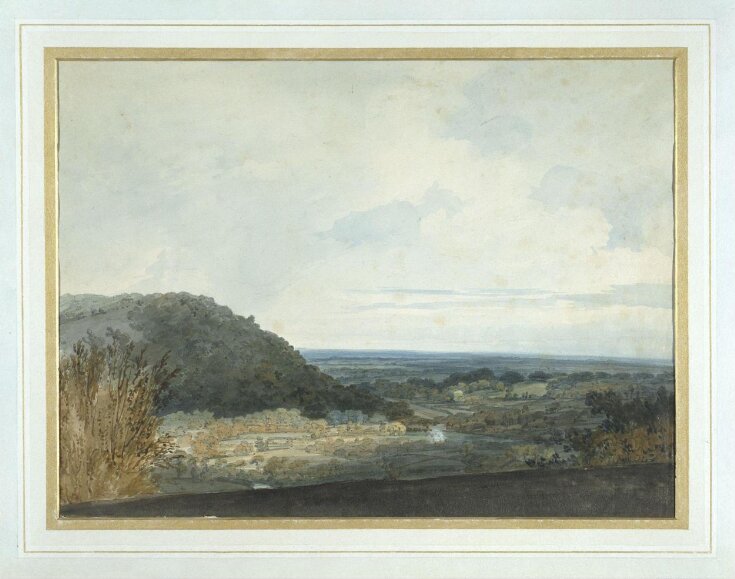
Possibly Box Hill Date….. previously attributed to Tom Girtin, and later to Turner. Girtin was contemporary to Turner, and they were in fact great friends. They would go on expeditions together, and on one of them painted the Savoy palace from a boat on the Thames. Girtin was an acclaimed painter, who sadly died at the age of 29. Turner held him in high esteem and his famous quote said ” if Tom had lived I would have starved”. Turner was definitely in the area that year, as the next painting of Leatherhead shows. This was his so called Student period.

At about the same time, we have this painting of Leatherhead

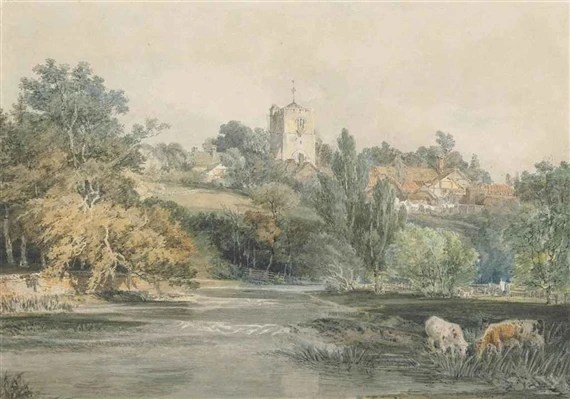
Leatherhead from the River Mole, with cattle in the foreground, dated 1796, and attributed to Turner. I find this an immature style compared to what we associate with Turner’s work, and it would be as this comes within his student period. Turner had been invited to Norbury Park, near Leatherhead, a place I associate with Fanny Burney who met her future husband there, Comte d’Arblay, an emigre from the French revolution. I wonder if they met Turner. Interesting to conjecture

I will publish so far and go on with this at a later date

Painting of my home village

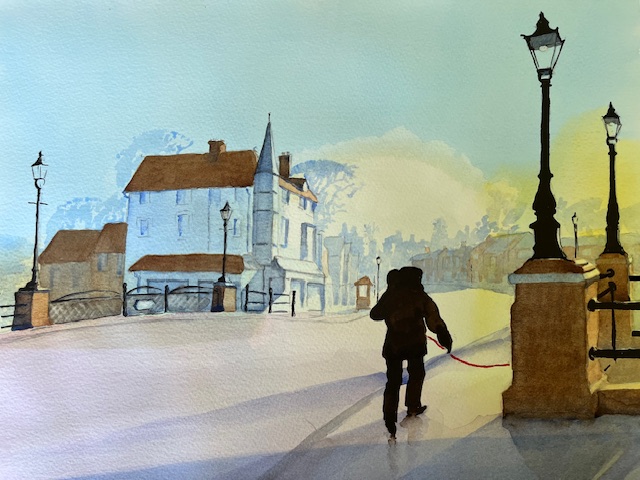
This is the centre of my local village, St John’s near Woking. The name St John’s was taken from the local church, built in the c19 by the then rector of Old Woking, as a chapel of ease for the village inhabitants. Quite a long walk to church otherwise in a century when no one had transport.

The village is mostly Victorian, and although surrounded by suburbia, does still retain its village atmosphere and integrity. Life started here in the late c18 when the canal was cut through open heathland. In the distance in my picture, the road makes a hump, as it crosses the canal. This is Kiln Bridge, where as the name suggests bricks were made from local clay, and these were used in the building of the canal. The canal was intended to link London with Southampton, but only reached Basingstoke before the railways were built and superseded canals. This was still a time when war with France was a possibility, and inland links with major south coast ports were desirable.

Today the Basingstoke Canal is maintained by Surrey and Hampshire County Councils. There is some leisure boating but not much. Wild life proliferates and the towpath is used for cycling and walking.

This is the very first time that I have painted my own village. I don’t know why. I put this painting on a local website and had more than 240 hits. All complimentary, I am pleased to say. No offers to buy though.

In the middle of the picture is our comparatively recent coffee shop, which has become the hub of village activity. Walkers and shoppers meet there to relax and catch up. We never had that before and it is a very welcome addition. We do have a pub but located going out of the village, so not so convenient. We have most shops so a useful selection.

At the bottom of my lane, we are blessed with a green open space, called St John’s Lye. Lye, lea or leigh means a green space. It is common land and so protected although we did have to physically resist Woking Borough Council who wanted to build a village hall on the Lye to replace the one that was starting to fall down. Eventually common sense prevailed and the new hall was built on the site of the old one. The Lye is available to all age groups for spontaneous activity including dog walking.

And so you have it. Not a place that many know, but loved by its local population

Farewell to an old friend

Autumn Swans

I painted Autumn Swans about ten years ago. A breeding pair nest most years on the Basingstoke Canal, which runs through our village,and bring up their family. I have painted them often, sometimes with their brood of cygnets and sometimes before they are hatched. This pair are foraging on the leaves that have fallen on the canal water. Their beaks are tricky to draw and get right. They are shovel shaped for sifting through mud. So often it is easy to draw them pointed which is wrong

The canal water at this time of year is brown, as their is no reflection. You just look through and see the muddy bottom. Deads leaves float on the surface, gradually sinking. The white of the swans is the plain paper, with some blue shadow and also a little raw sienna, as these birds are not pristine

I have another swan picture ion my website, which shows the cygnets as well as mother swan

This painting finally found its new owner a few days ago. Paintings can sometimes wait a long time for the right person. The new owner is delighted and so am I. At the same time, I shall miss these swans, part of my life for a long time, but it is right for them to go, and fly the nest

Local Church in Morning Light

Pirbright Church in Early Morning

This is one of our local churches in the village of Pirbright, Surrey. In the grave yard is buried Henry Morton Stanley, the explorer who found Livingstone, and uttered the immortal phrase “Doctor Livingstone I presume”

I have painted this church a few times in all seasons and these have always proven popular locally. What to do, to do something differently? Always a problem, especially heading for a local exhibition, as I am in December. I have chosen an early morning light which sometimes bathes everything with a red light. I have been cautious with the colour , perhaps too much. \i could have used a dilute wash of Permanent Rose over the tree trunks which would have made them pop, as the word seems to be.

I used four colours in this painting. Quinacradone Gold with a slight Vermillion tinge to it for background, Burnt Sienna with vermillion mix and for the very dark shades , Transparent Brown again with a tinge of the red.

The painting is on display at the moment. The art club have taken over the old post office in the centre of the village which will be very helpful as a permanent exhibition

We shall see. We shall get opinions if nothing else

Painting of Abinger Hammer part finished

Abinger Hammer part finished

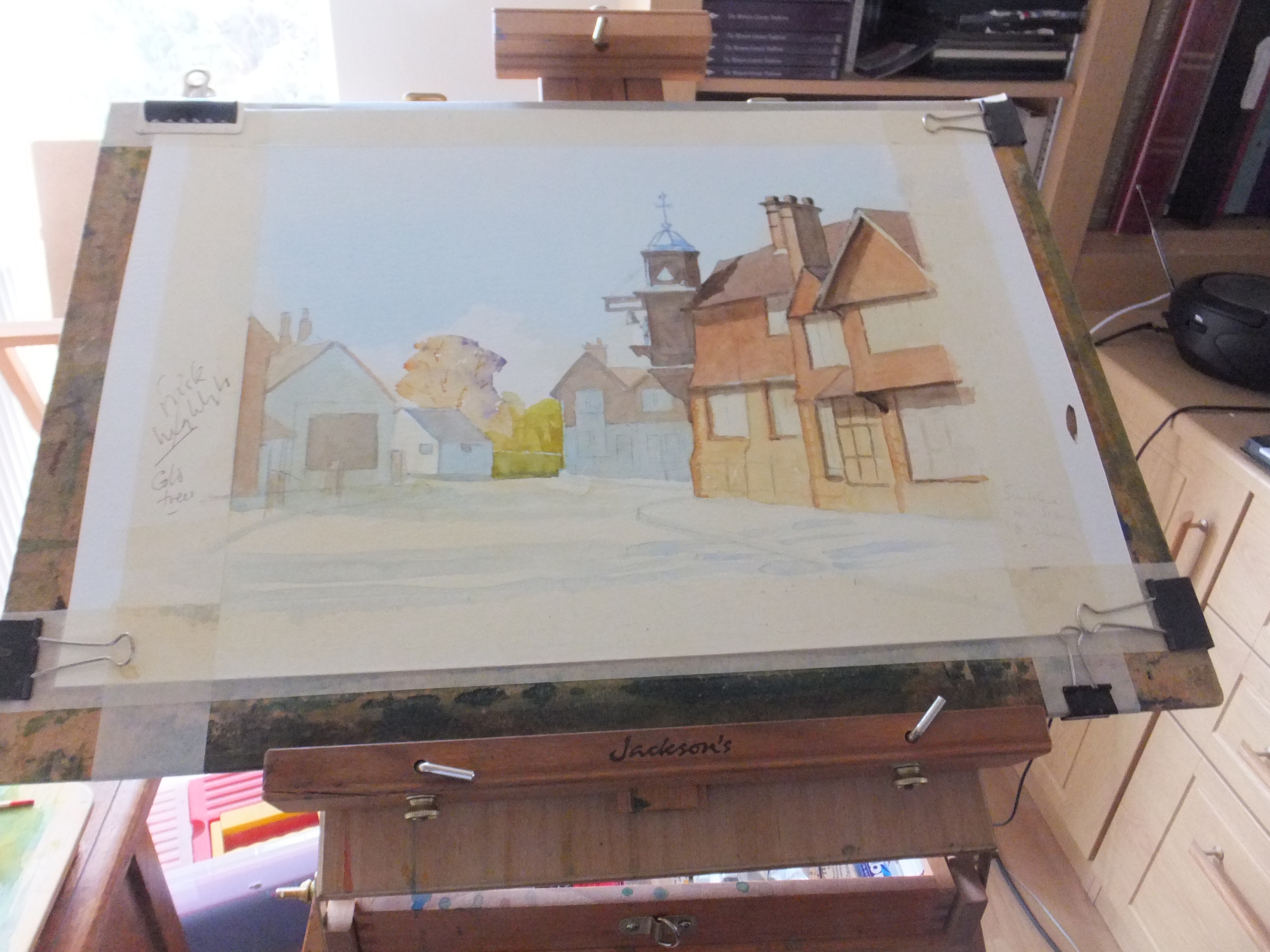
This where we are at the moment from the reference photograph published last time. The centre of attraction is the jack or striking clock installed in the c19. The figure of a blacksmith strikes the hour with his hammer, from his perch over the main road between Guildford and Dorking

Abinger Hammer is an idyllic village in the Surrey Hills. It was not always so. The River Tillingbourne runs nearby and was an industrial power source. It drove mills and in the case of Abinger powered a hammer which pounded hot iron into pigs or ingots. The hammer ponds are still there although the iron is gone. Today they grow watercress or have become trout farms. The iron industry moved north and stayed there, when Abraham Darby discovered how to smelt iron using coke instead of charcoal.

So far I have concentrated on the background and underpainting. It looks very soft which is not unattractive although needs to be sharpened up, especially the houses in the foreground. They are tile hung. Terracotta tiles are very much part of the Surrey vernacular, mostly square edged but a good many in beaver tail design. The golden coloured building stone is local sandstone, which is used frequently with bricks on the corners for protection. Always attractive to paint,, good old raw sienna does nicely and burnt sienna works well for terracotta. For additional poke a dilute glaze of permanent rose over the burnt sienna does make it pop as the saying goes.

The background is in shade except for the gaps where the trees can be seen in the background. I used quinacridone gold with some violet on the trees, by way of a change and it gave a nice effect

Still some work but mostly detailing. Hoping to use the finished result in my next real exhibition later this month which will be at Denbies Winery near Dorking, but gotta finish this first

A Completed Commission

The Final Version

This is the last commission of the year, and it is finished, I am pleased to say. I have had to keep in touch with the client, at every stage of the painting, which I don’t usually do, as it does make a lot of work . Having said that I have enjoyed this commission more than I thought, and maybe stage by stage consultation is not a bad idea, certainly after my last bad experience

However, they were nice people to deal with, and although they made a few changes here and there, basically they were onside.The painting was collected today and I am pleased to say that they were thrilled with the result

The subject of the painting was a Victorian cottage deep in the Surrey woods. Probably it had originally been an estate worker’s cottage, built around 1840 with a later addition.

I went to look at the cottage quite early one morning. The sun had risen. At this time of year, the shadows are long. The woods behind the house were brightly lit, most of the leaves had gone, and the light filtering through the branches gave them a translucent feel. To get that effect on paper needed thinking about. I used a colour that I don’t use often, quinacradone gold. It was perfect for the job and just gave the effect of sun-bathed trees that I was looking for

Most of the house was in shadow. I removed some as I wanted the effect of bright sun hitting the brickwork here and there. The combination of light and dark should be dramatic

When I was on site, the client brought their little dog, a Labrador bitch puppy. She was a beautiful colour, gold. Would I include her in the painting. I like to please, so I said yes, but I was anxious. I have painted dogs before but never done a dog portrait, especially one so tiny. She would be the size of a fingernail

I had taken some pictures. I have to say that for a lively puppy, she was very well behaved and posed beautifully. I picked one of the photographs and did a full sized drawing, which I was pleased with. I then reduced it in size to a thumbnail and put it in the sketch, and went on from there. When the time came to paint, I used the same gold as the trees in the background, and used more of the same for shadows on the dog. It worked better then I thought possible

Mostly straightforward otherwise, except that I could not get definition to stay in the cottage features. Overnight the colour would dry and disappear, which is not that unusual in watercolour. Eventually I reddened the brick colour with vermilion, which darkened the building and somehow improved the brick texture. Again something I have learned for another time

Commissions can certainly be testing, and very occasionally go awry, like my last unhappy experience, but they can also be broadening and make you attempt something you wouldn’t normally tackle. Will I start doing animal portraits? Hmm perhaps not, but animals in landscape are a possibility

House Portrait Completed

The Finished Portrait

There was quite a lot of detailing in this one. Different things were asked to be included, which I have done, but because of the scale, they have ended up as rather tiny. I was worried about that. Things like different coloured pots and also some blooms slightly out of season. Let’s hope they don’t disappoint

The car port and furniture store relationship on the left hand side, took some working out so that each was distinguishable. I did wonder afterwards whether I should have recommended leaving the furniture store out completely. The car port is a nice building, almost barn-like with its hipped roof, and it would have stood alone quite easily. However I didn’t. I painted what was there, which is the honest thing to do.

I reduced the enormous expanse of gravel with shadows coming in from trees which were off stage. I think that improves. Not really a follower of feng shui, I have left, nevertheless, an uninterrupted view of the path leading to the front door.

Some of the colours I have changed as well as scaling down the sizes of some of the shrubs. Generally a mix of reds and greens , I think the colour scheme works well, although some might disagree.

I now have another commission, another house portrait, which I went to see a couple of days ago. This is a rather charming cottage out in the woods, built around 1830, so lots of character, which I am shortly to start.

Just when it looked straightforward, I was asked to include the dog. Oh well, another challenge