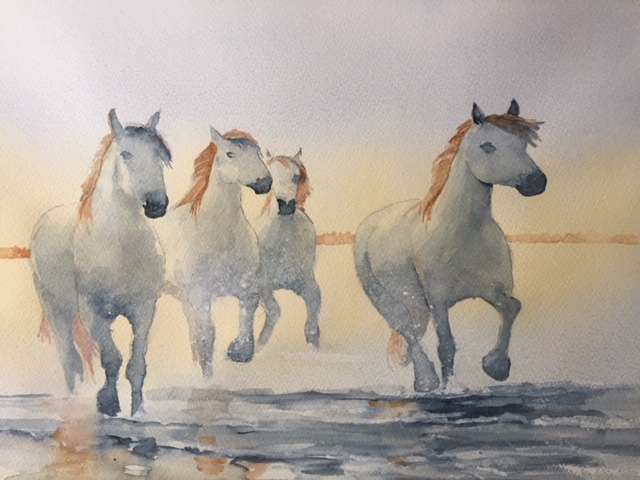
White horses galloping along the shore are always a stirring sight
I am getting paintings together for a new exhibition in March at Denbies Wine Estate near Dorking, and needed some new work. This one I am pleased with and will be putting it forward. This is the latest in my series of Camargue horses. I like this one more than previous horse pictures. perhaps I am getting better!
Recently I was given a commission to paint a horse with its owner. This will be given as a present so a special responsibility. I will let you know how I get on
Excellent exhibition on at the moment until June, featuring colourful tapestries designed by Grayson Perry and woven in Belgium. They echo the Rakes Progress series of paintings by Hogarth depicting the hero Tom Rakewell squandering his fortune on riotous living and plunging into debt and madness. The hero of the tapestries is Tim Rakewell, who becomes a computer genius, makes a fortune and moves socially upward. His nemesis comes when his luck affects his judgement and going too fast, drives his powerful car into a lamp post and goes through the windscreen. he was not wearing a seat belt. He dies at the roadside. As the attending medic says” with all his money and he dies in the gutter”
The first tapestry in the collection is The Adoration of the Cage Fighters with all its echoes of the Virgin Birth. The genius is born and is worshiped by the cage fighters who bring him gifts like the shepherds paying homage to the newborn Saviour. He will grow up into a man embarking on a journey of upward social mobility. I can’t see that he will benefit the world in any way but there it is.
This tapestry is said to be inspired by The Adoration of the Shepherds by Andrea Montegna
The other tapestry that I am showing is entitled The Agony in the Car Park. Here compare Gethsemane or the Agony in the Garden by Bellini. The scene is a hill outside Sunderland. The central figure is Tim’s stepfather, a night club singer. The scene hints at Grunewalds ‘Isenheim Altarpiece’. The large crane stands in for the crucifix. In the bottom corner Tim in school uniform blocks his ears with embarrassment. In his pocket a magazine betrays his interest in software. As we shall see, this will be his way out from a miserable childhood
These are just two panels from the complete story. There is the story of him leaving home after his girlfriend rows with his mother, his company which he sells for an enormous sum and then his demise at the roadside. What is the moral of the story. perhaps too much, too soon, or the dangers of moving upwardly mobile too quickly and being unable to cope. Woking Borough Council could perhaps learn from this story. Our town is officially bankrupt, through inept investment and squandering of people’s money. The townsfolk are looking at reduced services and increased costs. We shall never be solvent in my lifetime that is for sure. Even our beloved Lightbox is under threat and talks are ongoing about how to save it. Tragic to lose it. Woking is not a city of culture. The Lightbox gallery has been the jewel in the crown, and given us great prestige in the art world
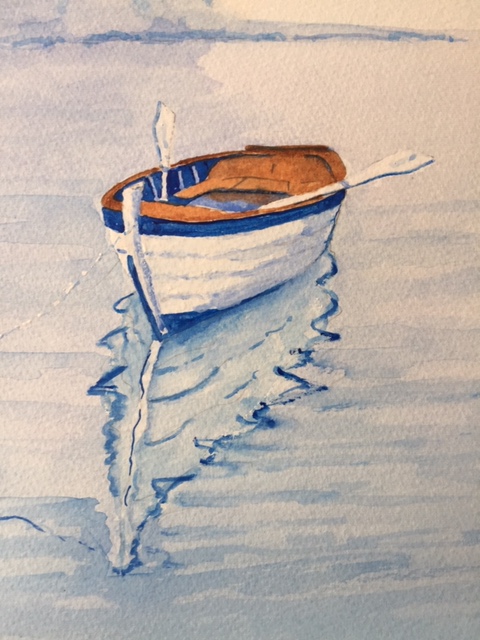
This was one of my entries for postcard sized entries for a charity auction to be held by a school catering for students of secondary age. These are youngsters who may have emotional problems or have suffered domestic abuse, and now need a stable and calming background in order to study and reshape their lives
The school wrote to me and asked me to provide artwork for their auction. I was very happy to help, not because I am a supporter of charities generally, quite the reverse, I am not known for helping people. This is the sort of project that I enjoy doing, so not exactly selfless
This is a fundraiser obviously and will take place during their summer break. The school is run as a charity and depends on donations from private donors. I feel a certain weight of responsibility on my shoulders and can only hope that my entries don’t let them down.
The initial reaction has been encouraging from the school who have received my entries, and are very pleased with them. An old friend of mine, John Griffiths, stage actor and writer, whose last book I illustrated, has already laid down a bid on one of the pictures, so we hope for great things
Just occasionally, going through folios of old paintings, I come across something I haven’t looked at for years, so much so that it looks new. Certainly I have never written about this one, as it was painted long before I started writing this blog
We were on our way to Santiago de Compostela, by coach so we couldn’t claim to be pilgrims. You still have to make the journey on foot or on horseback before you can do that. Nevertheless we had been making a most enjoyable journey from Madrid taking in cities like Burgos and Leon, when we stopped at this village, somewhere in Galicia. It was long ago and foolishly I didn’t keep a note of the name. All that I remember was that it was midday and it was very hot.
It was midday, and the sun was baking the ground we trod on. The place was deserted. Only the English were milling about. There were no mad dogs to be seen. The words of the Noel Coward song struck me immediately. Anyone with sense had taken cover, either eating lunch or probably having a siesta.
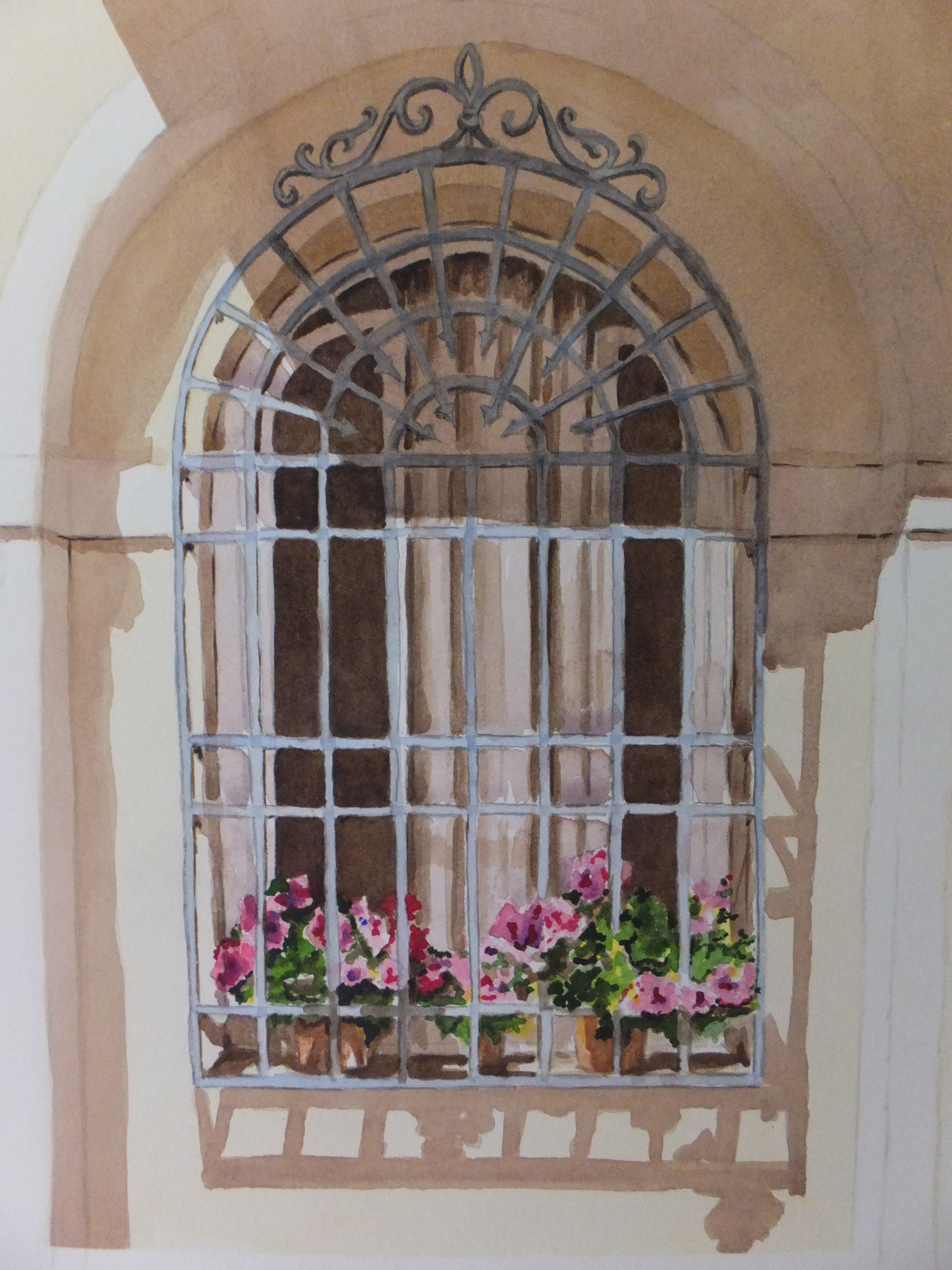
Later on I was moved to make this little painting. Siesta time, deserted streets, hopefully I have captured the intense heat. I will let others judge. Anyway nice to find it again
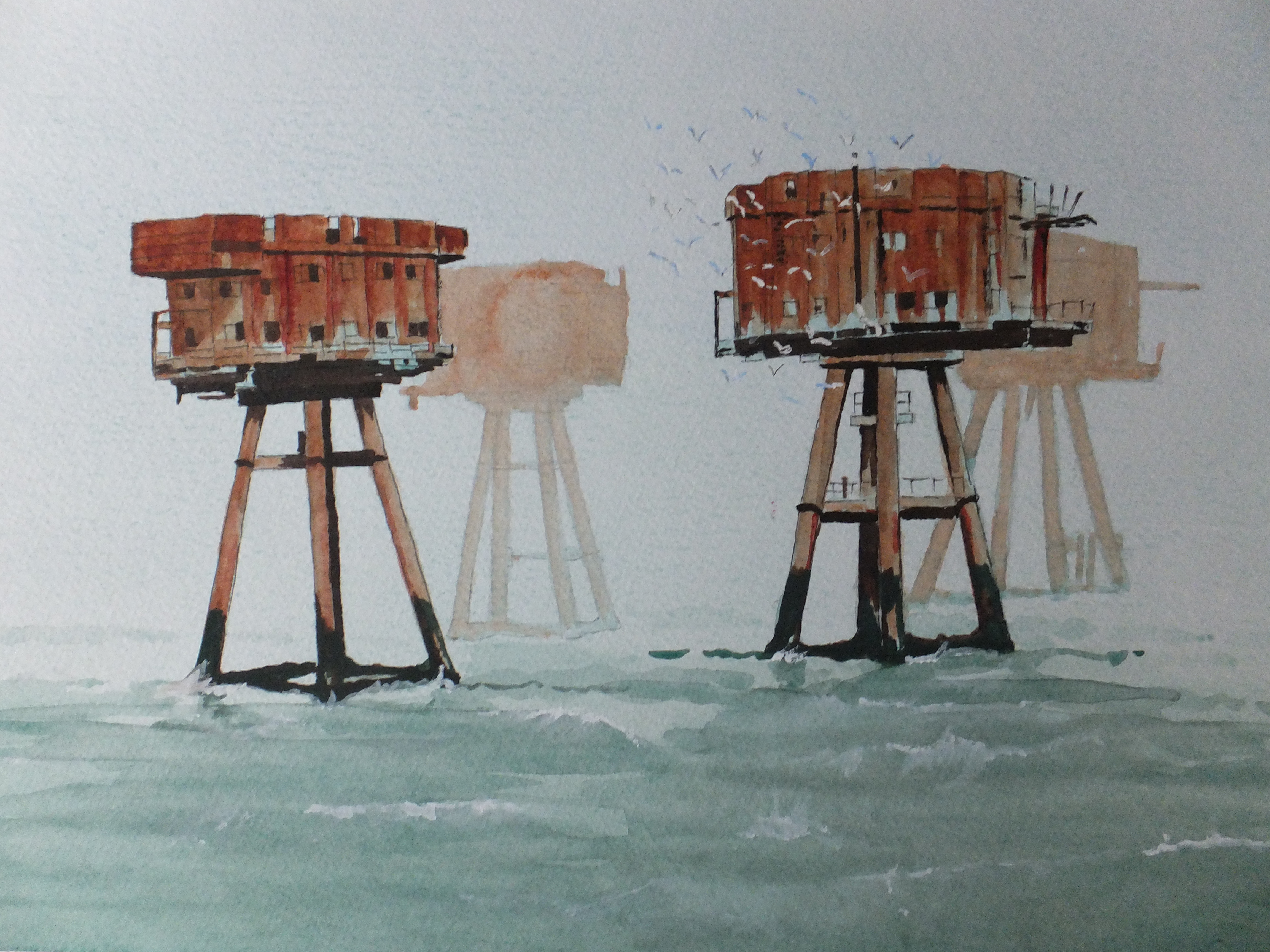
I have written about these magnificent structures before albeit many years ago. This is the second time that I have painted the towers, this time a different angle from the first. I think I prefer this one. It has more atmosphere. Certainly a very still and eerie place
It is now more years than I can remember that we took ship and sailed out to look at these forts. We were on an old paddle steamer called The Waverley which is a well-known vessel, and in those days, this boat would steam round the British Isles putting in at various ports, and running trips from there. This trip started in the Pool of London, which meant that the Tower Bridge had to raise its drawbridge to let us through, which was an experience in itself. The return journey took all day, calling in at Southend Pier to pick up more passengers, past car ferries mothballed which had been used to take cars from the Ford Motor Plant at Dagenham, and then out into the North Sea until we could see the sea forts
Designed by Guy Maunsell, the forts bear his name. Built in Gravesend they were towed to site on the sandbanks in 1942. There they protected the mouth of the Thames and prevented enemy aircraft using the river as a guide into central London. Decommissioned in 1950, they were later used as pirate radio stations until deemed unsafe. They stand as a nostalgic memorial
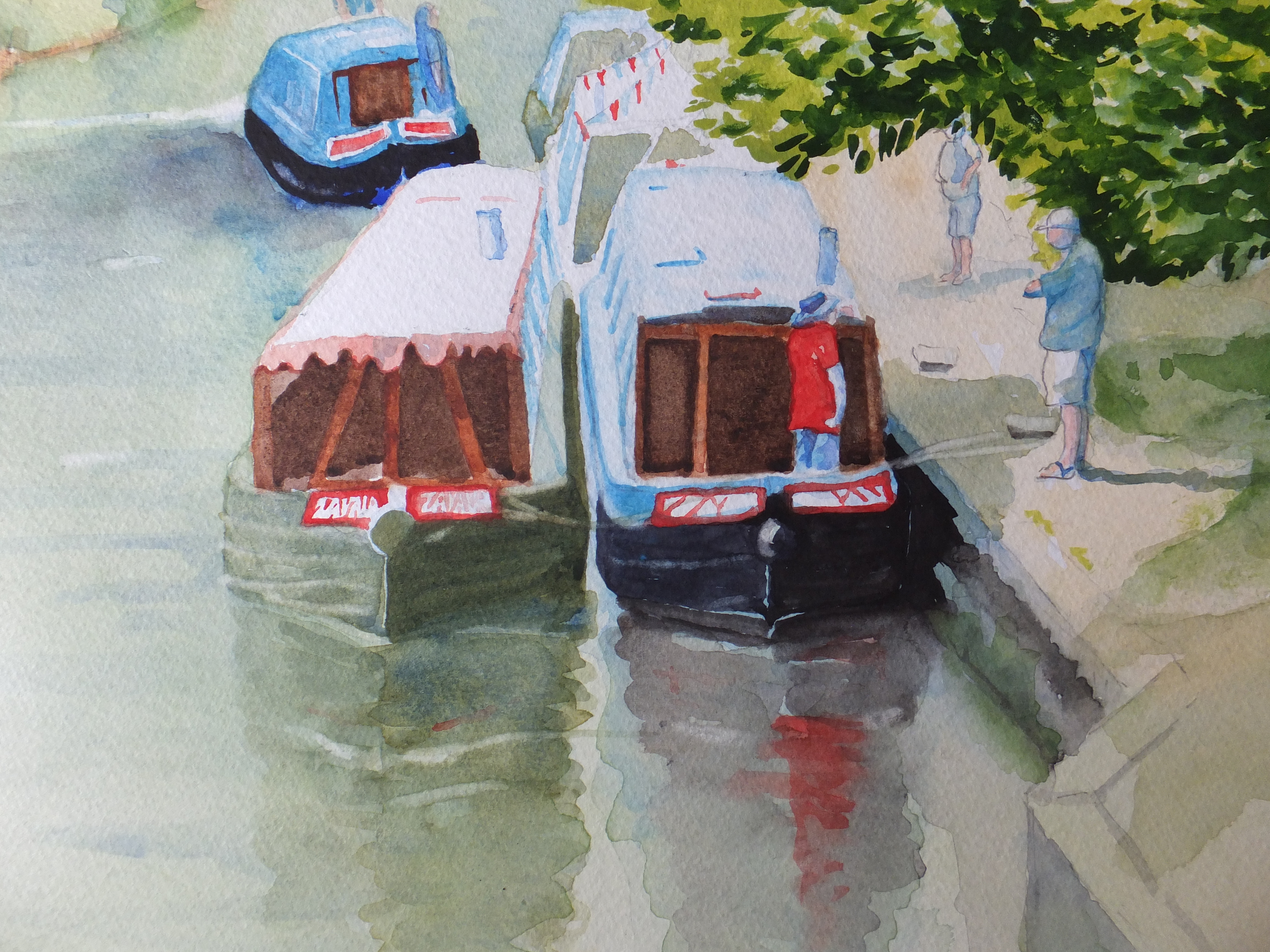
The Basingstoke Canal runs through my village of St.Johns in Surrey. There is very little traffic nowadays as the canal doesn’t go very far, and the short distance there is, is punctuated by locks. Occasionally there is a gathering of barges which seem to tie up mostly at St Johns, where there is an old wharf
The canal was cut in the late c18. The intention was to link London with Southampton but the advent of the railways cut this short. Today the canal is a haven for wildlife and some leisure activities.
It is very near me, and I have painted there often. There are so many subjects. It was nice to go back recently and hopefully capture this meeting of barges and their owners. The colours are always fun and add to the atmosphere
I sold this painting a couple of weeks ago at a local exhibition. I painted it nearly ten years ago. It was admired by many people, several of them fellow artists, who thought that the portrayal of light and dark was skillfully done, and that detailing was first class. i didn’t show it often at exhibitions admittedly but it was on my website, and also on my online shops. Why did it take so long to sell?
I have the question but not the answer. Art is subjective we know. The decision is mostly an emotional one. How does a painting make you feel when you stand there and look at it. I have had online buyers write to me, obviously pleased with what they have bought, telling me they look at their painting every morning and it sets them up for the day. That is so satisfying for the artist when it happens. I have noticed recently that quirky paintings that make you smile, often sell at exhibitions. I sometimes think that mine are perhaps too traditional, and don’t provide an emotional response.
So art is subjective. One cannot stand there and point out the benefits of the product. They are in the eye and the mind of the beholder. Difficult to reach.
Yes, there are practical considerations as well, such as cost, and budgets are constrained at the moment, but they haven’t always been. My year has been comparatively bleak, I believe because of the economic climate, otherwise i would have to think I was losing my touch. Others say not though. Other painters I know are still selling and they are in a higher price bracket, possibly appealing to a market segment which hasn’t been too affected by market conditions, let us say, and good for them
Wall space or the lack of it is no mean consideration either. If the buyers have funds and wall space, you are in with a chance. Yet I believe the emotional value of a painting transcends these considerations. This is when you have something to say and you actually reach out to potential buyers of your work. That is not easy. I have started to include more meditative subjects hopefully bringing peace and tranquility to someone
This isn’t a rant, believe me. I am just trying to understand why sales switched off so abruptly after a promising start at the beginning of the year, and what to do about it. I have met this problem before when I was in business many years ago. Major customers take fright and switch off their development plans and suddenly you struggle to stay afloat. You just need to survive until normality returns, and people can afford their heating bills again.
Mercifully my income from painting doesn’t affect my lifestyle that much, but I do like to see them go out to a new home. That is the satisfying part.
Minotaur Sculpture in Wire Netting at Lightbox Gallery Woking
Closing soon unfortunately, this Sophie Ryder exhibition showing her amazing sculptures is on in the Upper gallery of the Lightbox in Woking. Not only sculpture but also her mosaics and tapestry are represented
I have never had the chance to look at her work close up before. I have seen individual pieces in places like the RHS garden at Wisley, where three dancing gigantic hairs amuse the onlookers. It baffled me as to how such detailed work could be done in wire netting, netting like chicken wire, but it has been. Different animal shapes are on show. Hares are obviously a favourite. The minotaur as you can see and I believe gigantic ones are set up in her sculpture park in Yorkshire. Dogs too, a re featured as she loves her dogs
I will attach towards the end a picture of a set piece featuring four hares contemplating a heap of scrap metal. I was told that this piece was inspired by 9/11. I fancied that I saw expressions of bewilderment and despair on the faces of the hares, as they tried to make sense of the destruction and needless loss of life. Whether it was there or not, nevertheless this piece has a meditative quality, and I stood there watching it for quite at time.
Sophie Ryder is renowned for developing the Lady Hare, with the body of a woman and the head of a hare, as a counterpart to the Minotaur in Greek Mythology. The female body is based on her own apparently.
Her work has been shown all over the world, and I believe 9/11 will be going to the United States.
This magnificent collection is on show at the Watts Gallery at Compton just south of Guildford
Watts Gallery, just to set the scene, is or was the gallery used by the famous Victorian portraitist George Frederick Watts. Not only known for his portraits but also his allegorical works, which often commented on the inequalities of the times he lived in. Plus ca change.. Many of his individual works became popular. A painting called Hope I believe is ex President Obama’s favourite painting. Today the gallery houses a considerable collection of his work, but other paintings of his are dotted around international galleries
Nearby is Limnerslease, the house he shared with is wife Mary. The house is open to visitors. Mary supported her husband in his work, but was famous in her own right for setting up manufacture of pottery locally to employ villagers from Compton and also to train them in producing items in clay. Many survive, especially terra cotta plaques for exterior work.
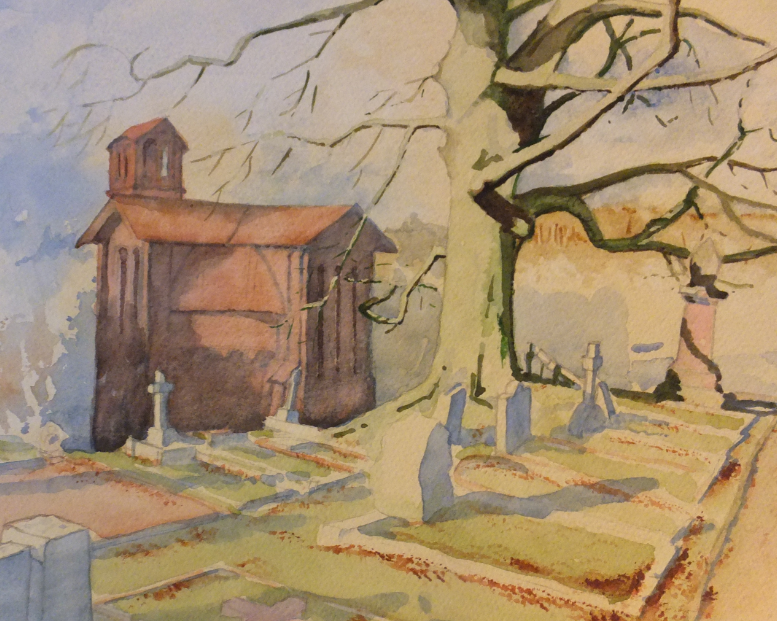
She also had built the magnificent chapel in the nearby cemetery. This was designed by her husband, and is a magnificent example of Art Nouveau design. I attach my own painting, as I don’t have a photograph. Actually I think my painting picked up the mood of the place especially on a winter’s morning
This special exhibition is housed in the main gallery
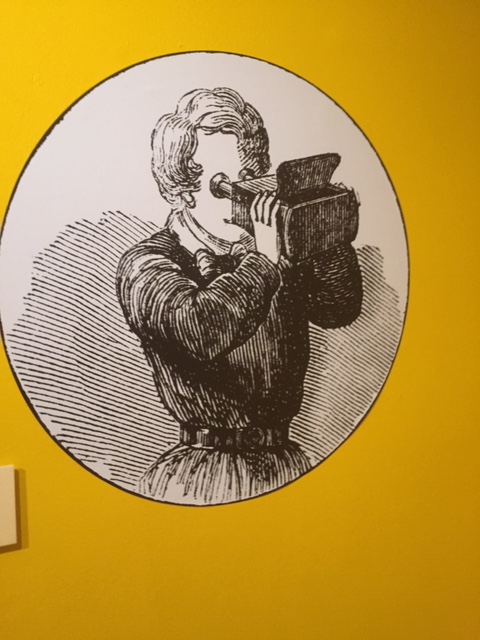
Sir Brian May started his collection as a boy with a freebie card out of a Weetabix packet. He sent for the viewer, and was amazed by the result in 3D. At the time as I remember, 3D was still high technology. He began taking his own pictures, and one of his father painting the ceiling is shown as an example. He took his pictures with a cheap camera from Woolworths. The name Woolworths has been consigned to history for some time, but it was the place to go for cheap goods. Quite tricky taking a second picture identical to the first, with the technology available at the time.
Having been hooked on the subject, he started collecting Victorian examples when he could find them at boot sales or auction houses. This was very much a Victorian pastime of course and many subjects were produced by card makers like Frith, covering famous names and places and many more
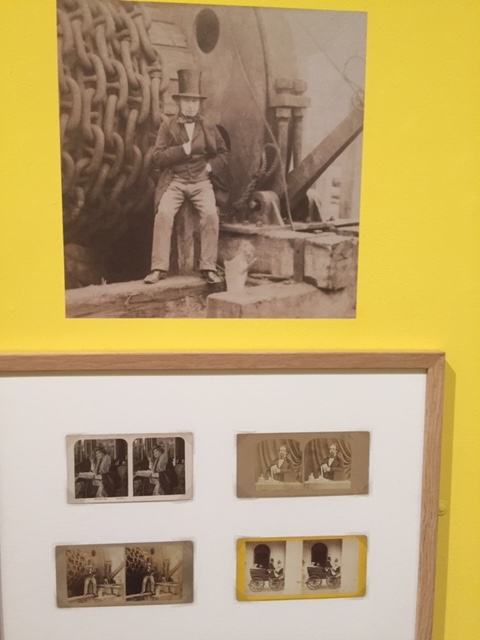
I attach a couple showing the iconic picture of Brunel the railway engineer, photographed alongside his famous steamship the Great Eastern. Also Charles Dickens preparing to deliver one of his readings,
A fascinating subject. I remember 3D as a boy, and being impressed looking at these cards through the viewer. There was also 3D cinema as well, although that was short lived as I remember, being replaced by new technology
The Annunciation by Dante Gabriel Rossetti 1849-50
An early piece by this artist, may even have been his first
The exhibition covered the work and lives of the Rossetti family, from the father Gabriele Rossetti, a political refugee from Italy together with his four children. Gabriele was involved in translating Dante’s Divine Comedy into English, which was a work his children continued after his death. The family were poets and artists. Gabriel Rossetti is well known because of his association with the Pre-Raphaelit Brotherhood, but curiously his sister Christina the poet is better known. She was a prolific writer of poetry. Her poem In the Bleak Midwinter is very well known as a Christmas carol, and would appear in every Christian hymnal, regardless of sect.
Gabriel, his brother William, and five fellow art students founded the Pre Raphaelite Brotherood, the first art group to challenge the soulless painting found in the Royal Academy with its reliance on old master styles. They were to express themselves from their own experiences. They modelled for themselves based on their own interests,and Gabriel drew a portrait of Elizabeth Siddal, a fellow student, and later to be his wife. There is a wonderful collection of her work in this exhibition, as far as I remember the only time that I have seen her work on show. Sadly she caught cold whilst modelling for Rossetti’s painting Ophelia, when she had to lie in a bath of cold water. Colds were treated in those days with laudenum, a mix of opium and alcohol, and it was that that killed her. She was only 39 when she died.
Christina and her sister Maria both chose a single lifestyle. They lived together and worked in the community through an order of Anglican nuns. William would remain single until his 40s when he would marry the artist Lucy Madox Brown.
Christina was to become a celebrity after publishing Goblin Market in 1862 and William became a leading critic and editor alongside his civil service career. Gabriel went on to form a new group: the aesthetic movement , which would change art and design for a second time. he combined working-class women with feminine fantasy inspired by Renaissance portraiture.
The portraits were paired with poems. Double works of art.
Gabriels finalyears were dominated by his obsession with Jane Morris nee Burden. Gabriel met her outside a theatre and asked her to pose as Queen Guinevere. His team included William Morris the designer , as they were painting murals in the Oxford University Union . Morris and Jane were married shortly afterwards and set up house at the Red House at Bexleyheath
Gabriel and William Morris shared the tenancy of Kelmscott Manor, a country house in Oxfordshire. In the early 1870s Gabriel and Jane became lovers






 offtoafineart