Leaf Spirit by Simon Gudgeon- a Tribute

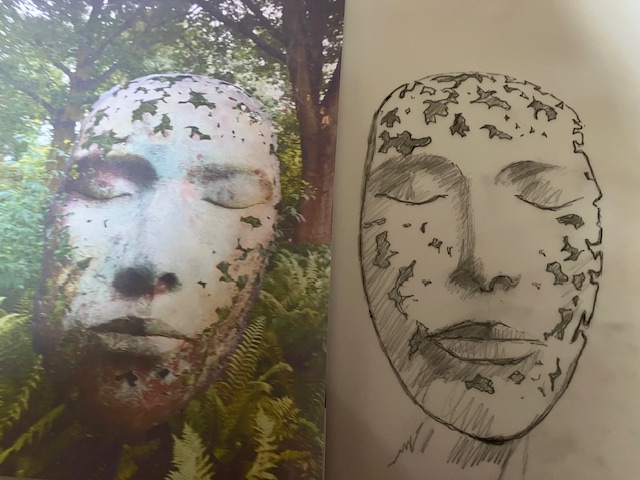
I have talked about this sculpture before. Leaf Spirit by the sculptor Simon Gudgeon, which is in Kew gardens. This isn’t the only example of this sculpture but the only one that I have seen. I did a blog about this some years back. It is in my opinion, an amazing piece of work, and I did wonder at the time whether I could attempt a painting of it, and in watercolour too, which will be a handicap in this instance.

This isn’t about the result, but more about the exercise and what I will learn from it. i suspect that it will be a steep learning curve, to coin a well worn phrase

I have found this to be a very hard year for selling paintings. I am not alone in this. There is a dearth of disposable income around the world. Competition for sales is fierce at the moment. Fortunately this is not my day job but for some artists life is tough. My mentor at our local art club has given me very good advice. Step out of your comfort zone, and paint things which challenge you. Don’t necessarily paint subjects that you expect to sell. So I have made a start on Leaf Spirit. I have done the drawing which has been surprisingly tricky. No matter how often I checked my measurements, the expression on my face is not quite the same as the one in the photograph. Mine looks more feminine for some reason, but it could change again with colour added.

I will go on with this at another date. I have some other projects queuing up and they too hopefully will take me in new directions. This could be the start of something totally different, a change of style even. For now, we will see where it takes us. Good I am starting to get inspired again
Exhibition of Women Artists at Tate Britain

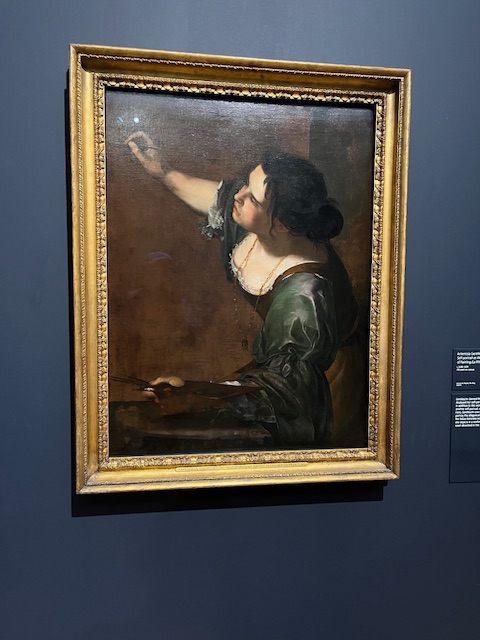
Magnificent exhibition at Tate Britain entitled Now You See Us is on until early next month. I wish I had gone sooner as this is an exhibition that needs more than one visit. It covers the work of women artists from 1520 – 1920, during ages obviously when women were subservient to men in most walks of life. Their work very often epitomises their struggle for recognition.

One of the earlier examples, a self portrait by Artemesia Gentileschi, an Italian artist working in London during the reign of Charles I, In London she worked for Charles I and Queen Henrietta Maria, and two works in this exhibition are from the Royal Collection. The other one is Susannah and the Elders, a popular Old Testament sory who was observed bathing by two of the elders, and sexually assaulted. The usual story, the elders tried to make out she was a whore but later her innocence was proved.

There were an amazing number of artists represented working through the ages. Very few did I recognise. Gwen John was one, and her self portrait was used in the exhibition publicity. In fact the work of hers shown was in my view some of the least inspiring.

During the 18c the work of the Royal Academy centred round oil paintings. Other media was looked down upon. Joshua Reynolds was especially sniffy about watercolour, pastel, embroidery and any sort of craft as being work that women did at home for their own amusement.

Gradually, and as we move into the c19 women are starting to meet men on equal ground. Two paintings which greatly impressed me were:

Colt Hunting in the New Forest by Lucy-Kemp Welch

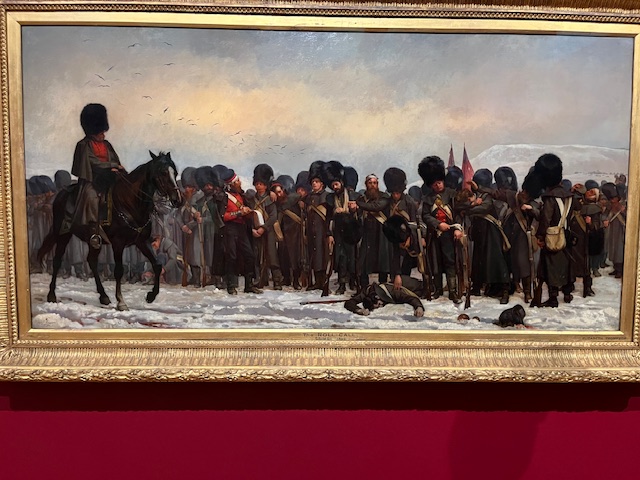
The Roll Call by Elizabeth Butler, a painting of Guards Regiment in the Crimea. This painting was summoned to the palace for a special viewing by Queen Victoria. It sold for the staggering sum of £1200

Both of these were sensations in the art world at the time. Both were hung “on the line”, which means they were hung at eye-level, a great tribute by the hanging committee of the Royal Academy

Colt Hunting in the New Forest which is an enormous painting

The Roll Call by Elizabeth Butler

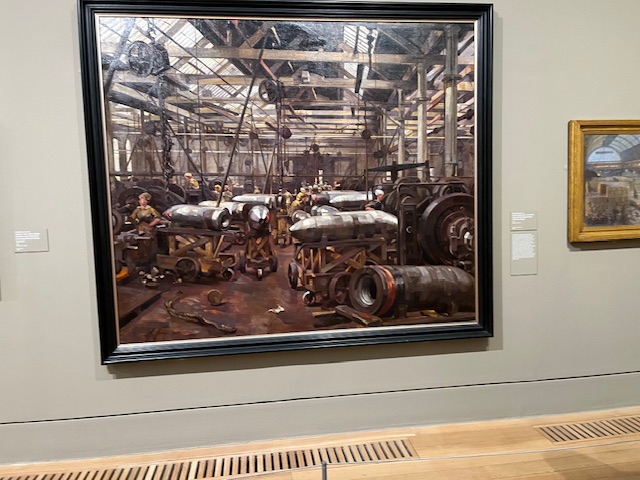
My photographs are not very good alas, done quickly avoiding other viewers.

Finally. a painting by Anna Airy, commissioned by the Imperial War Museum, Shop for Machining 15″ Shells, shows women doing factory work in 1918. This was the old Singer sewing machine Company factory on Clydebank. Important work and an important painting

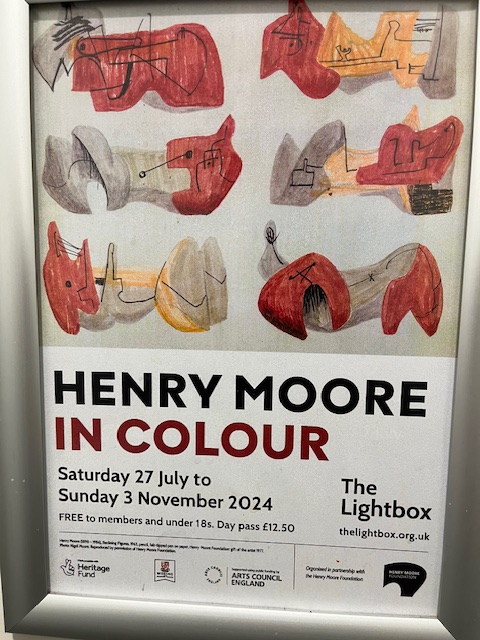
Henry Moore in Colour at the Lightbox

Yet another excellent exhibition at Woking’s Lightbox art gallery. Small, obviously, size dictated by the venue but focused and to the point. We, in Woking, are so pleased as following the bankruptcy of the town brought about by reckless investment, the fate of the Lightbox has been in the balance. Deep cuts are having to be made, and when difficult choices and sacrifices are having to be made, then difficult sometimes to make a case for our wonderful art gallery to be saved. So far it has been managed by the new local government and we are grateful for that. The Lightbox is relatively new, in a town with virtually nothing by the way of heritage or culture, so the rise in prominence of our gallery has been a matter of civic pride. We hope it will continue

Henry Moore is well known, and if like me you tend to remember his wonderful sculptures, then it is useful to be reminded that he painted as well, and some while ago too. When reminded, of course I remember his drawings and paintings of people taking shelter during air raids in London, in the underground railway stations. This exhibition highlights some of these works, known as the Shelter drawings commissioned by the War Artists Advisory Committee during the last war. These Shelter drawings were responsible for achieving widespread recognition for the artist following their display in the National Gallery. When you look at some of these drawings you start to see forming some of his later sculptures and I will show one if I can as an example

Certainly the first one I think I have seen as one of his sculptures!

Many years ago, there was a major exhibition of his sculptures in Kew Gardens, and I painted one of them that was placed in front of the Palm House. By way of light relief, I will end with it here

A figure stretching after a night on a cold platform? Might be