In a weak moment, I have allowed myself to be talked into researching the work that JMW Turner carried out in Surrey, and writing a talk on my findings, which I will then have to deliver to my history group at a given date in November. this sounds a long way off. I know from experience that it is not, so i have already started gathering stuff from books and internet. A visit to tate Britain when the weather improves will be necessary but enjoyable. The bulk of his bequest to the nation is there so must be something of use. Also Petworth House where he was a frequent house guest of Lord Egremont. Petworth is not in Surrey as we know but is close enough. What I am realising from the start, is that there is precious little written about Turner’s expeditions into Surrey. he did a number of paintings on these trips but none of them became his best known works and so consequently little written about them. perhaps my view will change as I get further into my searches
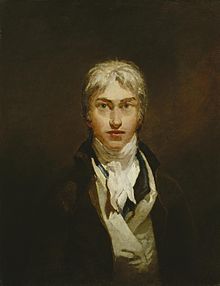
To start with a little background, the painting above is his self portrait. The only one he ever did in his lifetime. He was a private person as we know, and gave little of himself away. His birth date is given as 23rd April 1775, but this is disputed, as Turner would give different dates to different people. he had this aversion to people knowing his personal details. He lived with his parents, which was far from being satisfactory, as his mother had a violent temper, and was later incarcerated in Bedlam Hospital. So he as at School in Brentford and later in Margate, and this is where his love of the river started. He loved boats and messing about in boats. They figure in some of his paintings, and they are a frequent mode of travel on his painting expeditions. later he would row sometimes as far as Windsor on the Thames and down the Wey to Guildford, which we will look at later.
let’s start looking at some of his Surrey paintings and start in date order as far as we can
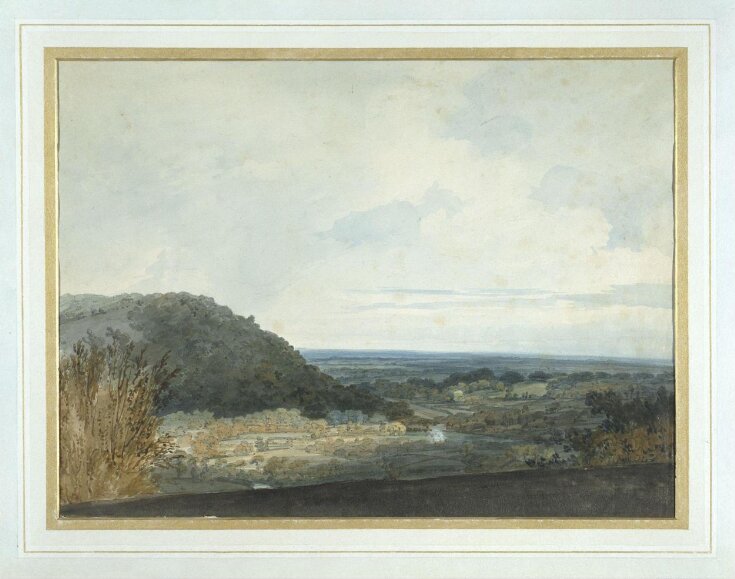
Possibly Box Hill Date….. previously attributed to Tom Girtin, and later to Turner. Girtin was contemporary to Turner, and they were in fact great friends. They would go on expeditions together, and on one of them painted the Savoy palace from a boat on the Thames. Girtin was an acclaimed painter, who sadly died at the age of 29. Turner held him in high esteem and his famous quote said ” if Tom had lived I would have starved”. Turner was definitely in the area that year, as the next painting of Leatherhead shows. This was his so called Student period.
At about the same time, we have this painting of Leatherhead
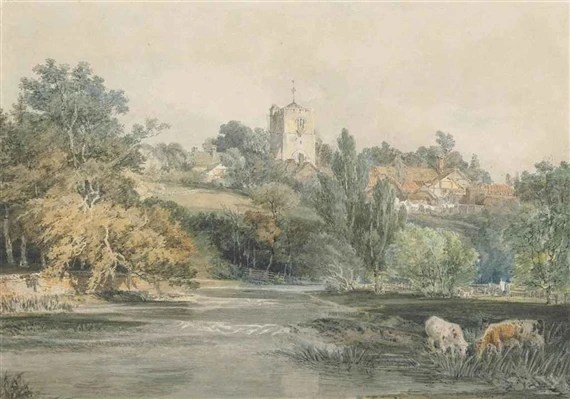
Leatherhead from the River Mole, with cattle in the foreground, dated 1796, and attributed to Turner. I find this an immature style compared to what we associate with Turner’s work, and it would be as this comes within his student period. Turner had been invited to Norbury Park, near Leatherhead, a place I associate with Fanny Burney who met her future husband there, Comte d’Arblay, an emigre from the French revolution. I wonder if they met Turner. Interesting to conjecture
I will publish so far and go on with this at a later date