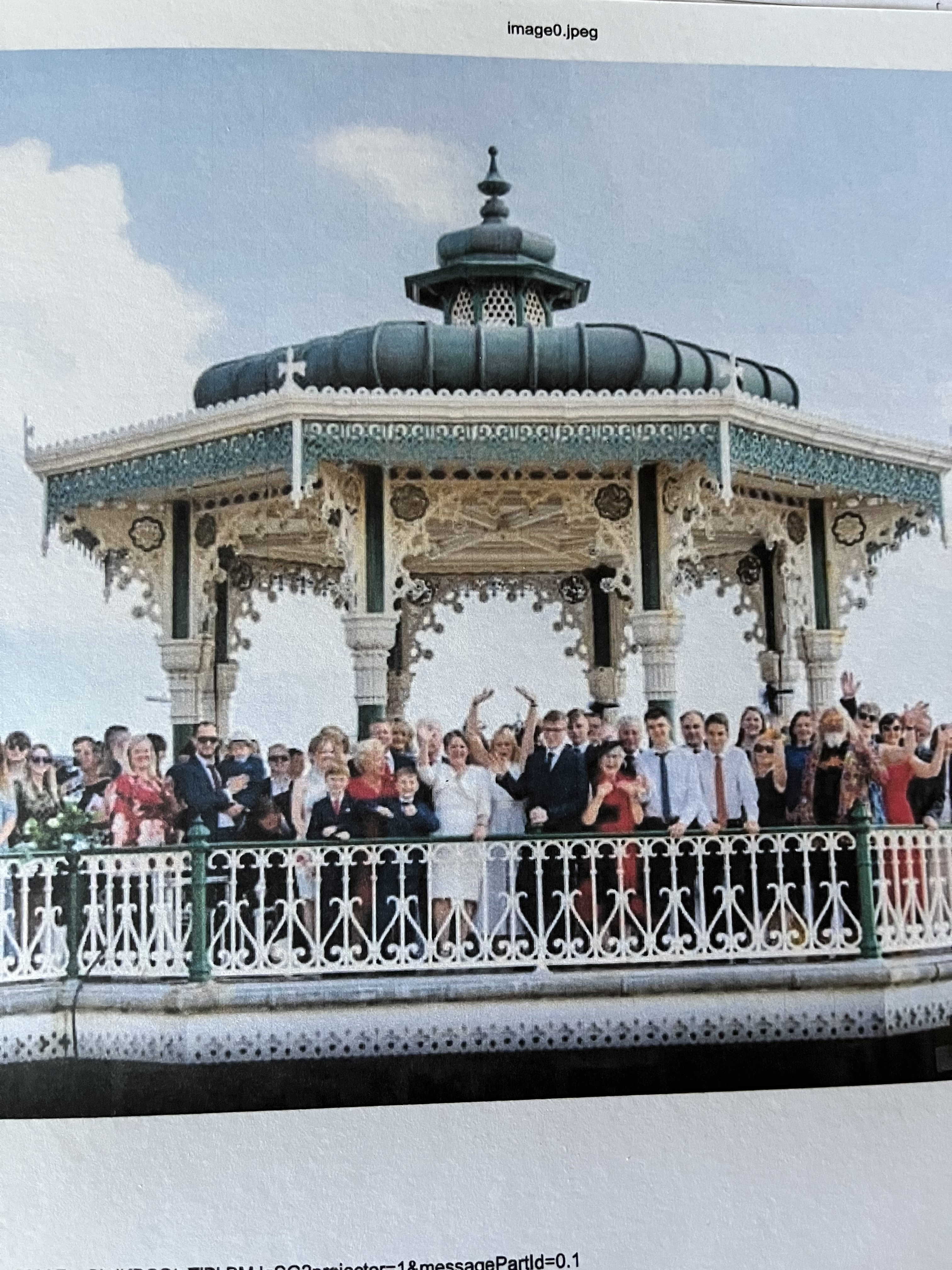
As before I am grateful to Narbe Photographie of Joulouville-les -Pins in Normandy for the use of their image
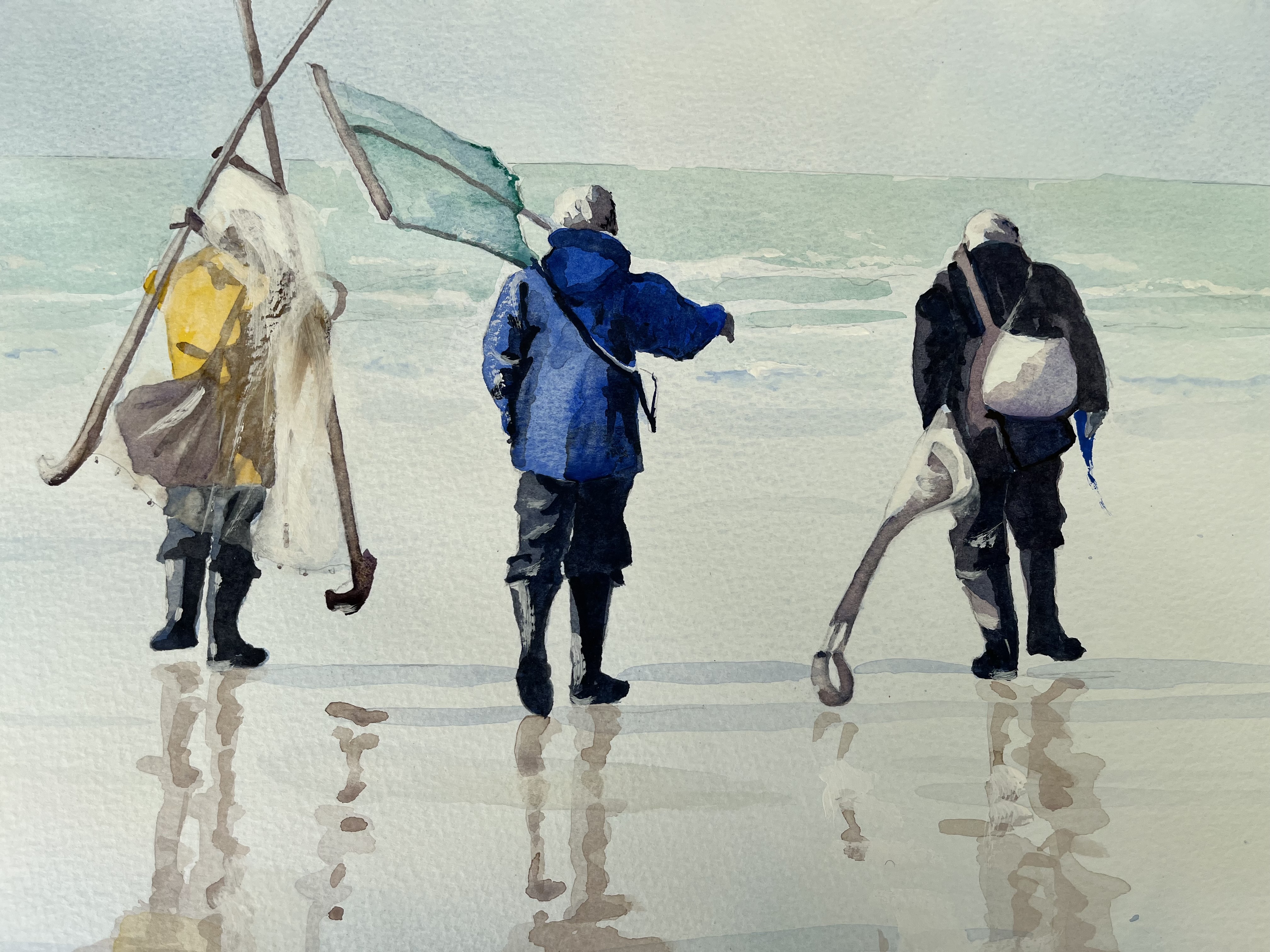
I wasn’t sure at first what these guys were setting out to catch. It’s shrimps I am told, and of course the green net seems obvious when you know. The other two with the white nets were less obvious but presumably they are for pushing along on the curved ends shovelling up shrimps.
Anyway they made an interesting group and I enjoyed painting them. The wet sand worked well I was told and certainly I was pleased with it.
More about the image than anything else. I hope you enjoy looking at it.
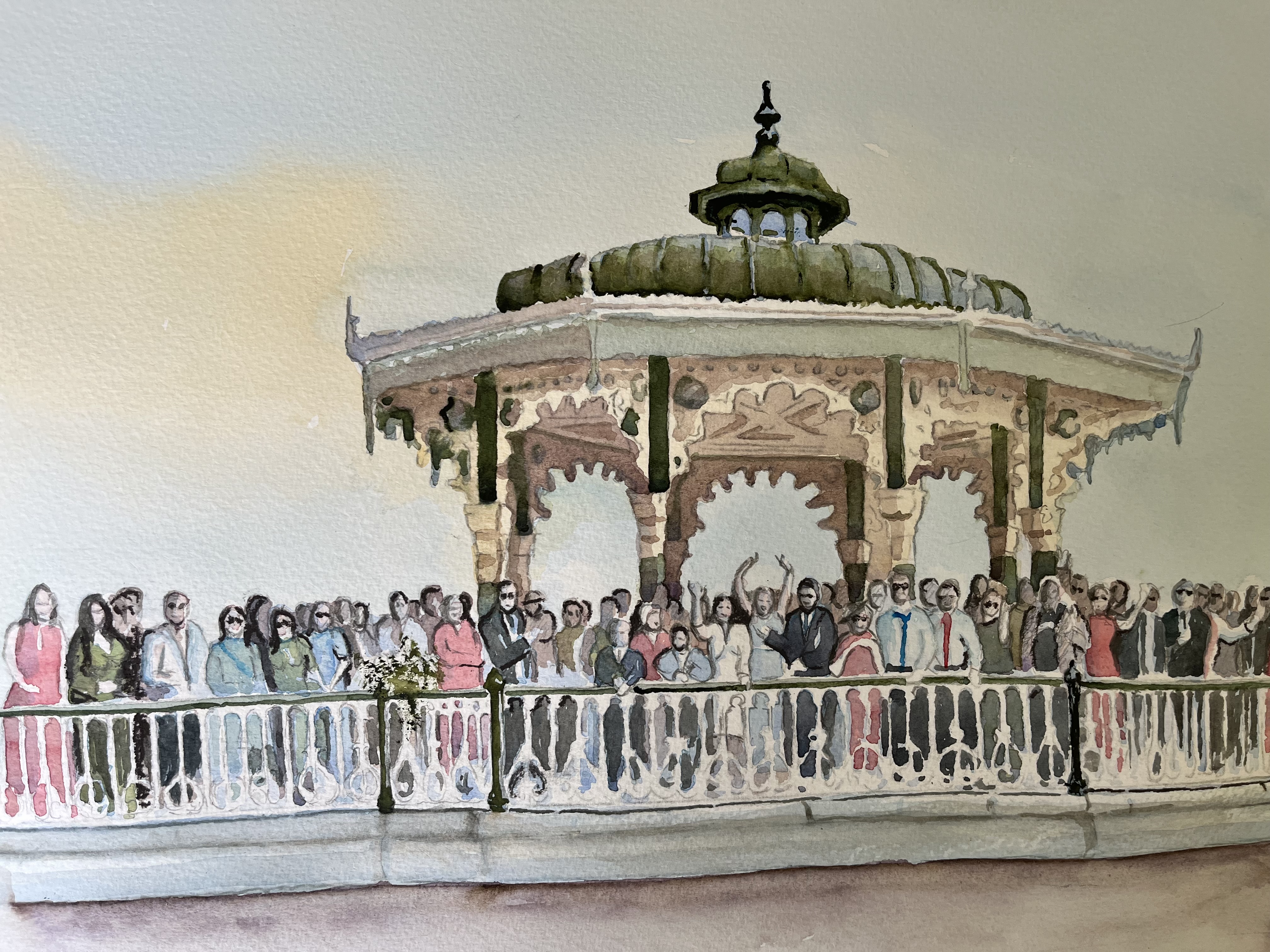
I nearly didn’t take this on, but later, I was pleased that I did. Like something that I have never attempted before, a large group of people all facing the camera or in this case the painter. Faces this small are tricky in watercolour with a brush, and are best avoided or abstracted in some way, which is usually acceptable. The guy who commissioned the painting asked if some detail could go into the faces, and so against my better judgement I did make an effort. Fortunately many were wearing sunglasses which made life easier. The result was acceptable. More than acceptable. he was delighted and so was his mother. She was the one getting married, and I believe she was thrilled with the result, so as always I was heartily relieved. I have said before that it is a great responsibility and a great privilege to be entrusted with someone else’s special occasion.
The monument in the background is the famous bandstand on Brighton promenade and is a delight to paint in itself. Completed in 1884 it is an historical landmark of architectural importance. The cast ironwork was made in Glasgow by Walter Macfarlane & Co, in their saracen foundry. It operates as Heritahe Engineering. Popular for weddings as you can see
nearby we are fortunate to have the splendid gardens at Wisley, which are the main gardens of the Royal horicultural Society. The best of the best imho. I was asked to paint the view through the wisteria looking along the canal, towards the fine looking building in mock Tudor, with the more prosaic title of The Laboratory. This lady wanted the painting for her parent’s wedding anniversary. Always a privilege to be asked to paint something for a very special occasion and always a responsibility too.
This painting went off a couple of weeks ago, and received with great delight, so a sigh of relief on that one.
This painting of The Dreaming Spires of Oxford was bought by proud parents to mark their son’s recent graduation from Oxford. The romantic skyline filled with Gothic spires and towers and honey-coloured stone buildings really does deserve its title. A painting that I especially enjoyed doing, which is not done justice by the photograph. Everyone thrilled by it, and sold on line, and a lovely review received which was nice.
And this one, still to do, only received a couple of days ago. This is a wedding group as must appear obvious, underneath the bandstand at Brighton. So much detail in the architecture which will have to be simplified somehow, not to mention all those people. They again will have to be simplified. I am just starting to draw this one out, and the drawing will be the long bit
I ask myself why I take some jobs on sometimes. I have never tackled anything like this before. It must be the challenge which won’t let me say no. I always told people that I didn’t paint cats, but owners were thrilled with those that I did. I said the same about Spinnaker Tower floodlit at night, which was very tricky, but the young woman who commissioned it as a present for her boyfriend was delighted, so had I turned these down, I would not have given pleasure to people, so i take it on if I can
Anyway wish me luck with this one. It will be a long haul
This is the painting that we always think of and this was shown for the first time in Paris in 1824
This became the style that the French referred to as a la Constable, rustic cottages,wagons in ponds and open fields and skies.
In the light of his French success, Constable’s continues determination not to travel abroad seems nothing short of bloody-mindedness if not pure rudeness. In spite of all inducements from Arrowsmith, from his friend Fisher, and even despite his gold medal was about to be presented by King Charles X himself he was adamant about refusing to go to France.He was thrilled with the medal which was later presented to him in London by the French ambassador. But he was resolved not to go to France
“I hope not to go to Paris as long as I live” he said. ” I would rather be a poor man here than a rich man abroad”. Well, be careful what you wish for. All of a sudden, as quickly as it came,Constable’s moment of French fame passed. By the end of 1825 he had fallen out with Arrowsmith. When the French market crashed like the British one during the mid-1820s, Arrowmith and another of Constable’s dealers Claude Scroth, went out of business. Constable’s commercial conduit dried up. He had sold more landscapes in a short space of time than had been bought by British buyers in years, but now the HayWain came back and The Cornfield was sent back from the Louvre in 1827 unsold
And there it is. It is in the National Gallery now
Constable hadn’t been the only successful british Painter at the 1824 salon. In fact so many British painters were showing , that it was known as the Salon des Anglais, which was quite a coup for the national contingent. Two others like Constable were awarded medals, and another made a Chevalier of the Legion d’Honneur. There seemed to be widespread approval of the so-called “British style” in landscape painting. If only Constable had been more amenable to travel and doing some networking he might well have prolonged his popularity. Delacroix for one was anxious to meet him, but although Delacroix came to London in 1825, and met other painters, there is no record of him meeting with Constable. You can’t imagine Turner squandering an opportunity to make such an important relationship. Quite the contrary, Turner went to a lot of trouble to meet Delacroix in Paris, in either 1829 or 1832. The urbane Frenchman was underimpressed with Turner’s appearance. Constable he described as ‘an admirable man…one of the glories of England’. He recorded Turner as looking’like an English farmerwith his rough black coat and heavy boots, and his cold, hard expression’. Later on though we was to concede that both Turner and Constable were the ‘true reformers’ of landscape painting
So on that note, let’s bring Turner bck into the story. Did Turner also fly the flag for the British School in Paris. No he didn’t.
He was conspicuous by his absence. Despite his enthusiasm for European landscape and despite his frequent travels, and the way he reinforced the preeminece of European culture, he was never represented at the Salon.
He rarely exhibited outside of his own country, only on two occasions and both times probably wished he hadn’t. The first was a solo exhibition in Rome in 1828 when reaction to his work was vitriolic to say the least. There was a cartoon going round which said ‘O Charlatan excrement is not art’ ! The second occasion was in Munich in 1845. Turner was the only British artist showing at an exhibition called ‘Congress of European Art’ Again his painting horrified the locals. The Germans were appalled by the loose handling and lack of form and regrettably interpreted this as a satire upon their country. To add insult to injury the picture was returned to Turner damaged , with additional carriage costs to pay. He was furious and apparently fussed over it ‘like a hen in a a fury’
An interestin paradox then in Turner’s relationship with Europe. Despite his extensive travels and his European outlook, his paintings had limited appeal abroad during his lifetime. It was Constable who was the more prominent of the two. To this day, it remains one of the more unlikely developments in Western art history.
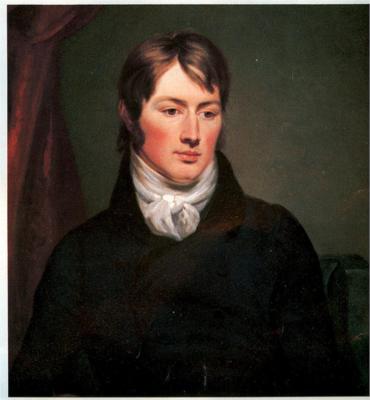
Something I didn’t know until I started reading about him with a view to preparing a talk later this year entitled Turner and Constable. In 1821 when he showed at the Royal Academy and showed The haywain in fact, he was wildly embraced by the French art market, not quite literally although he might have been. he was totally unprepared for all this enthusiasm which he certainly wasn’t used to at home
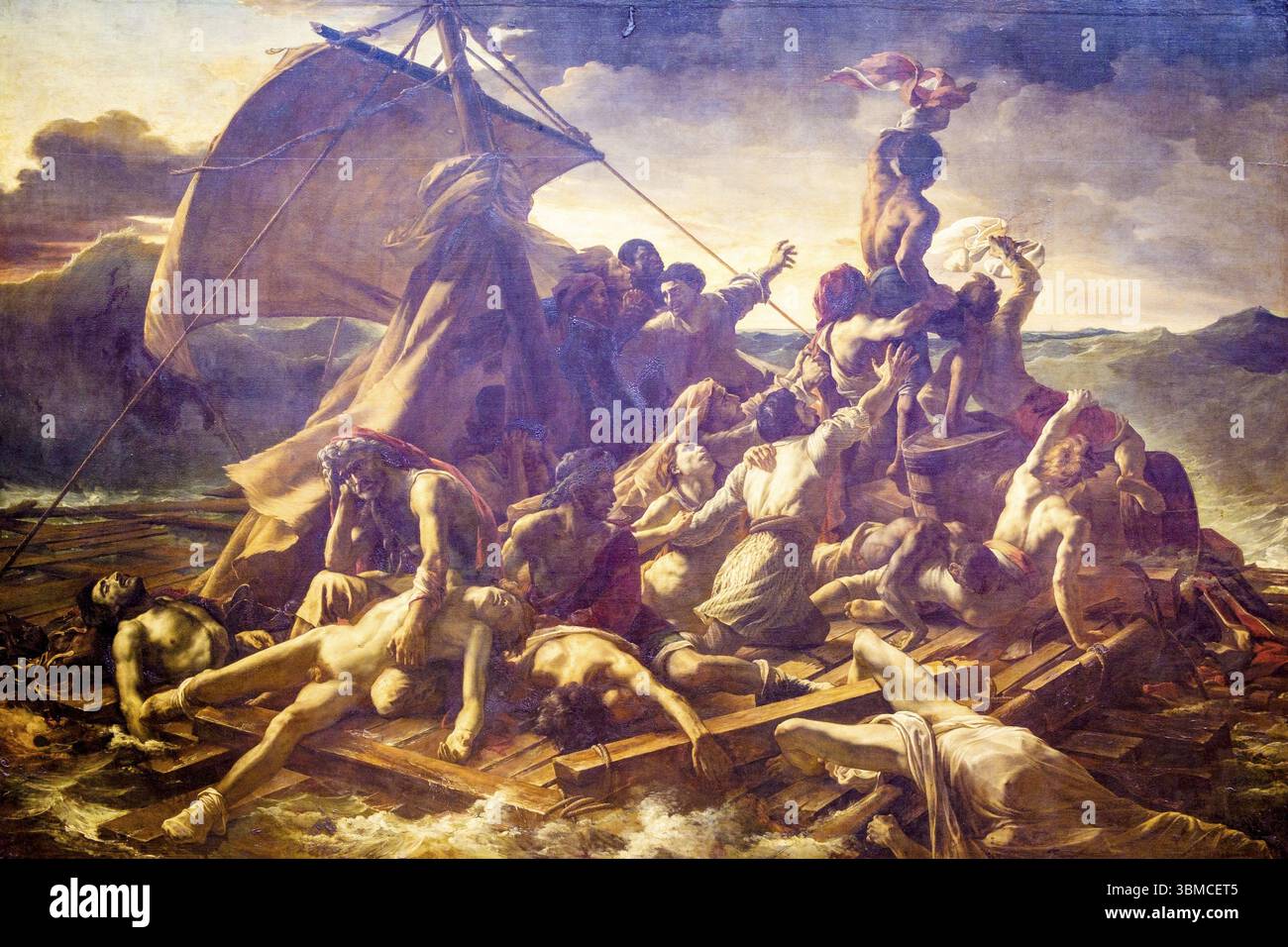
One of the first to discover him was the French Romanticist Theodor Gericault. He is probably best known for his famous painting The Raft of the Medusa, which he had brought to London, and which we are told thrilled 70,000 Londoners
And this is Gericault’s famous painting, which I will just talk about before talking about Gericault’s reaction to Constable’s work
This painting was based on a real incident which shocked the French nation. The French naval frigate ran aground off the coast of Mauretania on 2 July 1816. At least 150 people were set adrift on a hurriedly constructed raft. Only 15 survived and were picked up. The event fascinated Gericault and he could be said to have hooked into national grief. He undertook extensive research including visiting morgues for the skin colour of the dying and the dead. The painting was shown in the Salon of 1819 and received national approbation. He brought it to London where it thrilled Londoners including one Turner who went back to his studio and reworked his own great work The Shipwreck
Whilst in London Gericault visited the Academy exhibition and there discovered Constable. He thought that The Haywain was the best in the exhibition. Other French visitors thought the same and waxed lyrical.
Much to Constable’s surprise the interest quickly snowballed. A Parisian art dealer called Arrowsmith, French despite his name, offered to buy The Hay Wain and offered a derisory sum. The negotiations broke down but two years later, when Constable was short of money, he agreed to sell the painting to Arrowsmith for £250, as well as other pieces. The paintings caused a stir when they arrived in Paris.
The arrival of the Hay wain in 1824 was like a pebble dropping in a Parisian mill pond. The effect was immediate. At the epi-centre of the quake was another influential figure, Eugene Delacroix, who was so influened by the Hay Wain that he went back to his studio and repainted background on his great work The Massacre at Chios. He was blown away by Constable’s greens and tried to copy them. Critics viewing this picture at the time couldn’t find much evidence of green being used, but there we are.
If Delacroix was talking about the Hay Wain, then others were bound to be listening. A few weeks later it was these two paintings which received the greatest share of the attention at the Academie des Beaux-Arts, known as the Salon. The Salon dominated taste and opinion in France to an even greater extent than the Academy in Britain
Constable was embraced at the Salon in a way that had never happened to him at home. His large paintings were removed to positions of prominence, and Monsieur Constable, Peintre de Paysage was awarded a gold medal of excellence. His friend John Fisher couldn’t resist commenting that plain old Constable, who didn’t speak a word of French, was the talk and admiration of the French. His name entered the language. Landscapes were described as a la Constable!. More French exhibitions followed in Lille including another gold medal, Douai and the Salon again in1827, where there were plenty of landscapes a la Constable, with rustic cottages, wagons in ponds and open fields and skies.
Constable nevertheless refused to visit France, his attitude seemingly bloody-minded bordering on rude.
This is probably a good place to take a break. We are about half way, so a lot of writing and a lot of reading for you guys. It will take another post to complete the subject which I will do soonest
I am starting to find cats interesting as subjects.
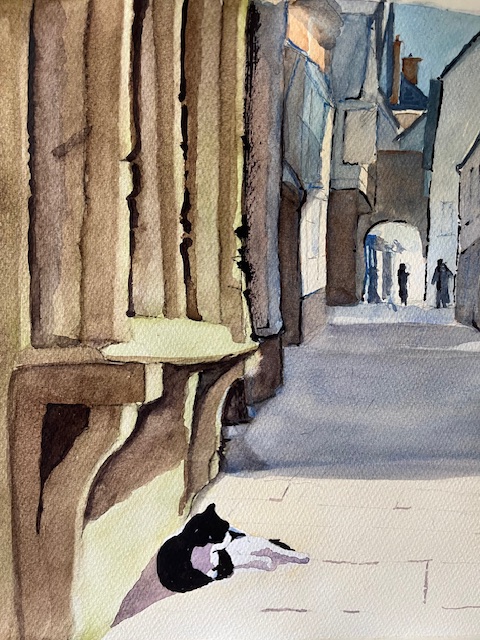
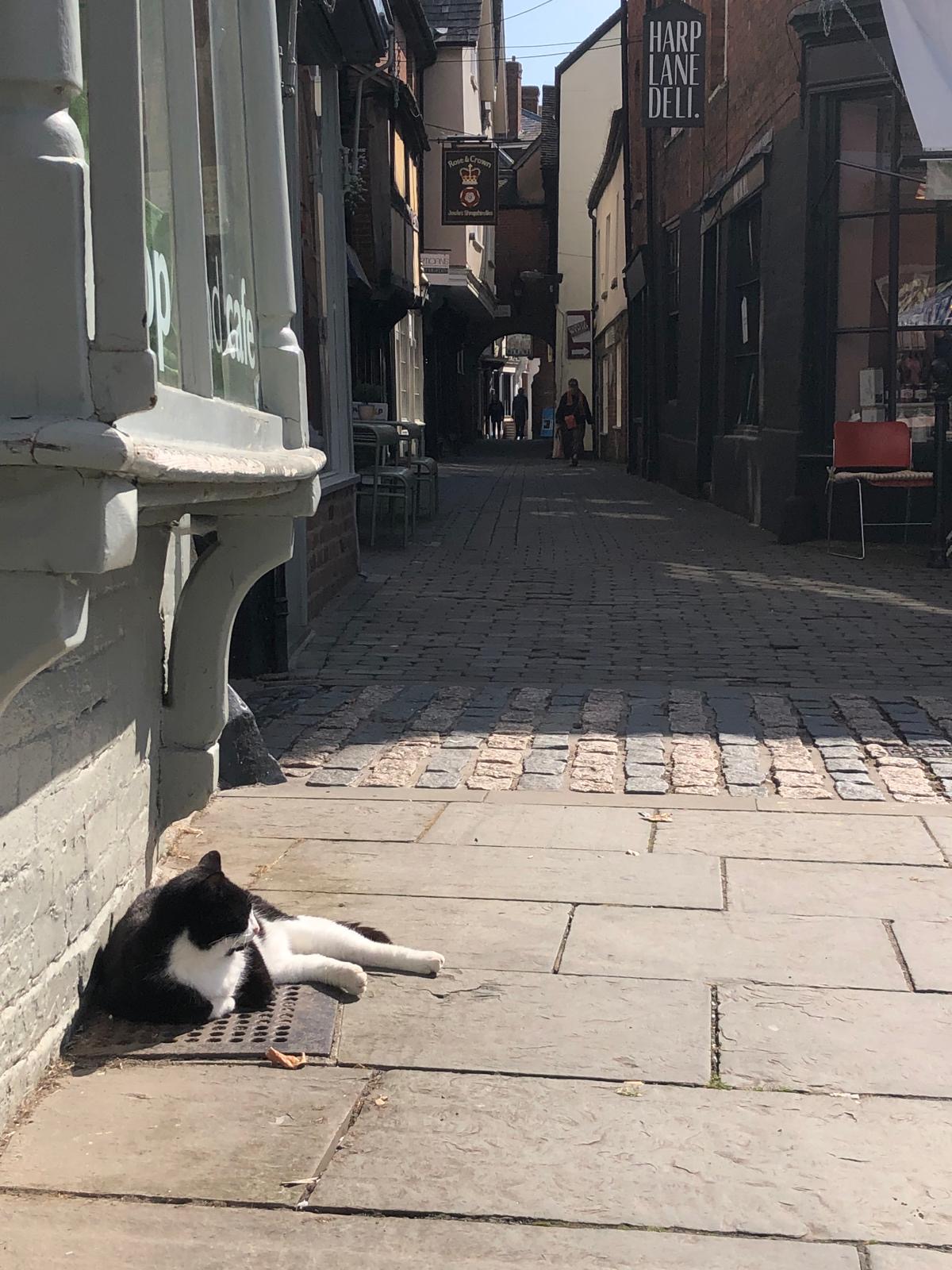
My son sent me a photograph a while back of this cat sunning itself on hot pavements, with a dark alleyway in the background. He had a cat at home which looked remarkably similar which was why he took the picture. They were on holiday in Shropshire at the time, and on this particular day were wandering round the historic town of Ludlow
I had it in mind as a possible painting at the time, and reminded about it recently, decided to do it. I quite liked the result, as I don’t usually do cats. I used a mix of raw sienna and naples yellow for the pavement. I have a favourite mix for black, which gives a glossy black which is good for animal fur or feathers. This is a mix of blue like Windsor Blue and Alizarin crimson, with a dash of Sepia or Burnt Umber. You don’t need much of the dark brown, and that bit is pure trial and error
Since my last, which was my first attempt at a cat portrait, I have received another commission from a cat lover in the same family. Let’s hope I don’t disappoint
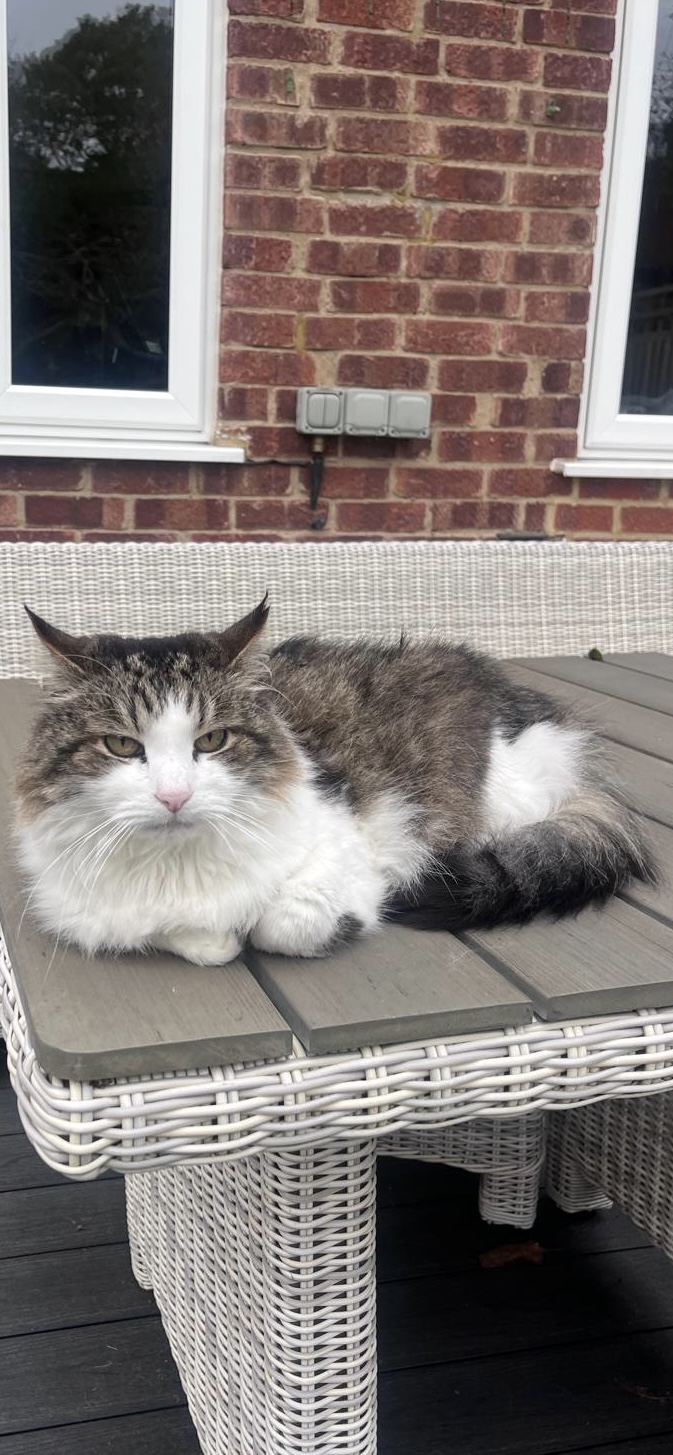
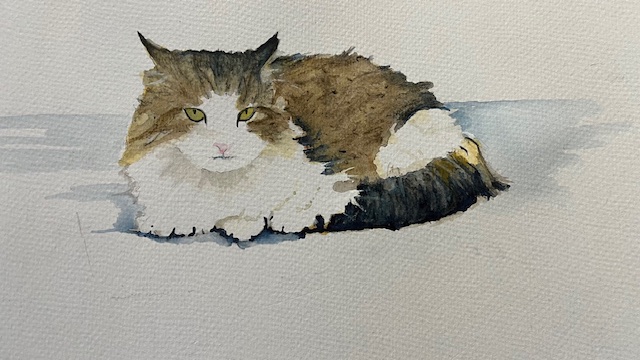
This is Pepe, a neighbour’s cat, a handsome devil, although getting old now. he is good natured but easily spooked, so you have to be careful how you approach him. Iwas asked to paint his portrait and tried to explain that animal portraits are not really my thing, but that I would try my best.
This my best shot
I liked what I had done, but does anyone want my opinion. As it happened his owner and my neighbour loved it, so all was well.
Following on from one cat portrait which I didn’t know I could do, I have decided to try another from a photograph my son sent me, showing a cat basking in the sunshine. He was walking round Ludlow at the time. he called it ‘chilling cat’. I prefer alley cat
Quite a lot in this picture to amuse a watercolour artist. A lot of shadows with a light source at the end of the alley as well as the cat itself. We’ll see how that turns out. It may be one of those pictures that needs a sample done first. Whichever, it will keep me amused
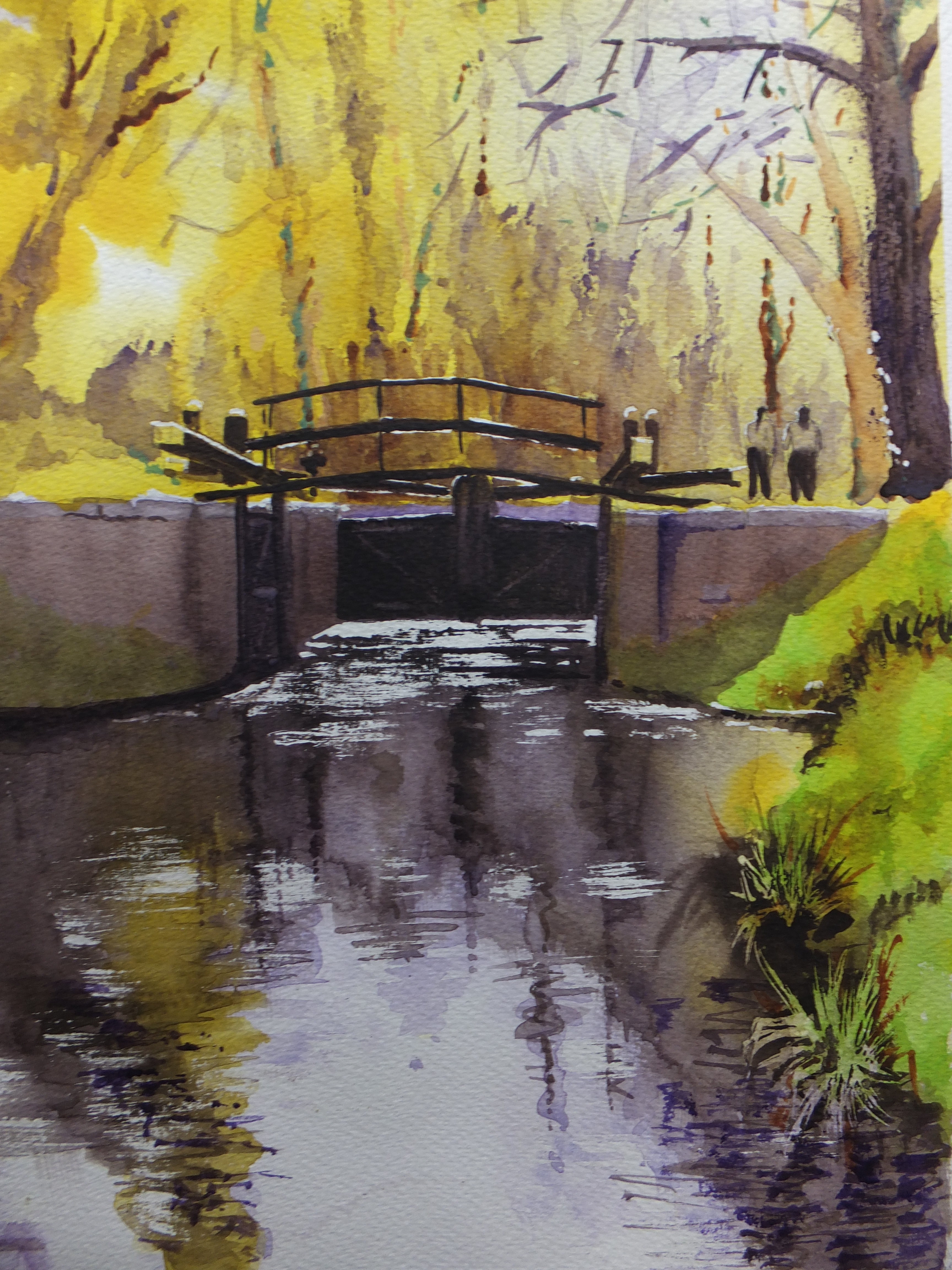
This is a really old favourite. The lock gates on the Basingstoke Canal, which flows quite near where I live. The canal is part of our industrial heritage, cut in the late eighteenth century to provide an inland link between London and Southampton, a major seaport. This was the time of wars or imminent wars with France, and transport by sea was fraught with risk, so the Wey was linked to the Arun by canal and extended to Portsmouth, which lasted for a short while, and this canal now called the Basingstoke was planned to reach Southampton. It never got there. It reached Basingstoke in the north of Hampshire, and then came the railways ,and canals were quickly redundant.
This painting went out to New Zealand by the way. It was bought by a young couple who’d come back to visit an elderly mother. They came to one of my shows, and took this painting home with them. That was years ago. I hope it’s still giving pleasure.
Today this canal is used for leisure only and is a haven for wildlife. It also gives artists and photographers subjects for their art. I’ll include a few
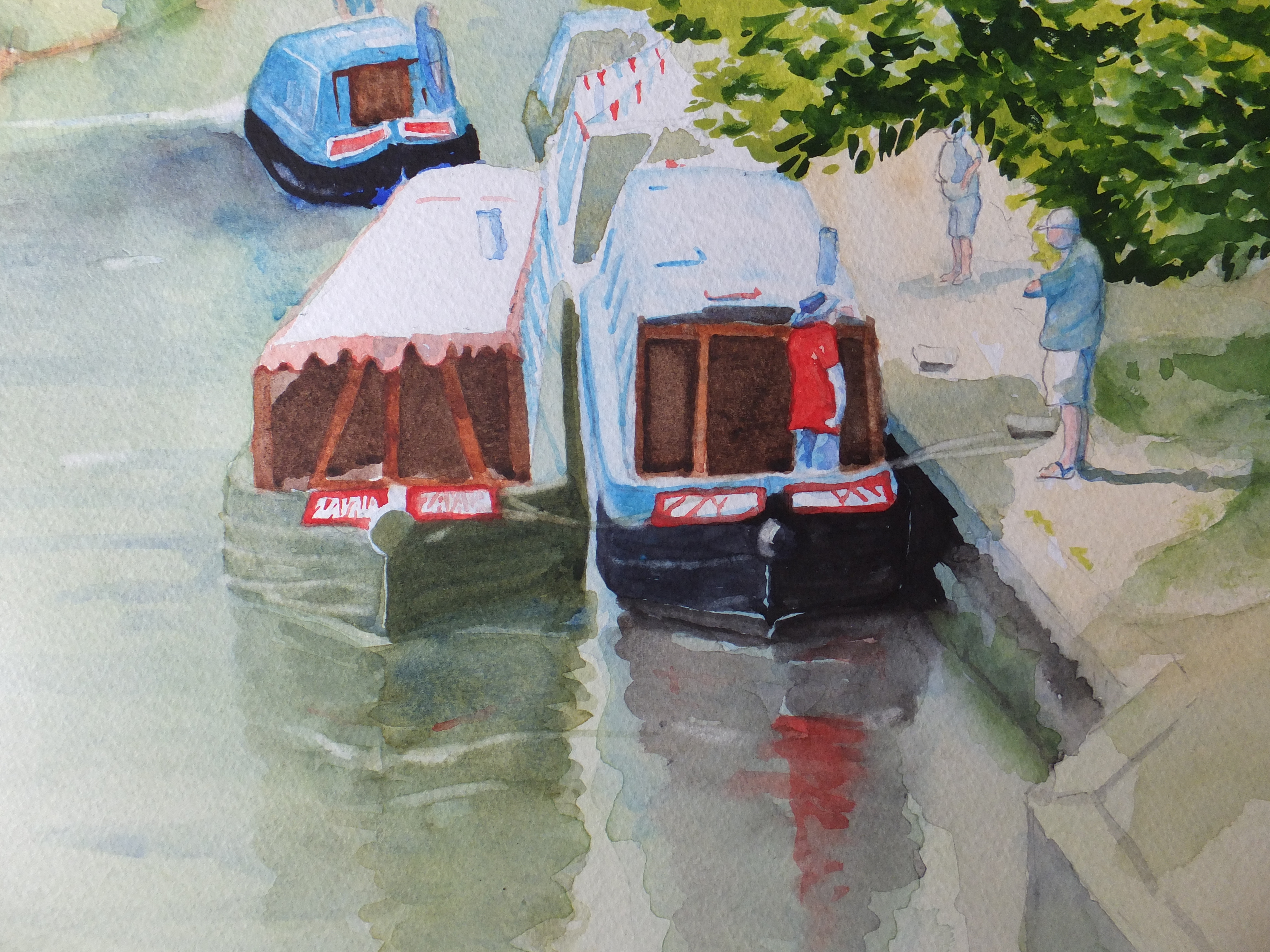
Barges gathering on the Basingstoke Canal
These are barges, of the type used for transportation in times gone by, which are now used for leisure purposes.Every so often there is a gala, when the barges get together as part of their social exercise. This is an ideal spot alongside one of the old wharves, which is outside our local Italian restaurant, which you can’t see, but is to the right of the picture. Delightful on a summer evening to sit outside with a glass of Cava and watch the activity on the water. The old boathouse is there too, long converted to a pharmacy.
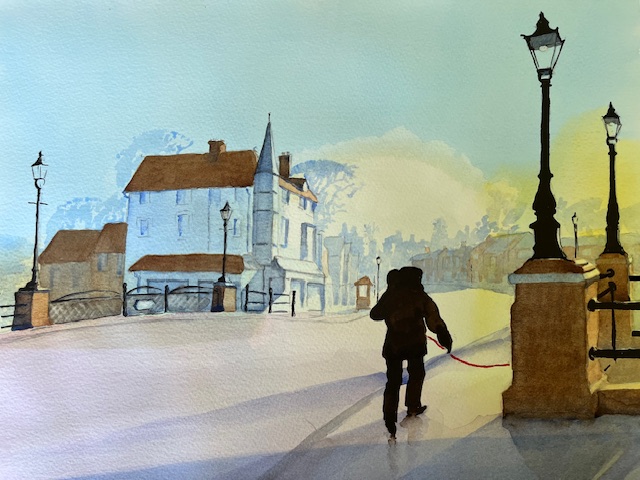
I stood on one of the old bridges, Kiln Bridge, to take the reference picture for this painting
Kiln Bridge in winter sunshine
This is the bridge over the canal leading into the village of St John’s. Kiln Bridge, well the clue is in the name. When they were building the canal, they made the bricks as they went along. The village grew up around the canal in a shanty town sort of way, and most of the buildings are Victorian. The shop opposite in the picture is a restaurant today, but in its day was a haberdashers shop for a while, in those good old days when small shops could make a living selling everyday things, before being driven from the high streets.Today restaurants and beauty parlours proliferate but at least they aren’t empty
The village took its name from the church of St John’s which was built by the rector of Old Woking, as a chapel of ease for the villagers. Very considerate, as everything was a walking distance in those days, and a five mile trudge to church in bad weather would be offputting even to the most pious.
I haven’t painted this church yet although I do intend to. It is a handsome Victorian church by a very well known architect George Gilbert Scott, who was responsible for many new churches up and down the country, not to mention restoration of old churches and cathedrals. Not just churches but also remembered for the Midland Hotel outside St Pancras Station, which was derelict for many years and beautifully restored comparatively recently. There were three generations of architects. Giles the grandson, built power stations like Bankside now Tate Modern and Battersea finally developed into a magnificent shopping mall. He is especially remembered for the red telephone box, which now are collector’s items.
For the moment, that is enough for one post. An interesting journey for me which I hope you enjoyed as well. I am quite elderly now, so if I want to look back again, there is plenty for me to look at
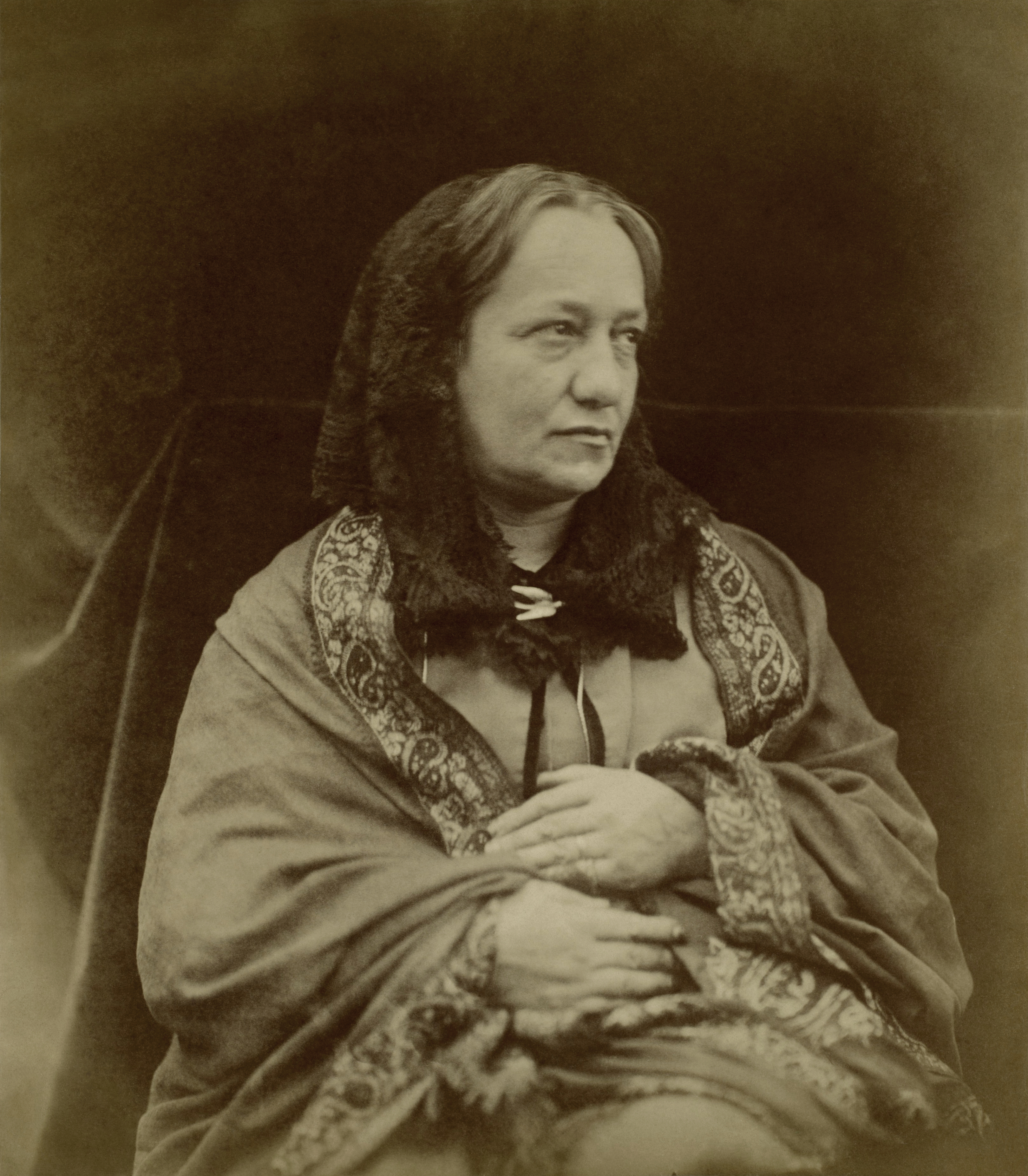
Probably the best known of the Pattle sisters, Julia Margaret Cameron
This is the current exhibition at the Watts Gallery at Compton near Guildford. This is the gallery of the paintings of George Frederick Watts, the famous Victorian painter. He lived nearby at his house called Limnerslease, with his wife Mary. He was a prolific portrait painter. He was also well known for allegorical subjects. His painting called Hope was featured on postage stamps and was also known as Barack Obama’s favourite painting. Likewise he often painted pictures with a social message
His wife Mary, also a painter, gave up painting to support her husband. She founded a pottery workshop in nearby Compton to give employment to local craftsmen. She is also known for building the nearby chapel with designs by her husband, generally regarded as an Art Nouveau masterpiece
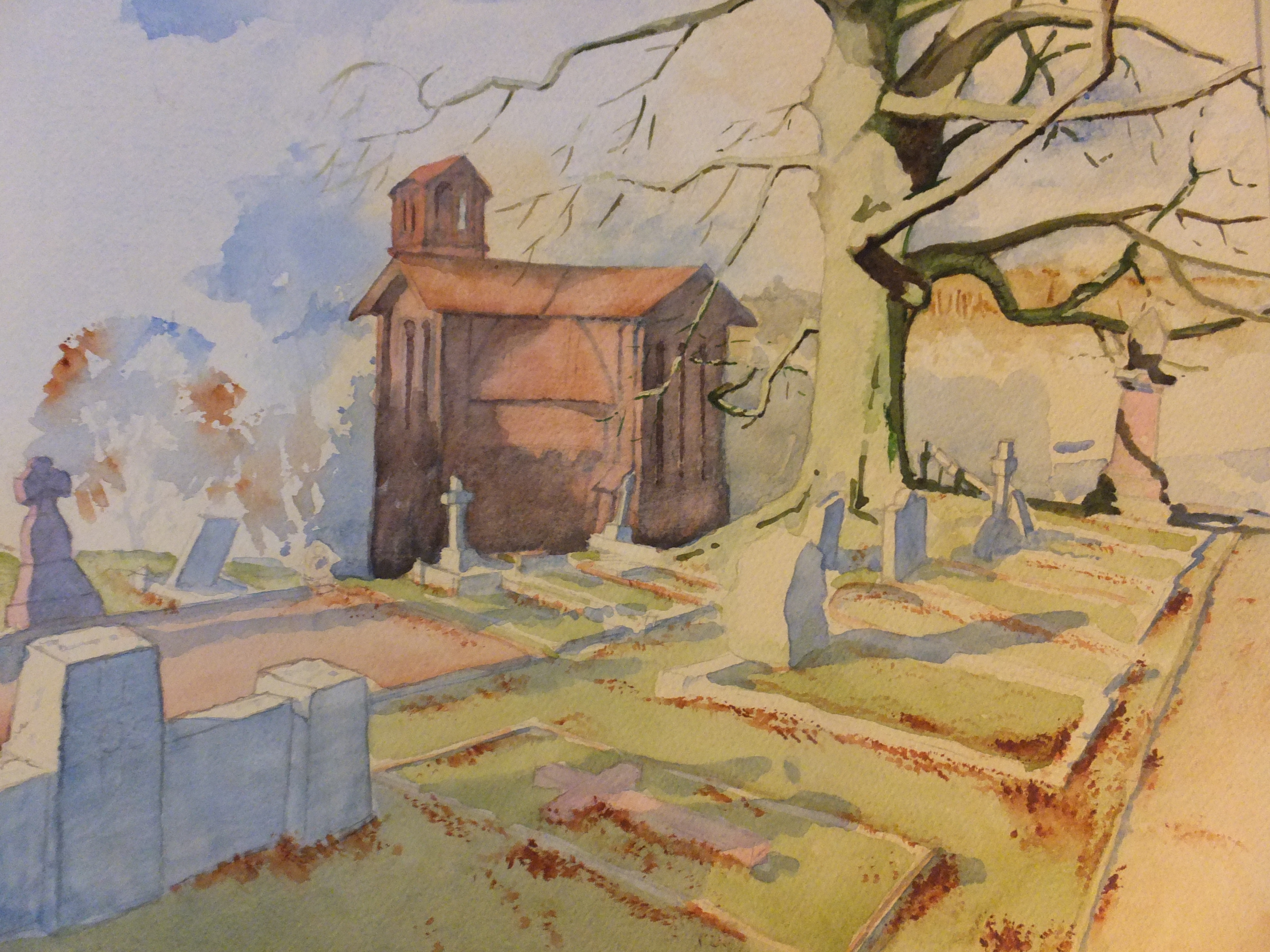
This is the painting of the Watts Chapel that I did once, built in brick and shaped like a Greek cross. The interior is beautifully designed in Arts and Crafts style. The bricks were made locally in Mary Watts works
The Pattle sisters were born in India, and became central figures British art and literary society. Born in Calcutta now Kolkata to James Peter Pattle, a civil servant, and Adeline Maria De l’Etang ,they received education in Paris and India.
Known for their beauty, intelligence and independent spirits they navigated complex social landscapes, bridging cultures and influencing Victorian high society and intellectual movements
George Frederick Watts was one of the prominent figures that they were connected with. There were seven sisters in all, and probaly the best known is Julia Margaret Cameron, the famous photographer, who lived on the Isle of wight for many years. Given a camera by her daughter, she became well known for her photographs of famous people, and also for the ability to capture subjects in a very soft light.
Maria Jackson (nee Pattle) was the mother of Julia Stephen who was mother to Virginia Woolf and Vanessa Bell, thus linking them to the Bloomsbury group
Pattledom was a term coined by Thackeray describing the sister’s powerful social network and bohemian lifestyle, blending Indian heritage with French education and English society
This exhibition is on until May, and well worth a visit if you are within striking distance of Compton
Btw. if you want to see more of my own paintings, they are listed also on my own website davidharmerwatercolour.co.uk. This website is a showcase rather than a shop, but enquiries are nevertheless welcome
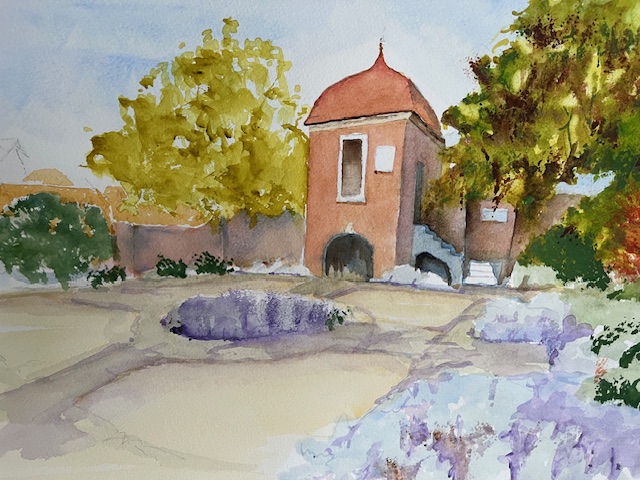
This was a nostalgic trip for me. I used to live literally round the corner from this lovely building, although at that time you could only see the top half as it was surrounded by a high wall. Pieces of glass were set into the top of the wall, to stop people climbing over. Even in those benighted times, this was illegal and constituted a man trap. Goodness knows when these shards were mounted into the wall, well into previous centuries certainly
Since then, walls were taken down and this delightful gazebo was exposed for all to see. It is from the c18 and was built as all gazebos were, to enable the leisured classes to enjoy the view from over the wall, and no doubt in those days for quite a distance. It would have looked out over the Fair Field, a large green space which would have hosted an annual fair. This is long gone, and today is commemorated by a road called Fairfield Road. The row of houses in this road was built in the reign of Queen Victoria, quite late in her reign as I remember, from building material taken from the demolition of the old manor house opposite.
Coming back to the gazebo, this was in a large garden at the back of a beautiful Georgian house called Magnolia House, occupied by two generations of dentists, now gone. Still a dentists surgery but the original old Havant family is no longer there. The house is one of the very few Georgian buildings to have survived a great fire in the c18. It is slightly uphill from the rest of the town which may have saved it from the flames.
I did this little watercolour quite quickly just to preserve a childhood memory. Havant is not a town which escaped development and there are very few gems like this remaining
I don’t live in Havant now, haven’t done for many years. My father lived in the family home in nearby Manor Close, named after the manor house which disappeared. I used to go down regularly so was able to look at the gazebo in all its glory, although could never go in as that is by appointment only, and time did not allow. The only problem with going back to scenes of one’s childhood, is that you start to hear voices of people you knew at the time, so stop and move on