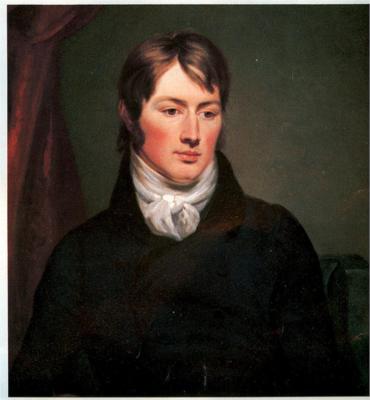
Something I didn’t know until I started reading about him with a view to preparing a talk later this year entitled Turner and Constable. In 1821 when he showed at the Royal Academy and showed The haywain in fact, he was wildly embraced by the French art market, not quite literally although he might have been. he was totally unprepared for all this enthusiasm which he certainly wasn’t used to at home
One of the first to discover him was the French Romanticist Theodor Gericault. He is probably best known for his famous painting The Raft of the Medusa, which he had brought to London, and which we are told thrilled 70,000 Londoners
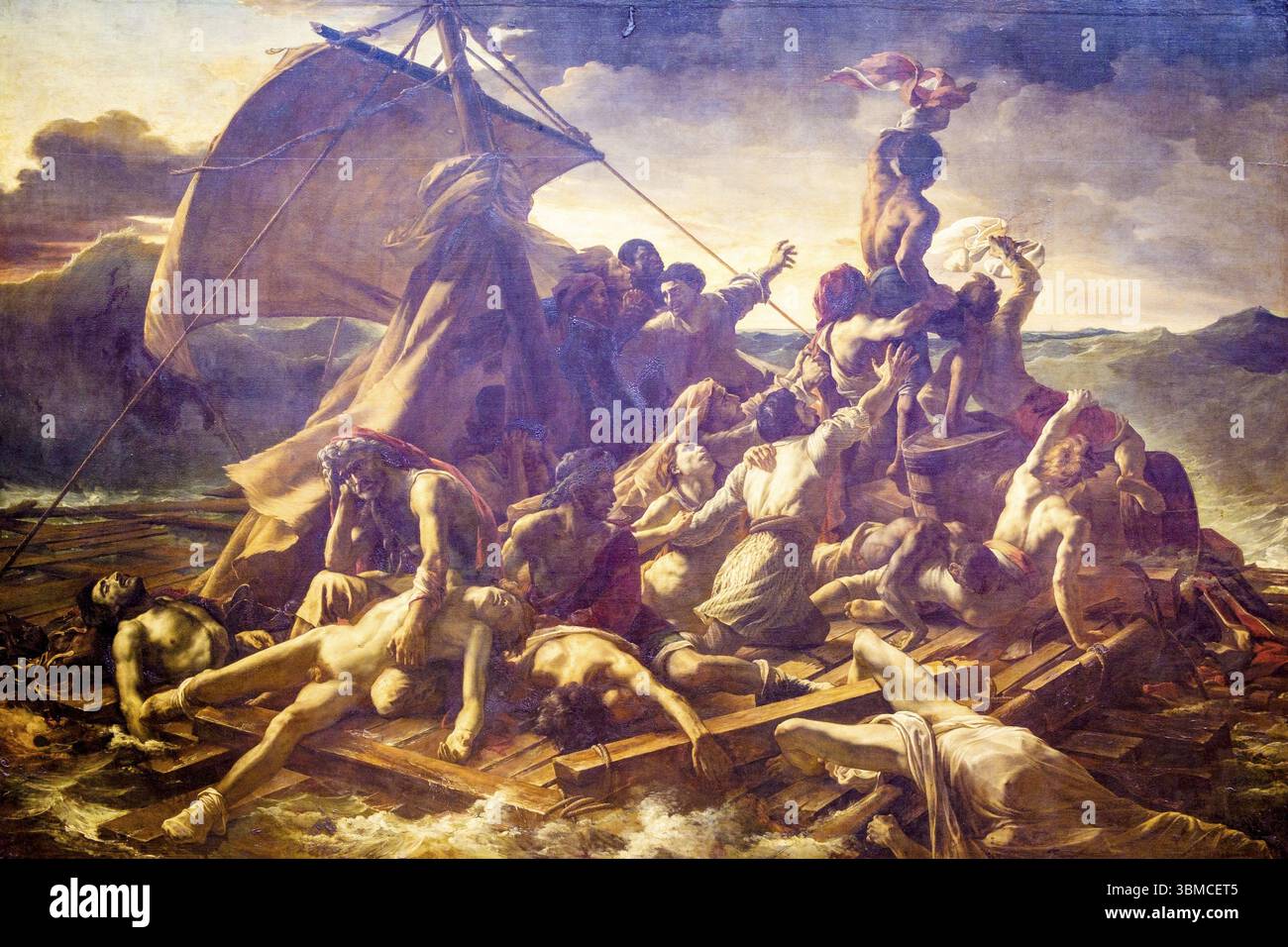
And this is Gericault’s famous painting, which I will just talk about before talking about Gericault’s reaction to Constable’s work
This painting was based on a real incident which shocked the French nation. The French naval frigate ran aground off the coast of Mauretania on 2 July 1816. At least 150 people were set adrift on a hurriedly constructed raft. Only 15 survived and were picked up. The event fascinated Gericault and he could be said to have hooked into national grief. He undertook extensive research including visiting morgues for the skin colour of the dying and the dead. The painting was shown in the Salon of 1819 and received national approbation. He brought it to London where it thrilled Londoners including one Turner who went back to his studio and reworked his own great work The Shipwreck
Whilst in London Gericault visited the Academy exhibition and there discovered Constable. He thought that The Haywain was the best in the exhibition. Other French visitors thought the same and waxed lyrical.
Much to Constable’s surprise the interest quickly snowballed. A Parisian art dealer called Arrowsmith, French despite his name, offered to buy The Hay Wain and offered a derisory sum. The negotiations broke down but two years later, when Constable was short of money, he agreed to sell the painting to Arrowsmith for £250, as well as other pieces. The paintings caused a stir when they arrived in Paris.
The arrival of the Hay wain in 1824 was like a pebble dropping in a Parisian mill pond. The effect was immediate. At the epi-centre of the quake was another influential figure, Eugene Delacroix, who was so influened by the Hay Wain that he went back to his studio and repainted background on his great work The Massacre at Chios. He was blown away by Constable’s greens and tried to copy them. Critics viewing this picture at the time couldn’t find much evidence of green being used, but there we are.
If Delacroix was talking about the Hay Wain, then others were bound to be listening. A few weeks later it was these two paintings which received the greatest share of the attention at the Academie des Beaux-Arts, known as the Salon. The Salon dominated taste and opinion in France to an even greater extent than the Academy in Britain
Constable was embraced at the Salon in a way that had never happened to him at home. His large paintings were removed to positions of prominence, and Monsieur Constable, Peintre de Paysage was awarded a gold medal of excellence. His friend John Fisher couldn’t resist commenting that plain old Constable, who didn’t speak a word of French, was the talk and admiration of the French. His name entered the language. Landscapes were described as a la Constable!. More French exhibitions followed in Lille including another gold medal, Douai and the Salon again in1827, where there were plenty of landscapes a la Constable, with rustic cottages, wagons in ponds and open fields and skies.
Constable nevertheless refused to visit France, his attitude seemingly bloody-minded bordering on rude.
This is probably a good place to take a break. We are about half way, so a lot of writing and a lot of reading for you guys. It will take another post to complete the subject which I will do soonest